Israel’s Campaign to Make East Jerusalem Unlivable
Israel has stepped up home demolitions in East Jerusalem in a campaign to drive out Palestinians. The government is claiming that buildings lack permits while also ensuring that such authorization is impossible to obtain.
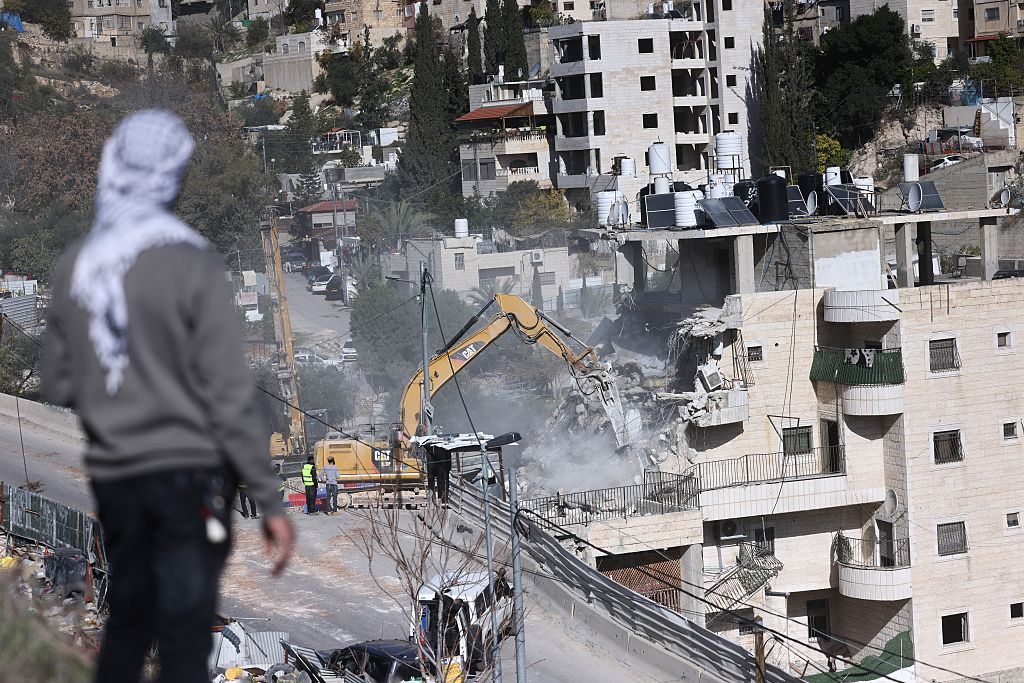
A Palestinian man watches as Israeli forces demolish a residential building in the Silwan neighborhood of East Jerusalem on December 22, 2025. (Jamal Awad / Xinhua via Getty Images)
Along with the constant violations of the ceasefire in Gaza, home demolitions are continuing apace in East Jerusalem. In Silwan, a Palestinian neighborhood south of the Old City, the destruction does not come in the form of bombing, but as a routine administrative procedure.
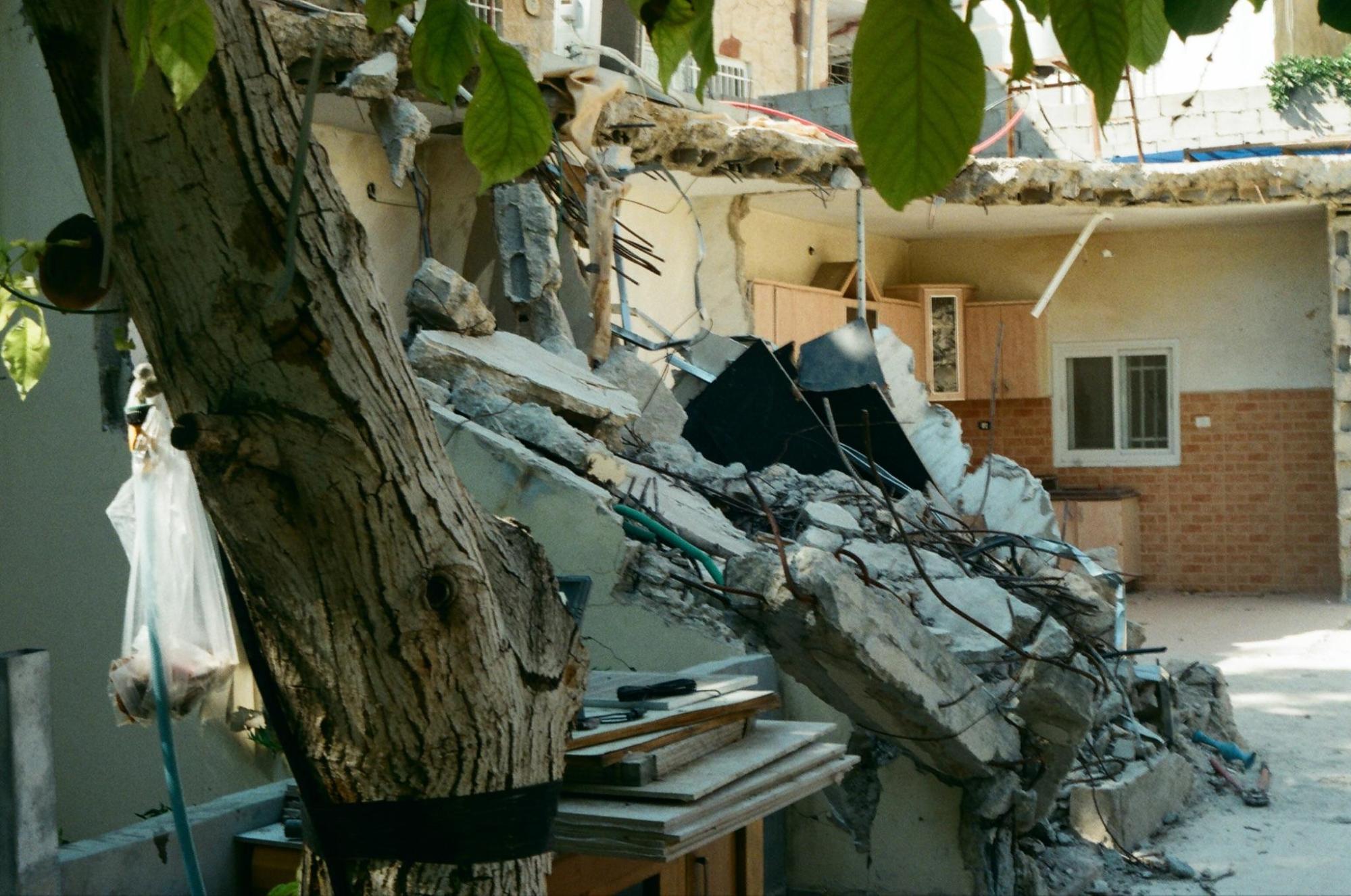
On December 22, shortly after dawn, Israeli authorities razed a thirteen-apartment building in the Wadi Qaddum neighborhood. After sealing off the area and cutting off utilities, bulldozers left about a hundred people homeless, forcing some to watch the destruction amid arrests and violence.
The official justification is always the same: a lack of building permits. However, in East Jerusalem, obtaining such authorization is almost impossible. Since 1967, less than 13 percent of the territory has been designated for Palestinian construction; zoning plans exclude entire neighborhoods, and applications are systematically rejected. In this context, building without a license is not a violation but a vital necessity. This makes urban planning itself into a colonial technology that decides who can stay and who must disappear.
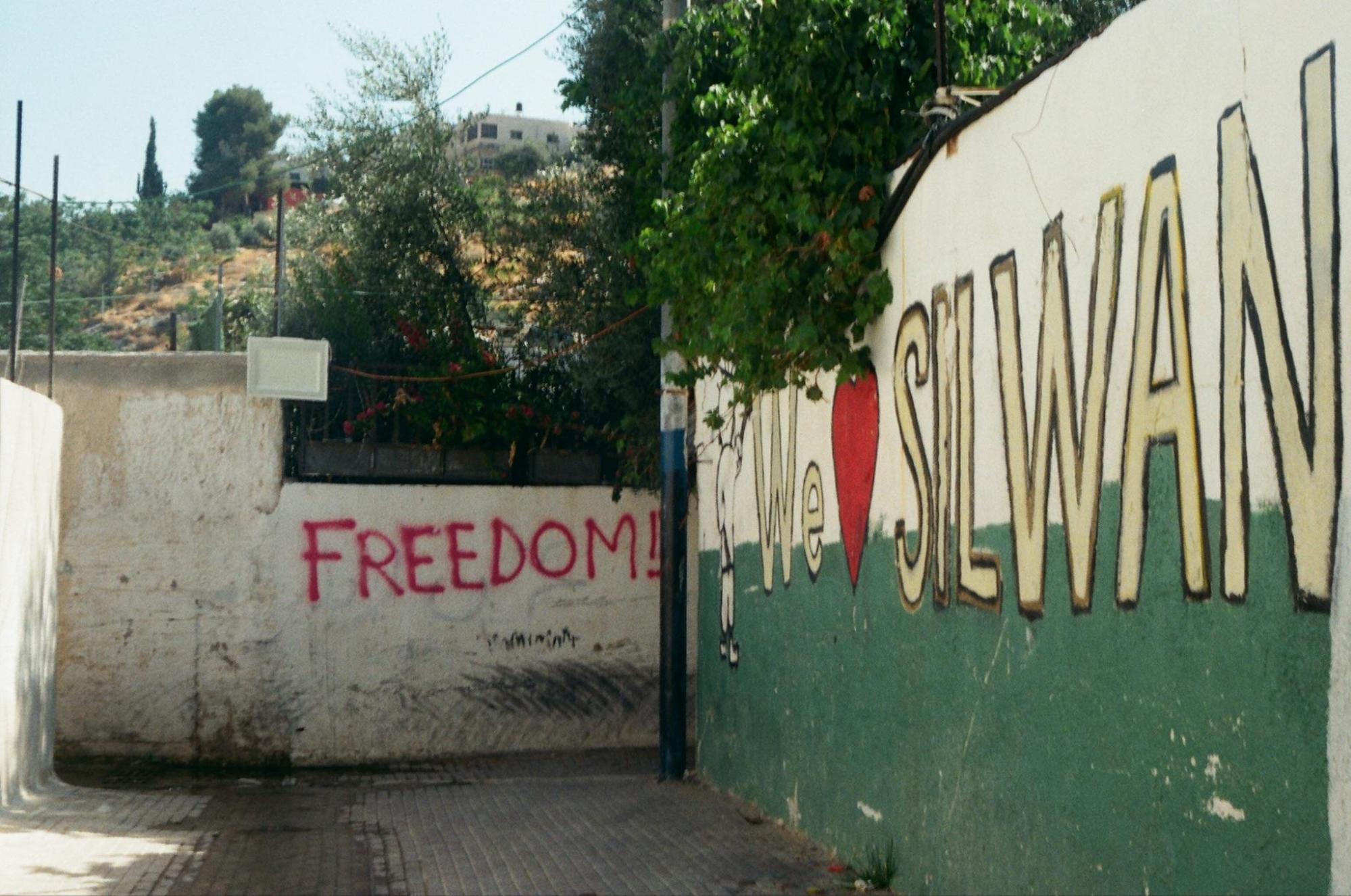
In Silwan, uncertainty is not a side effect of Israeli policy but the form of occupation. “Demolitions are the norm here,” explains one resident. Bulldozers and administrative orders shape daily life, producing a constant precarity that makes it impossible to plan for the future. It is violence in the form of planning.
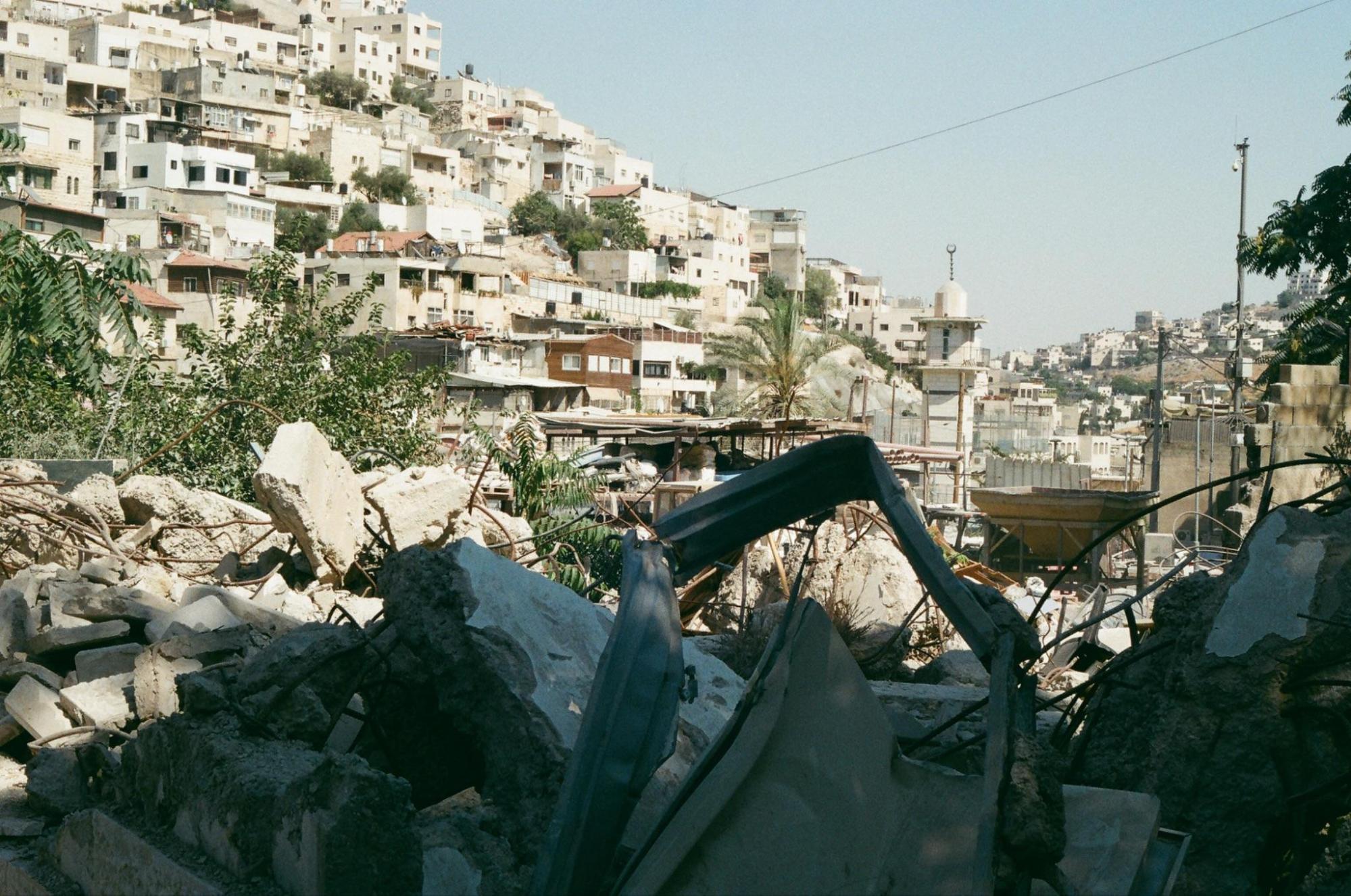
It all responds to a decade-old principle: maximum land for Israelis, with minimum Palestinians. This is not a slogan but a political rationale that guides each instance of confiscation. “The methods change, but not the strategy,” confirms a woman from Al-Bustan. “They want a settler majority.”
Wadi Qaddum is no exception. On December 30, another house was demolished in Al-Bustan. Officials, escorted by police, forced the children out of their beds at dawn. A few hours later, only a sleeping cat remained among the rubble. “It’s the thirty-fifth house demolished here already,” says the father, a victim of a system that denies people’s right to live in their own homes. The reason, once again, was the lack of a building permit, as required by the authorization system that regulates the entire East Jerusalem.
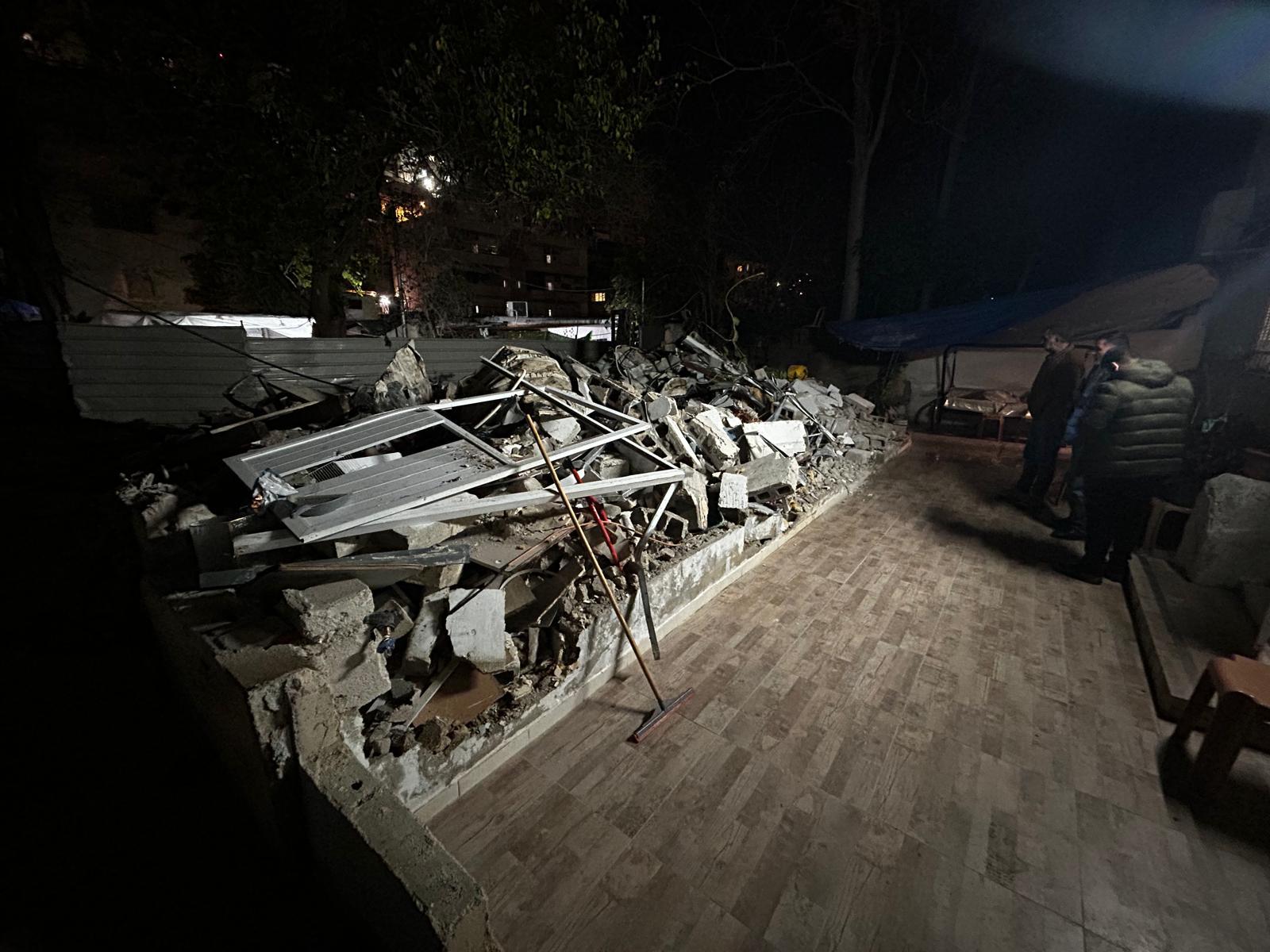
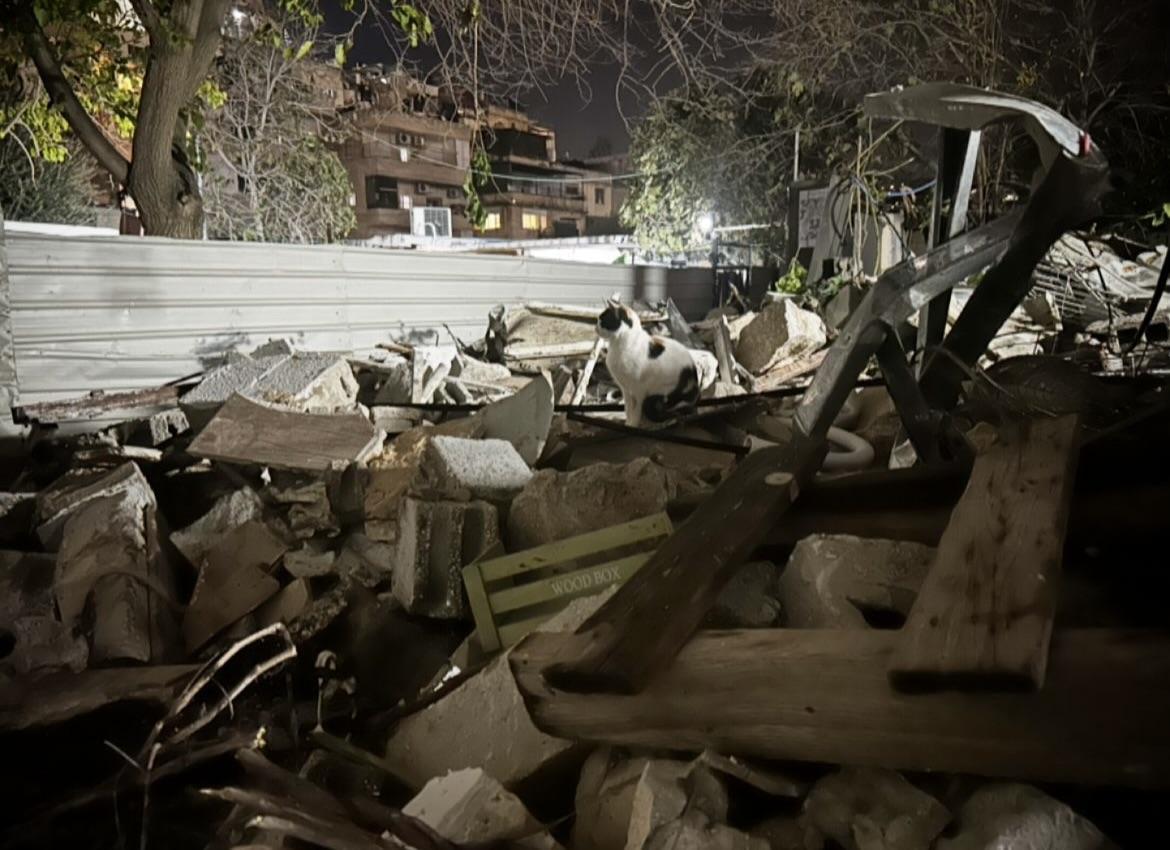
In recent years, with a sharp acceleration after October 7, 2023, the expansion of Israeli settlements and the destruction of Palestinian space in East Jerusalem have become complementary processes. In 2025 alone, the authorities approved nine colonial plans: 4,744 housing units on 1,153 dunams of land (1.153 square kilometers). Twelve more plans (2,417 units) are currently awaiting approval.
From October 7, 2023, to the end of 2025, data from the Civic Coalition for Palestinian Rights in Jerusalem paints a systematic picture: thirty-two settlement plans approved, for a total of 8,944 new units on 2,121 dunams. During the same period, 623 Palestinian structures were demolished, including 274 homes. Forced displacement affected over three thousand people, including five hundred children.
The year 2025 marked a peak with the demolition of 360 structures in East Jerusalem, almost half of which were residential. In Silwan, there have been at least fifty demolitions since October 7, 2023, most of which took place in the last year. Each intervention, justified by the same administrative measure — the absence of permits — systematically produces the same outcome: loss of property, displacement, and the forced precarity of Palestinian life.
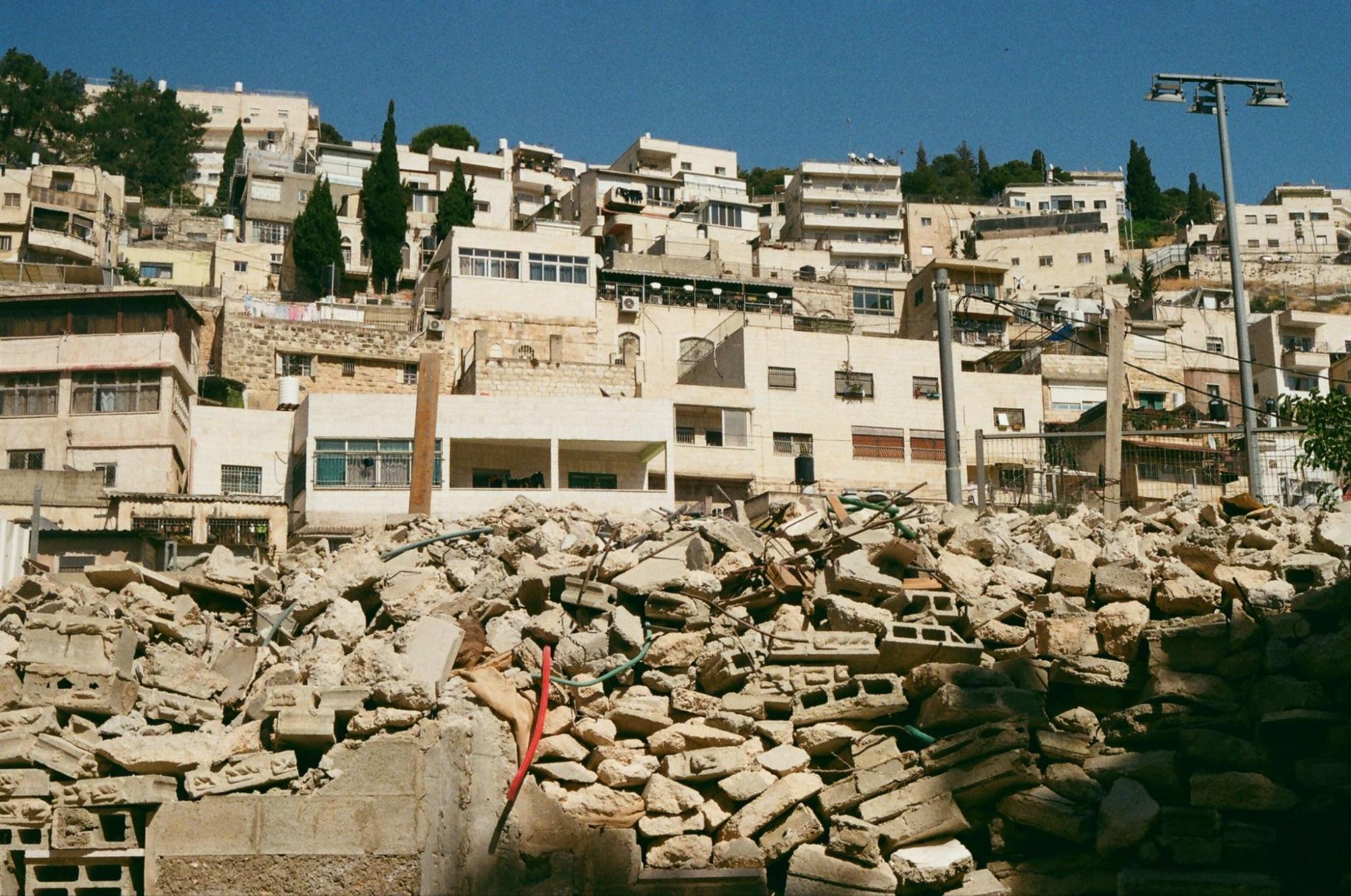
In Silwan, this precarity endures in family histories. Fakhri Abu Diab, activist and spokesperson for Al-Bustan, welcomes us into a caravan after his house was demolished twice in 2024. The second demolition took place during that fall’s US presidential elections: a well-established practice of striking while international attention is elsewhere. “They told me not to worry,” he says, “the Americans are busy. No one has time for you.”
Today the caravan stands amid the rubble. “Here was the kitchen; here was the bathroom,” Abu Diab points out. “This is our museum.”
The demolitions leave families fragmented: “Before we were together; now everyone lives somewhere different.” The trauma continues in the threat: the grandchildren sleep with the light on, and every noise sounds like a bulldozer. Even the caravan is under demolition order: “If you come back, we may not even have this.”
In the case of Abu Diab’s family, the municipality again justified the demolition by claiming that the building did not have a permit. “They don’t give people any chance to obtain a construction permit,” he explains. “Yet part of the house they demolished was built before 1967, before the Israeli occupation of East Jerusalem.”
After 1967, Israel occupied and illegally annexed East Jerusalem, applying its own domestic law there. The Palestinians who live there are not citizens but permanent residents: a fragile, conditional status, ever open to being removed. “If you don’t live here, you lose your residency,” says a woman from Silwan. “And if your house is demolished, how can you prove that you live here?”
Residency thus becomes an administrative trap. Palestinians are forced to stay in Jerusalem in order not to lose the city, but at the same time they are prevented from building there. They can only live there on condition that they continually prove that Jerusalem is their “center of life.” Moving, working elsewhere, or marrying a Palestinian from the West Bank can be enough to lose their status. In some cases, the police even check refrigerators. “They come to see if there is fresh food,” she explains. “To see if you are lying about where you live.”
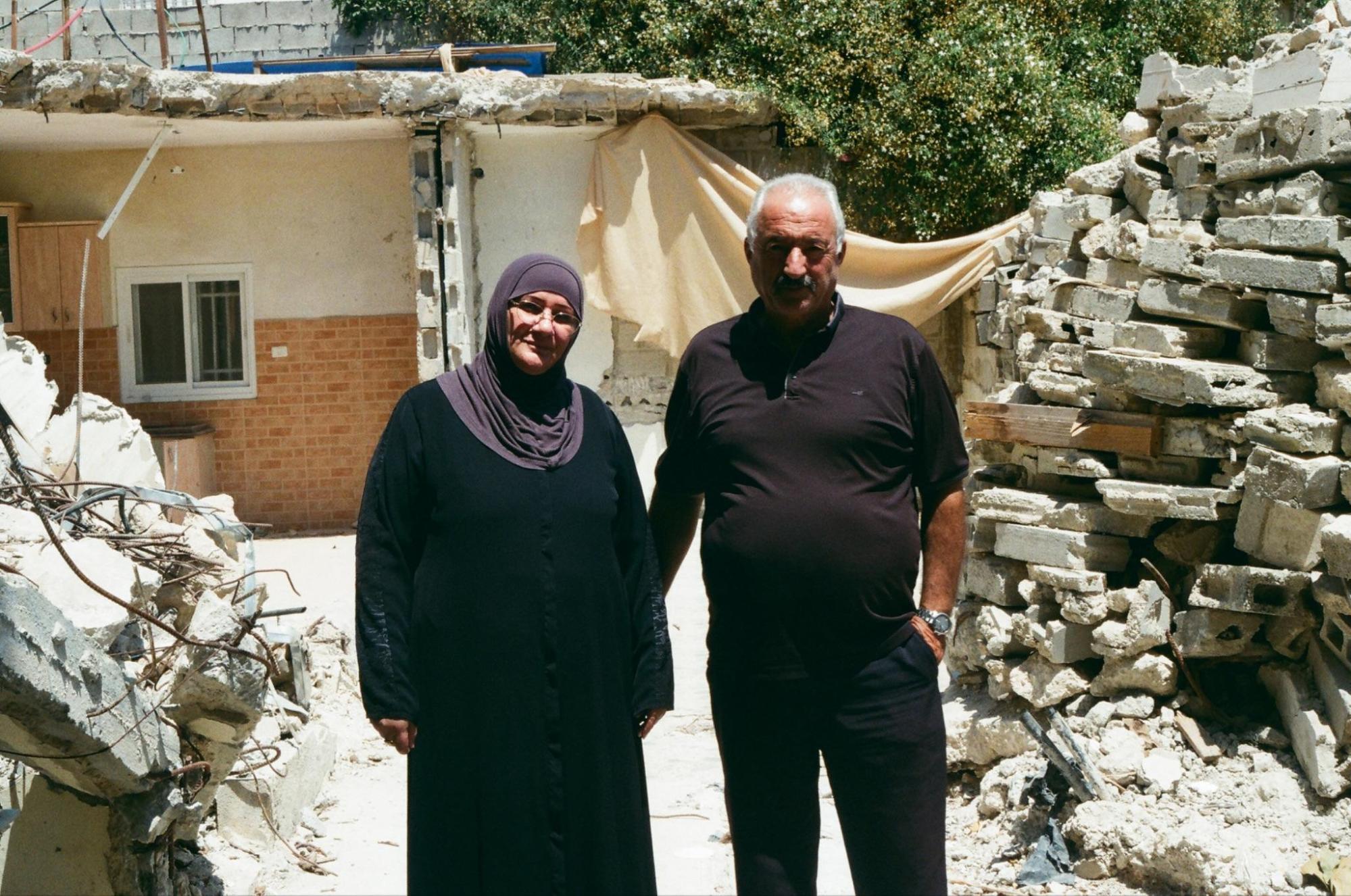
In this context, the housing shortage in East Jerusalem is not a side effect but a direct consequence of urban policies. Building permits for Palestinians are almost impossible to obtain. “We tried for years,” says a resident of Al-Bustan. “Lawyers, architects, alternative plans. We said, give us the permits and we’ll organize the neighborhood. They replied clearly: it’s not a legal issue — it’s political.”
Building without a permit thus becomes the only option. And this necessity is then weaponized against those who do build structures. “First they deny you a permit,” she says. “Then they punish you for building without one.”
In East Jerusalem, illegality is not an individual violation but a condition imposed on the collective. “Here we live in total uncertainty,” she adds. “One day the house is there. The next day it may be gone.”
Demolitions produce a permanent precarity, a condition in which building, living, and planning for the future becomes almost impossible. This violence, cleansing the territory of Palestinians, passes not just through explosions but through the administrative tools of urban planning.
When a demolition order is issued, the owner has two options: demolish their own home with their own hands or pay huge fines to cover the costs of the bulldozers, the police, and the operation. This system forces people to actively participate in their own expulsion.
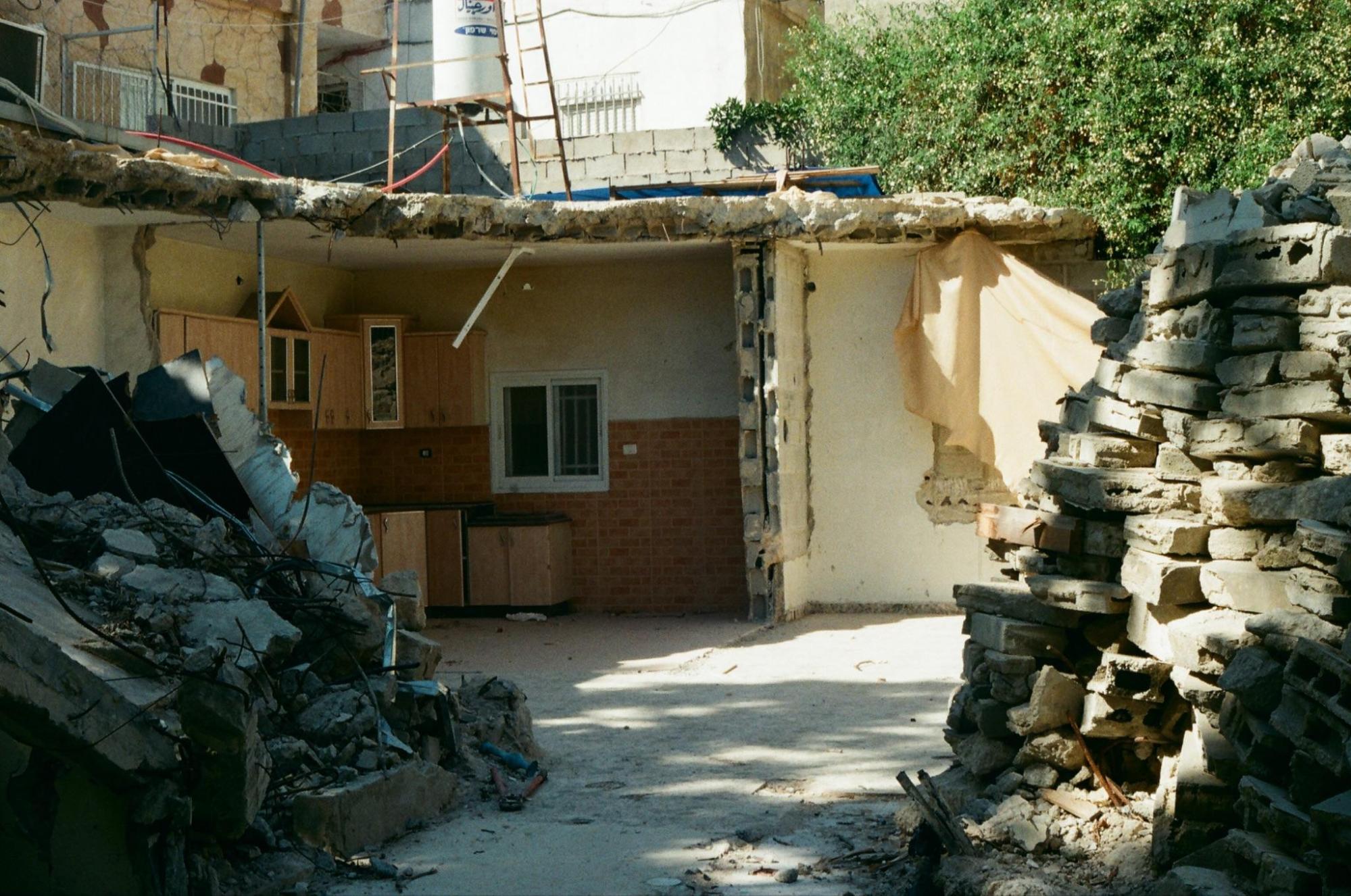
In Abu Diab’s case, the municipal authorities demanded payment of 45,000 shekels (about $13,500) to cover the costs of demolition. When he refused, his bank account was frozen.
“They seized all my accounts,” he says. “They completely blocked my financial situation until I pay for the bulldozers and police who demolished my house.”
Another resident we met in Silwan says he demolished his father’s house with his own hands. If he hadn’t, the fine would have been 90,000 shekels (about $27,000). “We had no choice,” he says. “Either we destroyed the house, or they destroyed us financially.”
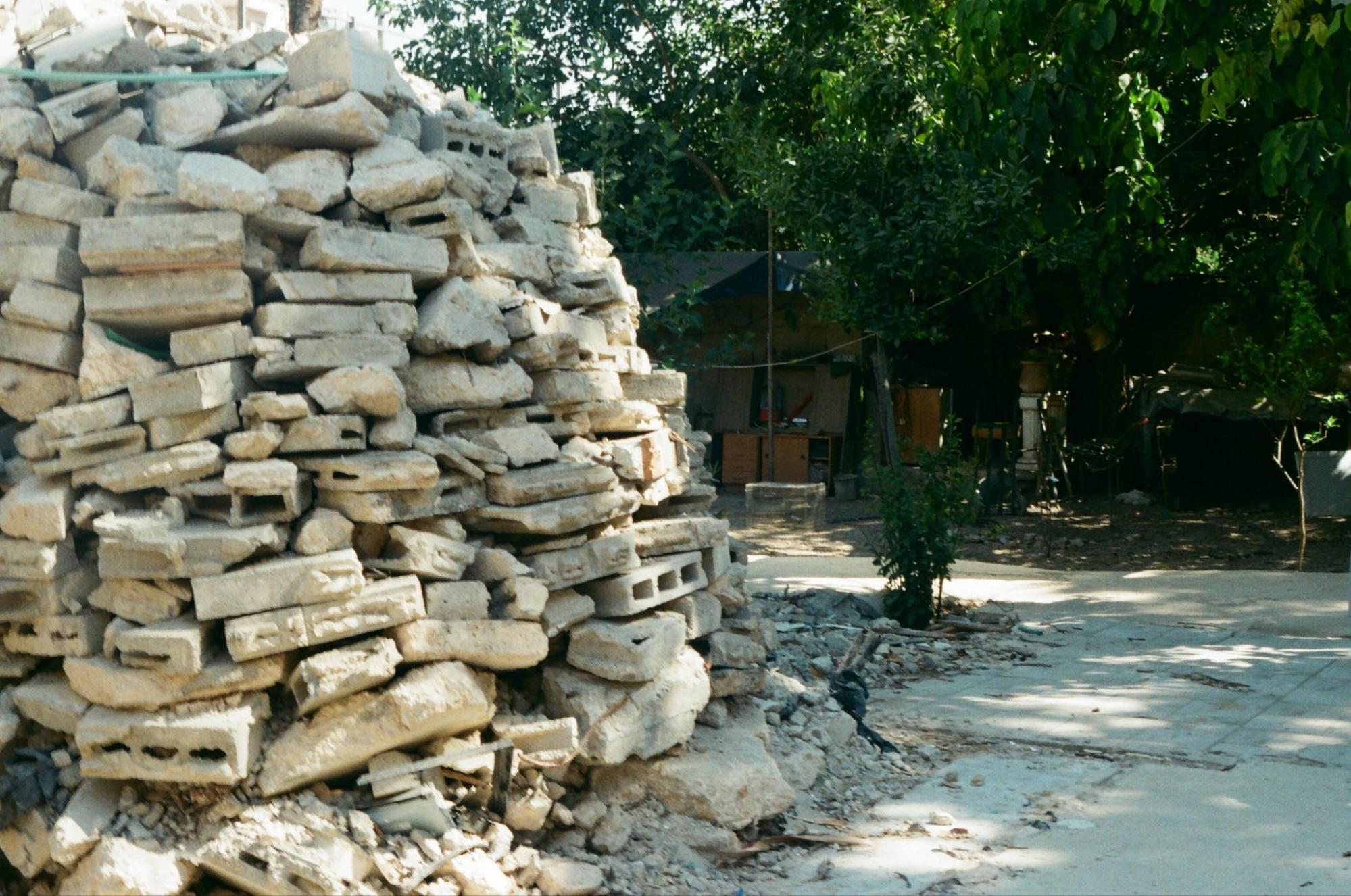
Abu Diab is also the spokesperson for the Al-Bustan community. Silwan is made up of thirteen neighborhoods; six of these are now under demolition or evacuation orders. Al-Bustan is one of them. “About a hundred houses here have had demolition orders since 2005,” he explains. “For years, we managed to freeze them thanks to legal work and international pressure. But the last year has been different.” In 2024 alone, about a quarter of the neighborhood was destroyed. “They accelerated everything,” he says. “Demolition after demolition.”
The plan for Al-Bustan has been known for years: to transform the Palestinian neighborhood into a “public park” that extends the archaeological site of the “City of David,” already active in Wadi Helwa, a few meters away. This is presented as a historical endeavor, but in reality it involves the erasure of an entire Palestinian neighborhood. “They say King David passed through here,” says Abu Diab. “They want to connect the Old City, the City of David, and the settlements.” Behind the language of archaeology and urban greenery lies a specific political objective. “This means only one thing,” explains another Al-Bustan activist, whose home has been reduced to rubble. “They want to swap out the Arab majority living in Jerusalem and replace it with settlers.”
Targeting Those Who Speak Out
Not all houses are demolished in the same way, nor at the same pace. “They don’t choose people at random,” say the residents of Silwan. “They target those who speak out, those who organize, those who denounce.” Demolitions are not just walls collapsing. They are political punishments, with a clear deterrent message: raise your voice, and you will pay the price.
Abu Diab knows why his house was targeted. During a police interrogation, they showed him photos of his meetings with diplomats and members of the European Union:
They said to me, “Haven’t you learned yet? Are you still talking to diplomats? No one is listening to you anyway.” I replied, “I will continue. Without violence, in accordance with the law. I will continue to speak. I will continue to protect families whose homes are threatened.”
Speaking out remains essential. ”Even if they target those who speak out, as they do with journalists in Gaza, it means that speaking out works,” says an Al-Bustan activist.
And while they destroy homes and lives, the international community remains silent. “It has abandoned us,” says Abu Diab. “If no one does anything, why should Israel stop? Israel acts as if it is above the law. And this is everyone’s responsibility, each and every one of us. Every house demolished, every woman who loses her home, every child, every person affected, is everyone’s responsibility.
“They use urban planning to destroy us. This is not peace. It is one demolition after another.
“If you only look at the stones, you think it’s a house. But it never is. They want to destroy people: psychologically, economically, socially. This is war here. . . . A home is your history, your memory, your present, and your future. It is your entire life.”
Faced with all this, for Israel’s partners to keep silent is to be complicit in its crimes.