Spain’s Left Municipal Governance Lessons for Zohran Mamdani

Balancing the smooth running of local government with a bold reform agenda, as Zohran Mamdani will have to do in New York, isn’t easy. Spain’s recent experiments with left local governance offer some lessons on how (and how not) to do it.
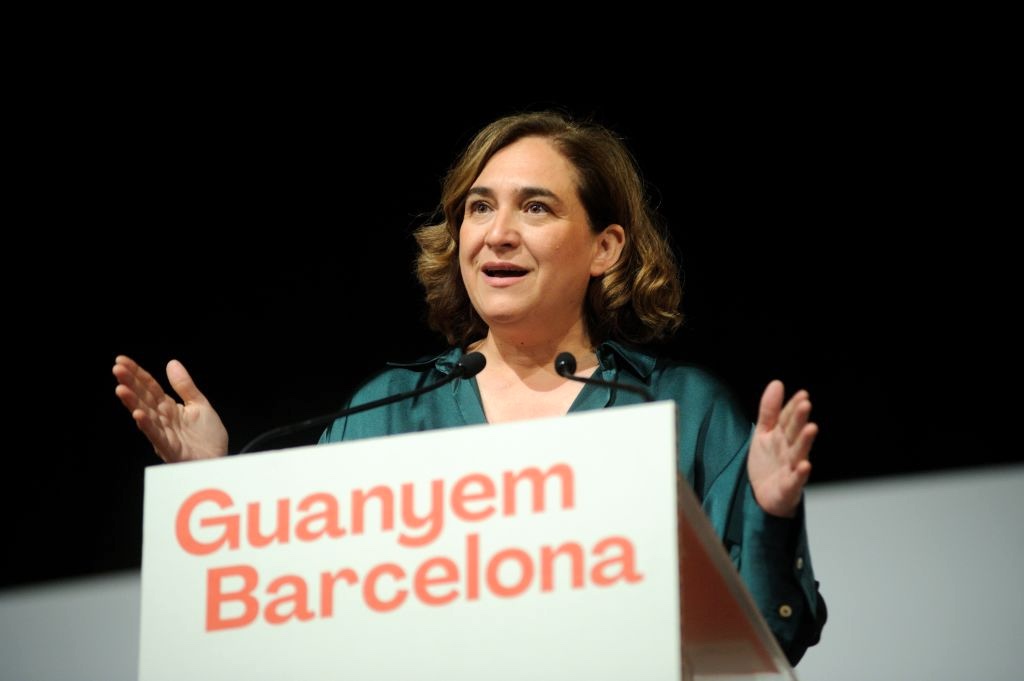
(Alberto Paredes / Europa Press via Getty Images)

Zohran Mamdani’s victory in the New York City mayoral election leaves the US left in uncharted territory. Though democratic socialists have won a series of national races in the decade since Bernie Sanders’s 2016 presidential run, nowhere has a left-wing candidate had the opportunity to wield such meaningful executive power.

With few recent precedents to draw on, Mamdani has invoked Milwaukee’s twentieth-century “sewer socialists” as a reference for how he will approach governing, while others have looked to draw relevant lessons from the Paris Commune and interwar Red Vienna. Yet a far more immediate parallel for understanding the challenges awaiting Mamdani when he takes office in January is the Spanish left’s experience after 2015 of governing two of Europe’s largest cities.

Swept to office on the back of the indignados wave of anti-austerity protests, and with the backing of left populist Podemos, mayors Ada Colau in Barcelona and Manuela Carmena in Madrid set out to curb housing speculation, rebuild public services, and democratize city institutions. Like Mamdani’s mayoral run, their insurgent campaigns created an air of generational change as they united broad electoral coalitions of younger, middle-class voters hit by austerity, working-class communities, and center-left tactical voters to defeat establishment incumbents.

Their outsider status was also reflected in initial symbolic gestures in office. On her first morning as mayor, former housing activist Colau was to be found in one of Barcelona’s poorest neighbourhoods, negotiating the suspension of an eviction against a local family. Meanwhile, Carmena, a retired judge and former communist, took the subway to work, refusing the use of her official car.

In her inaugural speech, Colau also spelled out to her supporters that it was “one thing to win an election and another to govern.” She pleaded with them: “Don’t leave us alone [in the institutions].”

Indeed, once in office, both mayors quickly ran up against the structural limits of their powers as they grappled with nationally imposed austerity rules, media hostility, and coordinated pushback from corporate elites. Certain campaign promises were quickly discarded, while the torturous pace of institutional politics generated frustration among activist groups in both cities.

The two mayors, in turn, responded in distinct ways. While both looked to counter media predictions of chaos by projecting an image of competent governance, Colau was able to combine this with a selective confrontation with elites and an unwavering focus on her core agenda. By contrast, under extreme pressure in the Spanish capital, the Carmena administration slowly retreated toward a bland progressive managerialism, as her political group on the city council splintered between moderates and maximalists.

Both experiences offer lessons in just how difficult it is to balance the smooth running of the local state apparatus with advancing a bold reform agenda. Yet in Colau, Mamdani has a contemporary illustration of what it means for a left-wing mayor to negotiate the narrow path between political co-option and collapse.

Under Fire

Any evaluation of the Carmena administration needs to take into account its centrality to the wider anti-austerity struggle in Spain. June 2015 saw the country elect a series of left-wing municipal governments, which, from Zaragoza and Valencia to La Coruña and Cádiz, were committed to challenging the European Union’s orthodoxy of fiscal discipline and privatization.

But governing in the second-largest city in the EU and the political capital of Spain singled out Carmena not only for greater national media scrutiny but also more concerted attacks from the then right-wing Spanish government.

In particular, her administration became caught in a protracted budgetary standoff, as Spain’s former finance minister Cristóbal Montoro repeatedly sought to impose cuts on the council. Nor did it have much room to maneuver, as the measures in the 2012 budget stability law liquidated much of the economic autonomy of indebted local governments. In this context, the key tactical dilemma her administration faced resembled one Mamdani’s will potentially encounter under the Trump White House, namely: how to position itself before a hostile national government capable of derailing its agenda.

Difficult compromises over which programmatic battles to wage were necessary. But Carmena struggled to forge a consensus over how to proceed among the diverse left-wing elements within her Ahora Madrid alliance on the council, which stretched from the small party Greens Equo to the Trotskyist Anticapitalistas. Halfway through the mayor’s term, I spoke with one member of Carmena’s administration who acknowledged the mounting disaffection among activists and the more radical councillors. He argued, however, that in the first years in office, it was more important to earn broader public confidence by delivering tangible achievements like investments in social programs than trying to impose the Left’s ambitious platform in its entirety.

In this respect, he pointed to the decision not to take back into public control the city’s outsourced waste collection services in Carmena’s first year. Though a campaign commitment, setting up a major new municipal company would have required city hall to bypass the legal limits placed on hiring new public employees by Montoro’s ministry. In a pressure-cooker atmosphere in which the media was already talking up the deterioration of the city’s cleanliness, Carmena feared subsequent legal challenges from the minister would lead to significant disruptions in this basic service and so renegotiated the contracts with the existing corporate service providers.

This decision was explained to me by a member of her government in terms of “the need to maintain the trust of the broad progressive electorate who had backed the mayor only months before,” a significant portion of whom were traditional center-left voters. Others within her Ahora Madrid group disagreed, with one such councillor telling me at the time that the Left could not simply give in to established forces threatening chaos but rather had “to incorporate elements of risk in its strategy so as to advance.”

Budget Showdown

As these internal forces became increasingly polarized within the Ahora Madrid alliance, the Left struggled to cohere around a strategy for walking this political tightrope between adventurism and its own containment.

If some of her councillors seemed unwilling to engage with the realities of majoritarian coalition building, it also became evident that the administration had no clearly defined plan of action for defending its core anti-austerity mandate. This was the case even as the city increased social spending by 53 percent between 2015 and 2017 and ramped up investment in socially deprived neighborhoods — in defiance of the city’s nationally mandated spending cap.

This increased expenditure translated into funding for a planned large-scale social housing program while the council also set out to invest heavily in extending the network of public preschools, women’s shelters, and municipal sports centers. The budget for home help for the elderly was increased by 25 percent; the program of free school meals had its funds increased by 50 percent.

Carmena’s administration did combine this spending hike with meeting its debt reduction targets under the budget stability law. But in contrast to the leeway afforded to the budgets of dozens of right-wing controlled councils, Montoro was determined to make an example of Madrid. In November 2017, he demanded a 7.2 percent cut to the city’s overall annual expenditure, as he took the exceptional step of instituting weekly controls on the city’s spending.

“This is a full blown intervention . . . aiming to prevent us from carrying out our normal activities of government,” one member of the city’s administration told El Diario at the time.

Yet even with limited leverage at its disposal, certain moves were available to the city in order to push back. Alongside legal appeals, other progressive mayors proposed a coordinated protest campaign, including a mass demonstration outside the Spanish Parliament. According to the then mayor of Valladolid, Óscar Puente, such “a forceful, collective response” was something other city halls had been pushing for during most of the previous year — but it had been opposed by Madrid.

In reality, an ex-judge with a highly institutionalized view of politics, Carmena had sleepwalked into this showdown without a strategy for organizing against Montoro’s aggression. Her instinct was still to avoid escalation, even as her government divided over how to respond.

Head of finance Carlos Sánchez Mato believed the council should hold out and force Montoro to unilaterally impose the cuts himself. At the very least, this would maintain the administration’s clear anti-austerity credentials. This was something he saw as particularly important as Spain’s finance minister had timed the confrontation to ensure “maximum disruption” of the city’s investment programs in the year running-up to the 2019 elections.

Instead, after a month’s deadlock, Carmena ultimately agreed to make the cuts and also to drop the city’s appeals in the courts. In this context, Waleed Shahid’s description of her administration as that of a socialist mayor who “governed with competence and restraint” seems particularly generous. These are both necessary traits, which Mamdani will be required to demonstrate, but which must not be conflated with the sort of political caution that inhibited even the limited resistance to a right-wing offensive that was possible.

Against this background of retreat, and after a split with the radical left of her alliance, her failed 2019 reelection campaign struck a more depoliticized tone — stressing the city’s innovative reforms in areas like pollution reduction, pedestrianization, and participatory democracy. This ate into the support of the center-left Socialist Workers’ Party (PSOE) in more affluent areas of the city, but Carmena also dropped thousands of votes to abstention in the “red belt” working-class neighborhoods, causing the overall progressive vote to fall.

Managing Expectations

In comparison, Colau’s administration in Barcelona enjoyed the advantage of greater budgetary autonomy from the Spanish government, due to the city’s lower debt rate. Her task of governing was also made easier by the greater internal coherency within her Barcelona en Comú formation. Colau’s position of hegemony within the organization gave it greater stability across her eight years as mayor, while a more integrated leadership team and an active, if relatively small, base contributed to a healthier internal culture than that of Ahora Madrid.

Instead, its challenges lay elsewhere. As it looked to take on runaway mass tourism and property speculation, it faced a relentless lawfare campaign from corporate developers and other capitalist interests in the city. And binding long-term contracts and intractable legal challenges left it struggling to contest the model of inefficient corporate-run local services. In one high-profile case, her city hall found itself caught in a four-year court battle with multinational Agbar over taking back control of running the city’s water supply, only for Catalonia’s Supreme Court to rule in the corporation’s favor early into her second term.

Yet despite such limits, Colau and her administration slowly advanced a substantive agenda around housing, urban planning, and social policy across two terms as they moved against the overtourism and real estate speculation that has blighted Barcelona in recent decades. In particular, the council pushed its legal powers to the limits to halt the Airbnb-ization of the city while, at the same time, implementing an ambitious Right to Housing Plan that saw an 80 percent rise in Barcelona’s social housing stock over the past decade, albeit from a very low base level.

“We have made serious leaps forward,” Colau’s head of housing, Lucía Martín, insisted in 2023, pointing out that by the end of the administration’s second term in office, Barcelona had the largest council housing stock in Spain. But in the same interview, she also acknowledged that, given where the administration started from eight years earlier, “many of the housing policies we have approved will have to be pursued for the next ten, twenty, or thirty years to produce structural changes.”

This points to a fundamental dilemma that Colau had to grapple with: how to combine the patient institutional work of developing a comprehensive regulatory regime and local state capacity in areas like housing with the need for more immediate results to sustain momentum and to demonstrate it could deliver. In this sense, managing expectations was a constant battle as it sought to offset legal reversals and negative press headlines with a clear political narrative and foreground partial victories.

This began with initial high-profile measures that signaled a break with previous policies that fueled speculation, such as fines imposed on major banks for maintaining empty apartments and a moratorium on new tourist accommodation and hotel builds in the city. Yet in many cases, the type of bold campaign promises that engaged voters in the run-up to the 2015 election depended on formal powers that, in reality, did not correspond neatly to those of municipal government in Spain — a challenge Mamdani also faces.

This was the case with the commitment to reducing housing evictions, which, given the council’s lack of powers in the area, saw Colau’s administration set up a mediation unit to ensure banks and landlords reach alternative agreements with residents. Between 2015 and 2023, it halted evictions in 90 percent of the 15,400 cases it dealt with — even though, at times, it was criticized for not going far enough by the anti-eviction organization La PAH, which Colau had previously led.

“There are still a large number of evictions in Barcelona, but if you add up all the ones that they stopped through their mediation service, it has been significantly reduced,” sociologist Carlos Delclós told me in 2023.

Elsewhere, even clear successes such as the containment of Airbnb rentals risked being overtaken by novel speculative practices being driven by international investment funds. Between 2015 and 2023, the total number of holiday apartments in the wider Catalan region went from 45,000 to nearly 100,000, whereas Barcelona’s total remained unchanged at around 9,000 units, with the council closing 8,000 unlicensed flats during that period. Yet at the same time, developers flooded money into for-profit student accommodation and co-living units while corporate landlords increasingly switched to the temporary residential rental market (i.e., contracts between one month and a year) to bypass the pandemic-era rent freeze and cater to digital nomads.

Delclós argues Barcelona en Comú did “about as much as it could to hold back the tide [of speculation] in the short term with some excellent measures,” while also insisting that the city under Colau “became a reference point internationally for housing politics because of how it used the powers at its disposal to lay the ground for an innovative middle- and long-term strategy.” In this sense, managing expectations meant constantly balancing the need to sustain confidence in the Left’s longer-term project for the city with an honesty about the limits of municipal power, and framing setbacks and challenges in populist terms.

Municipal Populism

Indeed, even after eight years in office, Colau looked to position her city hall in terms of its opposition to the economic elites, and, if anything, came to invoke a more class-inflected rhetoric in the 2019 campaign and onward so as to distinguish her formation’s agenda from the wider clash of nationalisms around the Catalan independence drive.

Yet one of the major weaknesses of Spain’s 2015 municipalist wave, including in Barcelona, was the obvious gulf between these left-wing platforms’ broad electoral reach and their lack of social depth. As Barcelona’s deputy mayor Gerardo Pisarello put it toward the end of the Left’s first term in office: “In 2015, we had votes but no organization. We had people who voted [identifying with] Ada Colau but these people were not necessarily organized in their neighborhoods.”

For Pisarello, one consequence of this lack of extra-institutional structures was city hall’s difficulties in consistently getting its message out as it was confronted by a largely hostile mainstream media: “People stop me on the street to ask us to better explain what we are doing, what problems we are encountering and who are adversaries. My response is, where are we meant to do that? . . . Through what means are we meant to transmit our ideas to our people?”

At moments of heightened mobilization, such as the massive taxi strike that paralyzed Barcelona for five days in 2018, a positive dynamic between the city’s institutional initiatives and social mobilization was produced. It resulted in the Catalan regional government agreeing to the regulations of rideshare platforms like Uber that Colau had been lobbying for. That strike was called after Colau’s attempts to introduce regulations to crack down on digital platforms like Uber were struck out by Catalonia’s Supreme Court, which ruled they went beyond the city’s competencies.

With taxis blocking Barcelona’s main thoroughfares, and Colau taking to the airwaves to demand action by state authorities, the Catalan government agreed to regional regulations — which then saw Uber scale back its operations in the city. Yet more broadly, without a substantive, organized base acting as a counterweight to the pressure of lobbies and the bureaucratic inertias of the state, Colau’s administration was left to slowly edge forward its agenda amid a constant war of attrition by political opponents and the media.

As she stood for reelection in 2023, conservative outlets pitched the vote as about Barcelona’s status as an increasingly lawless and dysfunctional city under Colau’s watch — even though the Catalan capital had seen the largest drop in crime of any major Spanish city since 2019, falling 16 percent. In a tightly contested campaign that ended in a three-way tie, Colau fell less than 350 votes short of securing a third term in office.

Dilemmas of Office

As with Colau, sustaining momentum within the constraints of municipal government will be a major challenge for Mamdani. The core planks of his platform are feasible, but they can only be delivered from city hall through engaging with a centrist Democratic governor and other state-level actors. Even where agreements can be reached, the implementation of policies like fare-free buses will likely take place in a heightened atmosphere, with national media outlets already talking up the potential for disruptions and ready to frame any problems as evidence that the new mayor is out of his depth.

Carmena’s term as Madrid mayor showed how easily an administration with a bold agenda can be drawn toward moderation. Measures that might not survive legal challenges, or which risk disruptions to essential services, are postponed for pragmatic reasons, often justified, but which slowly narrows the scope of what still feels realistic to pursue.

The alternative is not some easy defiance but rather, for Mamdani, as for Colau before him, governing will mean probing how far his core mandate can be carried amid political and administrative pressures that risk reshaping what is possible — and doing so with a potentially defining confrontation with Donald Trump looming in the background.

One difference from the Spanish cases is that Mamdani enters office with a far stronger ground organization that is capable of mass campaigning. This is a potential major asset that can help reinforce his mandate, but only if its energy is primarily channeled into backing the reforms being negotiated rather than turning every delay or compromise into a verdict on the project itself.

This also places a responsibility on his administration not to neglect its base and to avoid the type of unproductive polarization of the left space that was witnessed in Madrid. Colau’s experience suggests that holding together a broad coalition depends on balancing the demands of governing competently with keeping the direction of the project legible and not being afraid to name the enemy.

Yet with local government heavily focused on the provision of basic everyday services, difficult trade-offs will be necessary so as to advance reforms in a way that can both keep the city running smoothly while sustaining the support needed to carry them through. How these competing demands are worked out in practice will be key to shaping Mamdani’s term in office.