Class Struggle Built the Swedish Welfare State
Swedish social democracy produced one of the most humane societies in history. That wouldn’t have happened without a militant labor movement and a working-class political party.
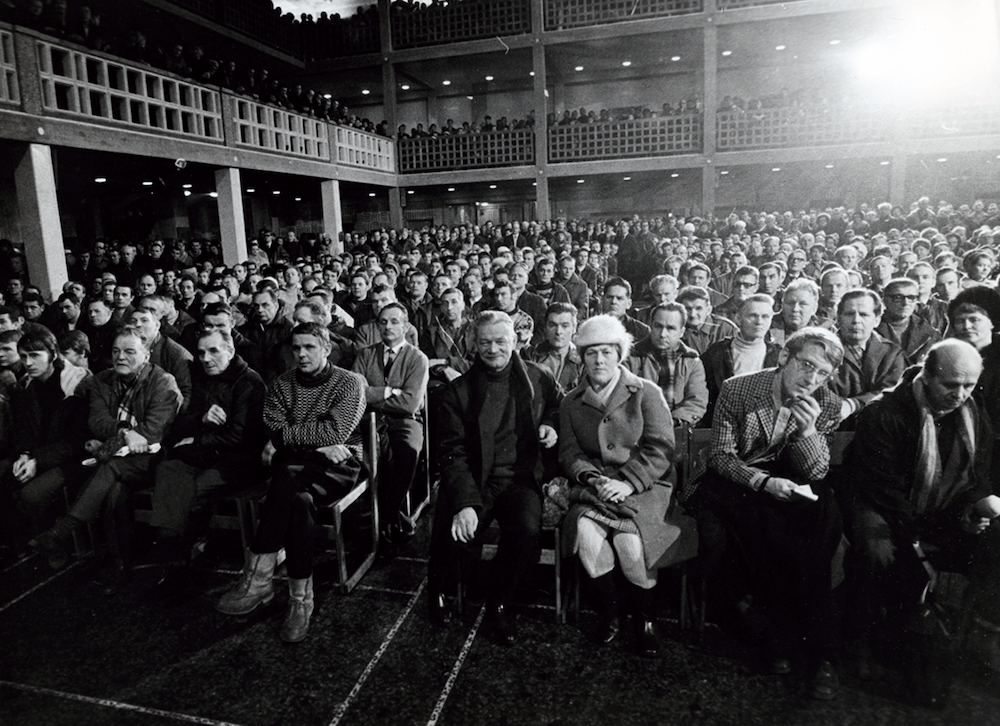
A rally during a wildcat strike of Swedish miners in 1970. (Reportage photography / Arbetarrörelsens arkiv och bibliotek from Folket i Bild / Kulturfronts arkiv)
Sweden is often held up as the gold standard of postwar social democracy. At its height, Sweden was one of the most egalitarian societies in the world, with a generous welfare state committed to assuring all its citizens a comfortable standard of living. Even compared to other European countries, which also developed relatively strong social democratic movements and welfare states, Sweden stood out for its accomplishments: achieving the lowest level of income inequality and remarkably low unemployment levels, in large part due to unrivaled redistributive policies.
How did Sweden’s remarkable welfare state come about? The answer is simple: decades of class struggle and organization.
In his classic 1983 study of Swedish social democracy, The Democratic Class Struggle, sociologist Walter Korpi challenged prevailing orthodoxies on the evolution of class conflict in economically developed societies. Against theorists who claimed that class was less and less important for conflicts over economic distribution in advanced industrial societies, Korpi argued that conflict between the classes was still central; it simply took on new forms. And against those who held that workers’ organization and parliamentary politics did little to further working-class interests, Korpi argued that trade union organization and socialist control of government allowed workers to fundamentally change the balance of power in society and extract major concessions from the capitalist class.