Japan’s Liberal Democratic Party Faces an Identity Crisis
From its origins in 1955 as a US-sponsored bulwark against the Left, the conservative Liberal Democratic Party has dominated Japanese politics for seven decades. It now faces a new electoral challenge from parties of the populist, xenophobic right.
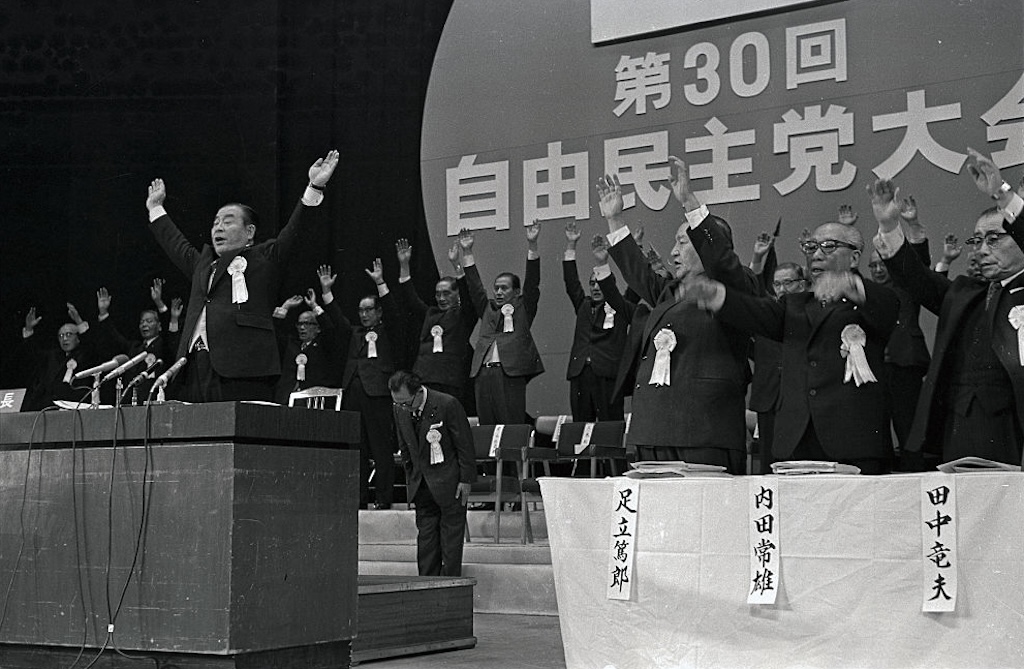
Japan’s Liberal Democratic Party is easily the most successful political party in the developed capitalist world. With its dominance now strongly contested by elements to its right, the LDP is struggling to adapt. (Bettmann / Getty Images)
Japan’s Liberal Democratic Party (LDP) is easily the most successful political party in the developed capitalist world. While other long-standing parties of government have gone into crisis and decline, from the Italian Christian Democrats to Ireland’s Fianna Fáil, the LDP has retained its position at the head of the Japanese state through all the transformations that its society has undergone over the past seven decades.
The LDP was established in November 1955, shortly after the reunification of the Japan Socialist Party (JSP) the previous month. One of the senior architects of the conservative merger commented that the new party, with its diverse and conflicting factions, would be lucky to survive ten years. Instead, the LDP went on to become the dominant ruling party throughout the Cold War and beyond.
After retaining its mantle as the ruling party for thirty-eight continuous years, the LDP was ousted from power in 1993 and again in 2009. After both electoral defeats, commentators proclaimed the long-awaited demise of an anachronistic and corrupt party. Such pronouncements proved to be premature.