Maine Governor Janet Mills Keeps Killing Worker Protections

Janet Mills, the governor of Maine, is Democratic Party leaders’ choice for the state’s key 2026 Senate race. She has spent her time in office vetoing protections for workers and tenants and taxes on the wealthy.
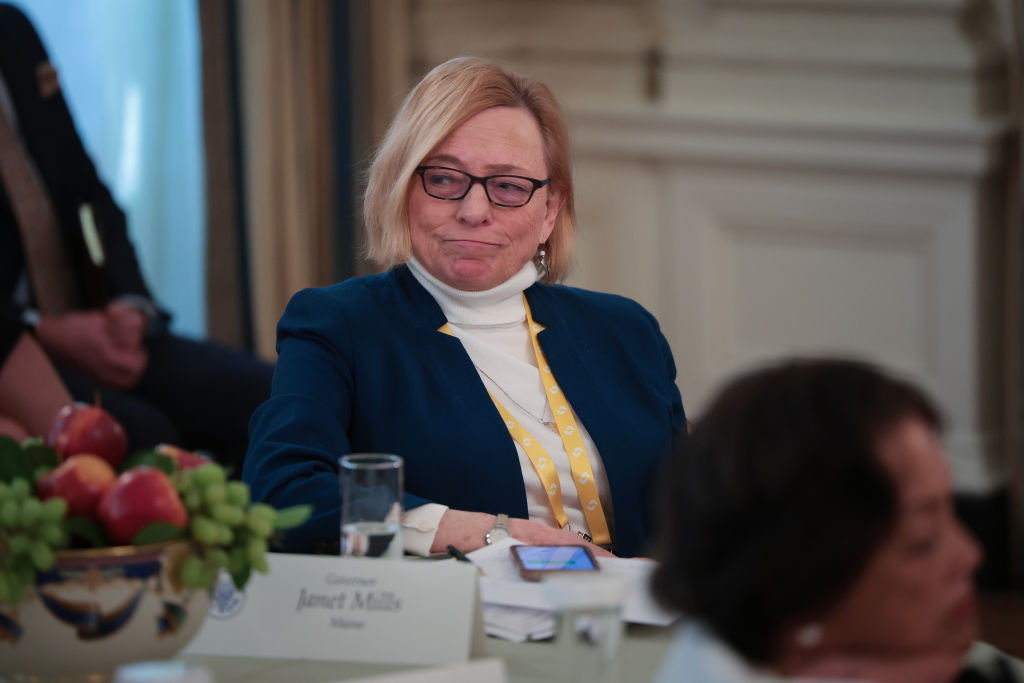
Maine’s two-term governor, Janet Mills, entered the 2026 Democratic primary race last month to take on Sen. Susan Collins as the hand-picked candidate of Senate minority leader Chuck Schumer and the Democratic Senatorial Campaign Committee. (Win McNamee / Getty Images)

At a time when Democratic voters are demanding new, antiestablishment leaders, the Democratic Party’s power brokers are pushing a seventy-seven-year-old candidate for a key 2026 Senate race who’s spent the past six years as governor vetoing collective bargaining rights for workers, tax increases on the wealthy, renter protections, and tribal sovereignty protections, according to a Lever review.

That candidate, Maine’s two-term governor, Janet Mills, entered the 2026 Democratic primary race last month to take on Sen. Susan Collins (R-ME) as the hand-picked candidate of Senate minority leader Chuck Schumer (D-NY) and the Democratic Senatorial Campaign Committee. Her opponent is Graham Platner, a forty-one-year-old oyster farmer and populist candidate running on delivering Medicare for All and breaking up monopolies. He’s faced scrutiny for past postings in online forums and a tattoo from his time in the military.

Since entering the race, Mills’s campaign has highlighted her stances on a host of progressive causes, including her labor advocacy and her efforts to protect health care and abortion rights.

But the governor’s veto pen tells a different story, say her critics.

When bills arrive on her desk, “there’s a perception that she’s mostly concerned with business interests,” said Andy O’Brien, a former Maine state representative and the current communications director for the Maine AFL-CIO union federation, speaking in his personal capacity. “She’s very good on social issues like reproductive rights, LGBTQ issues, and the environment, but when it comes to economic issues, she’s very conservative.”

Despite her Senate bid receiving endorsements from women’s groups such as Emily’s List, Mills even struck down a bill to set up a tracking system for rape kits, so that authorities could compile an inventory of DNA samples collected after sexual assaults.

Many of the governor’s vetoes benefited the state’s most powerful corporate interests, which gave more than $200,000 to Mills’s campaigns during her two runs for governor. Those industries include construction, pharmaceuticals, and telecommunications, among other powerful employer groups.

Mills’s campaign did not return the Lever‘s request for comment.

Labor Losses

Just months before she announced her Senate bid, Mills ended Maine’s 2025 legislative session by striking down a bill supported by labor groups that would have permitted farmworkers to discuss their pay and working conditions with one another without threat of retaliation from their employer, as well as file complaints to a state labor relations board.

Her veto letter explaining the decision cited concerns about “disruptions” to agricultural businesses caused by a “new regulatory burden.”

“I cannot subject our farmers to a complicated new set of labor laws that will require a lawyer just to understand,” Mills wrote in a veto letter explaining her decision, a line she has used nearly verbatim in at least one past veto letter.

Under federal labor law, most employees are entitled to discuss wages with colleagues to determine if workers are underpaid or face pay disparities, findings that can often lead to collective organizing.

But farm laborers are exempted from most federal labor laws, including those guaranteeing their right to share wage information. In a rural state like Maine, known for its potato industry, the 20,000 workers in the agricultural workforce are paid far less than employees in other sectors.

Mills, the granddaughter of potato farmers, has made blocking worker protections for these laborers a hallmark of her time in the governor’s mansion.

In 2022, Mills opposed a bill that passed the legislature that would have granted farm laborers the ability to organize together and collectively bargain, citing the same concerns she would list in the farmworker bill she struck down this year.

Then, in 2024, she blocked a measure to set a minimum wage for farm laborers because it included enforcement provisions that allowed workers to sue their employers for violations, among others. Both bills were top legislative priorities of the state’s AFL-CIO, which had endorsed her 2022 run for governor.

In 2025, Mills signed into law a pared-down version of the legislation guaranteeing farmworkers a statewide $14.65 minimum wage, but it did not include the additional enforcement provisions.

Mills also axed labor reforms for other industries.

In 2024, she killed a bill banning restrictive noncompete agreements that hamstring worker mobility. That same year, she vetoed another piece of legislation that would have strengthened workers’ collective bargaining rights by banning anti-union intimidation tactics used by employers

In previous years, she blocked efforts to stop employers from punishing employees who took state-guaranteed paid time off, killed a permitting reform bill to streamline offshore wind developments because it included a provision mandating union jobs, and vetoed a modest labor bill that would have required the state government to merely study the issue of paper mill workers being forced to work overtime without adequate compensation.

Mills also spurned the AFL-CIO on another top priority: in 2024, she vetoed a buy-American and buy-local legislation that would have prioritized local businesses for certain government contracts instead of multinational corporations.

Wealth Taxes and Rape Kits

Mills’s veto history reveals that she’s shot down other progressive and even mainstream Democratic causes, too.

For example, Maine’s renters have been squeezed by Mills’s veto pen. In 2019, she blocked reforms that would have forced landlords to give tenants more advanced notice before implementing rent hikes and evictions. She claimed this measure would have added another needless burden to businesses.

In her 2022 run for governor, the real estate industry was one of her top contributors, providing her with over $27,722 in donations, according to records compiled by OpenSecrets.

Mills also opposed a progressive 2024 tax structure that would have helped balance the state’s budget by raising taxes on wealthy residents and delivering tax breaks for lower-income households.

The previous year, the governor killed a campaign-finance reform bill that would have restricted foreign spending in elections and affirmed the state’s support for a constitutional amendment to more tightly regulate money in politics.

She has furthermore vetoed several bills designed to protect tribal sovereignty rights. She stopped legislation that would have prohibited the state’s use of eminent domain law to take away Native tribes’ land, as well as a bill that would have ensured that the Wabanaki Nations, one of the state’s Native tribes, receive the same full federal protections guaranteed to other Native Americans.

At the end of the 2024 legislative session, Mills “pocket vetoed” thirty-five pieces of legislation, a procedural move in which the governor blocks a cluster of bills altogether, rather than vetoing each one individually.

One of those bills would have created a statewide tracking system for DNA samples collected after sexual assault cases. Currently these “rape kits” are unaccounted for and difficult to track, which can hamper sexual violence investigations.

When asked about the rape-kit veto, Mills told local news she supported the aims of the bill, but that it arrived too close to the end of the legislative session for her to sign it. While reintroduced in the 2025 session, the bill did not receive her full backing and has since failed to pass.