William Goodell and the Science of Human Rights
A “flaming abolitionist” of lesser fame, William Goodell was praised by Frederick Douglass for being among the most important opponents of slavery in his time. He articulated a radical moral vision: a political theology of hope grounded in justice and reason.
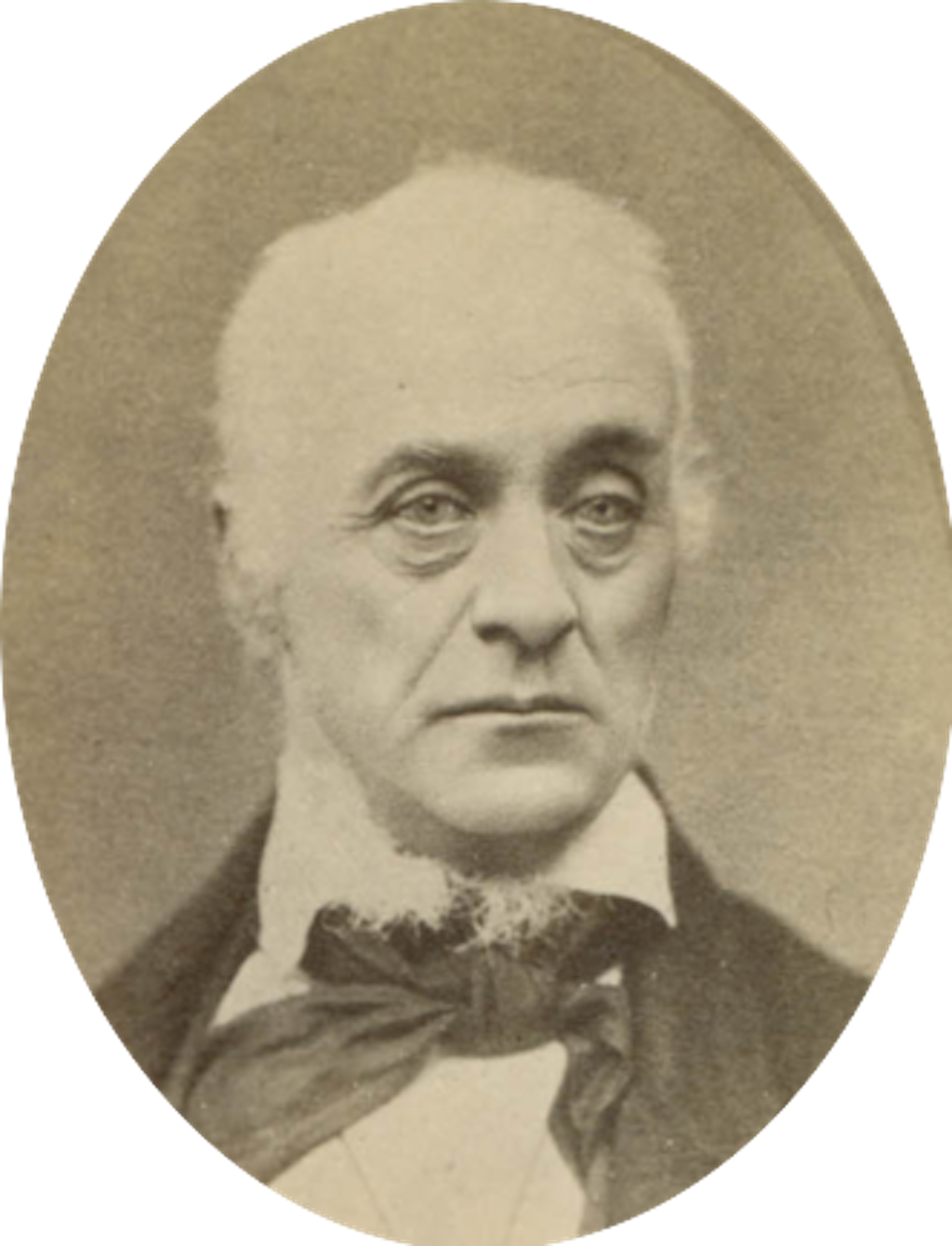
Abolitionist William Goodell saw slavery as a grave moral error. He also saw it as inextricable from class oppression, as it rested on and reaffirmed the belief that elites could do precisely as they wished with whatever they owned. (Portraits of American Abolitionists, Massachusetts Historical Society)
In the early 1830s, Asenath Nicholson’s boardinghouse in lower Manhattan was a favorite gathering spot for reformers of all stripes. One visitor described it as a “club des Jacobins” and identified William Goodell as one of the most outspoken of its “flaming abolitionists.” A leading antislavery journalist and activist from the 1820s through the end of the Civil War, Goodell is not nearly as well known as William Lloyd Garrison or Frederick Douglass. However, in 1863, Douglass himself called Goodell the person “to whom the cause of liberty in America is as much indebted as to any other one American citizen.” Over nearly a half-century as a prolific and indefatigable reformer, Goodell distinguished himself as one of the nation’s most astute critics of slavery and white supremacy, defenders of democracy, and champions of universal reform.
Orphaned in his early teens, Goodell embarked on adulthood with scant resources other than a relentless work ethic and a fine-tuned moral compass. As a young man, Goodell tried his hand at being a merchant, seaman, and bookkeeper, without achieving financial security or an intellectually satisfying position. Lacking the means to attend college, he was a devoted autodidact with an inveterate impulse to publish his ideas. His break came when an admirer of his letters and poems critiquing the Missouri Compromise in the Providence Gazette offered him the chance to edit a small religious journal. Goodell snatched the opportunity and never looked back. From the moment he traded the bookkeeper’s pen for the journalist’s typecase, he devoted his life to diagnosing the nation’s social pathologies.
As it was for many antebellum reformers, temperance was Goodell’s portal to the arena of social critique. However, he was never comfortable as a single-issue reformer. His antislavery sentiments were unwelcome in some corners of the temperance community and, by the early 1830s, abolition had become his chief cause. He was one of the founders of the American Anti-Slavery Society in 1833, and through much of the decade he collaborated closely with Garrison.