The Abolitionist Legacy of the Civil War Belongs to the Left
The US Civil War was a revolutionary upheaval that crushed slavery and stoked hopes of a broader emancipation against the rule of property. We should draw on that memory today for struggles against racism and capitalism.
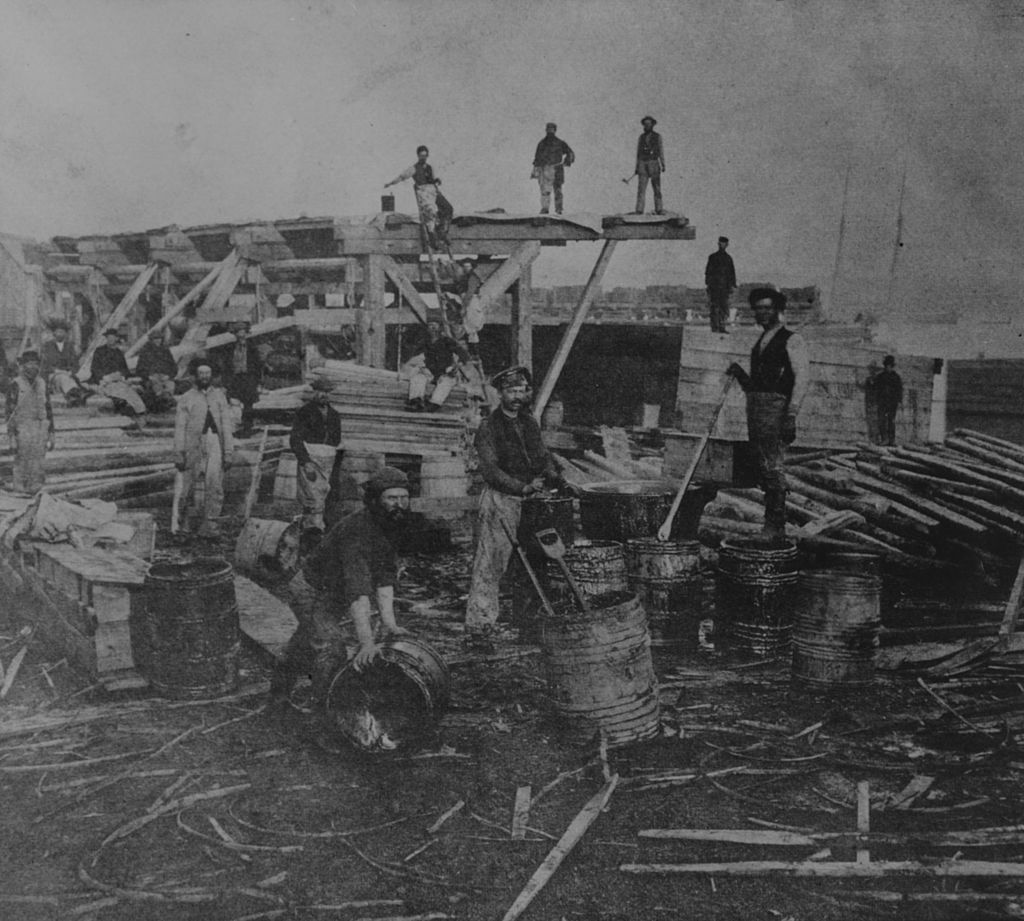
Workers working on ruins after the US Civil War, circa 1865. (Archive Photos / Getty Images)
How should we remember the Civil War? For many liberals today, the story is one of the North winning the war but losing the peace, acquiescing to a sectional reconciliation that left white supremacy intact. Racism won out, plain and simple.
But this is only part of the story. The precipitous decline in union membership, labor militancy in the workplace, and Marxist scholars in academia have conspired to obscure what historian Matthew Stanley brings to light in his recent book: that the Civil War, for black and white workers alike, was an enduring touchstone for popular struggles from Reconstruction to the New Deal, shaping class consciousness in the process.
Grand Army of Labor: Workers, Veterans, and the Meaning of the Civil War shows how industrial workers, farmers, and radicals deployed an “antislavery vernacular” in their struggles against Gilded Age and Progressive Era capitalism. They cast themselves as the natural torchbearers of the antebellum free labor ideal, which, they argued, targeted not only chattel slavery, but wage labor — heralding what Karl Marx envisioned as a “new era of the emancipation of labor.”