Antislavery Wasn’t Mainstream, Until It Was
After Republicans lost their first election in 1856, the nineteenth-century Nate Silvers were happy to declare the antislavery movement a radical, fringe idea. Four years later, Abraham Lincoln won on a radical program of change.
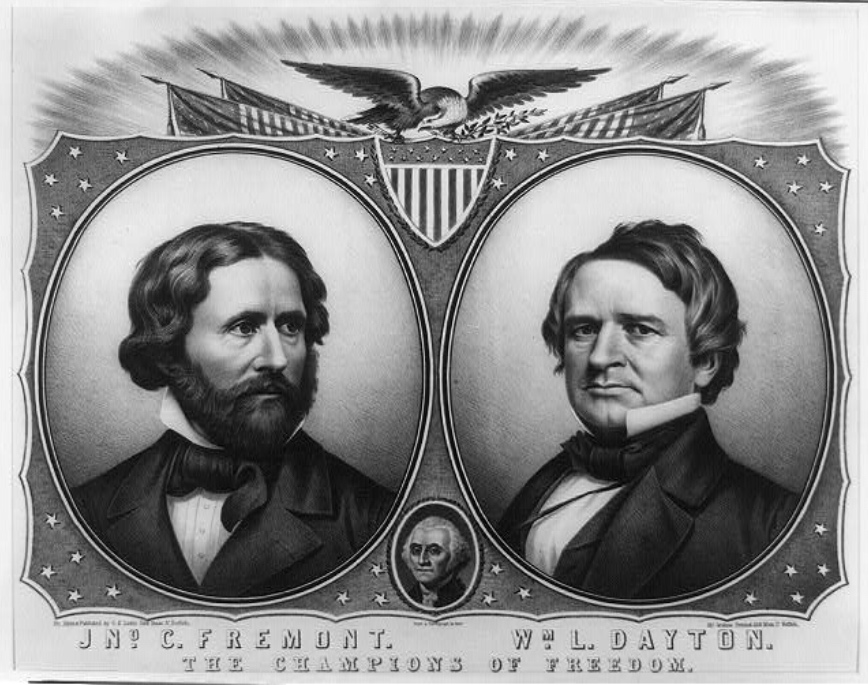
Campaign poster of 1856 Republican Candidates for President and Vice President John C. Frémont and William D. Dayton. US Senate / Wikimedia Commons
In 1856, the new Republican Party ran its first candidate for President, the western explorer John C. Fremont. He was an unusual leader for an unusual party. The Republicans’ aggressive antislavery platform, which proclaimed bondage a “relic of barbarism,” was the first of its kind for a major party in US history.
Opponents denounced the Republicans as sectional fanatics who would split the Union. Equally dangerous, their hostility to human property threatened the foundations of the social order, even beyond the slaveholding South. “Fremont,” as one conservative rallying-cry had it, was synonymous with “free-soil, free-love, and communism.”
Popular enthusiasm for Fremont — who was, of course, no real hero — was unmistakable. Republican mass meetings and rallies covered the Northern states, bringing crowds of twenty thousand or more to unlikely places like Beloit, Wisconsin, and Massillon, Ohio.