Chris Hani’s Murder Robbed South Africa of a Great Leader
Chris Hani, the South African Communist who led the ANC’s military wing, was assassinated in April 1993 before seeing the liberation he had fought for. The loss of Hani and his socialist perspective was a major blow to the new South Africa.
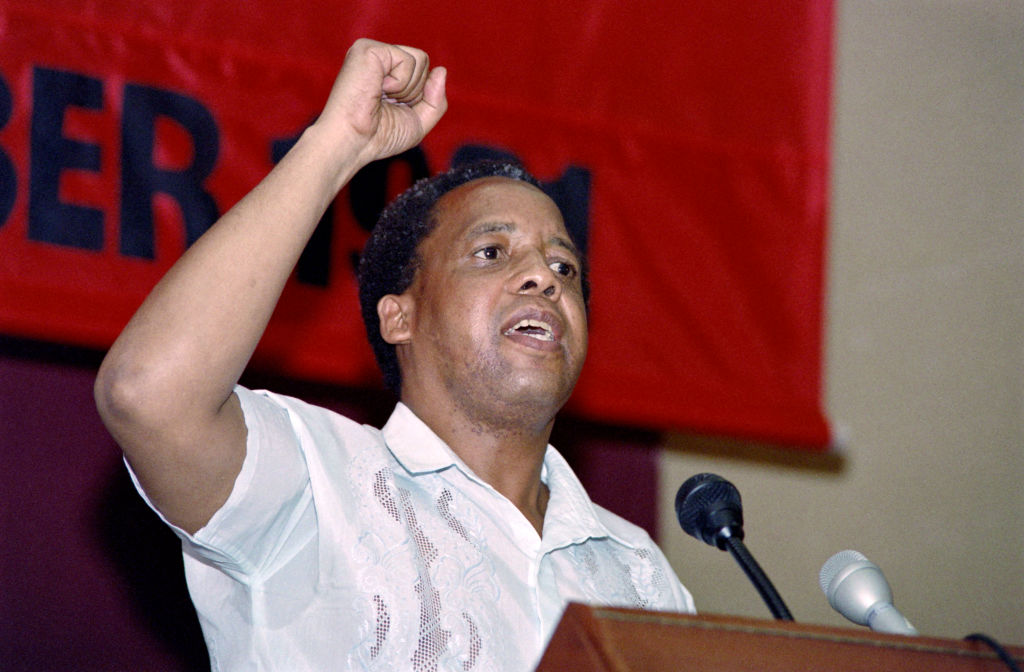
Chris Hani remained loyal to socialist ideals when many of his comrades were preparing to renounce them, including future presidents Thabo Mbeki and Jacob Zuma. His assassination in 1993 was a grievous loss to post-apartheid South Africa. (Walter Dhladhla / AFP via Getty Images)
The assassination of Chris Hani in April 1993 was a decisive moment in South Africa’s transition to democracy. Nelson Mandela used this tragic event to pressure President F. W. De Klerk to conclude negotiations and announce a date for the elections that would bring the African National Congress (ANC) to power the following year, marking the formal end of apartheid.
Hani was born in 1942, the same year as two of Mandela’s successors as president, Thabo Mbeki and Jacob Zuma. While Mbeki and Zuma both remain alive and politically active today, more than thirty years later, Hani did not live long enough to hold office in the new South Africa. He is nevertheless remembered today as one of the greatest of South Africans.
He played a leading role in three anti-apartheid organizations: the ANC, the South African Communist Party (SACP), and the armed wing that the ANC and SACP formed together in the 1960s, uMkhonto weSizwe (usually known as MK). By discussing in more detail his role in these organizations, we can show why his death was such a great loss to the new South Africa.