South Africa's Left Can Rebuild — If It Rejects Corruption
The South African left today is dominated by parties of patronage and corruption and small sectarian groupings. If the Left is to rebuild itself, it needs to break with these elements and forge a movement committed to emancipatory working-class politics.
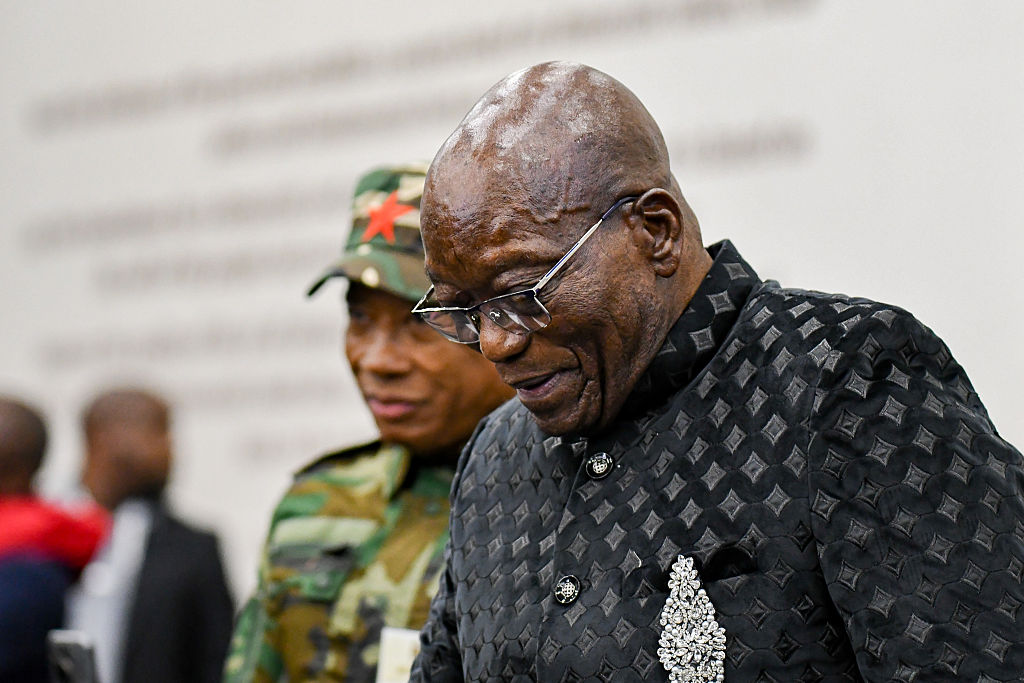
Acting always out of the narrowest and most venal of motives, former president Jacob Zuma has probably done more than any single individual in the last 30 years to damage the welfare and political prospects of working-class South Africans. (Gallo Images / Jeffrey Abrahams)
If late May’s “Conference of the Left” was any indication of what progressive forces have to offer, the Democratic Alliance (or DA, South Africa’s main center-right opposition party) should rest easy. The scare quotes are needed because the biggest parties at the gathering cannot in any sensible way be defined as left-wing. Theirs were the loudest voices in the hall, and it gave a ringing hollowness to the entire proceeding.
For a party that can’t seem to retain any senior leader for longer than two months, the uMkhonto weSizwe (MK) delegation appeared surprisingly well organized. MK was the armed wing of the African National Congress (ANC) during apartheid; the name was revived by former president Jacob Zuma in 2023 to launch his own breakaway party after the ANC moved to prosecute him for corruption. Tony “Mercedes” Yengeni — a former ANC chief whip jailed for fraud after accepting a discounted Mercedes-Benz from an arms company during a government procurement deal — addressed the gathering on its behalf on the first day. On the second, they tried to maneuver Jacob Zuma onto the podium, thankfully without success.
Zuma has probably done more than any single individual in the last thirty years to damage the welfare and political prospects of working-class South Africans. Acting always out of the narrowest and most venal of motives, he used his presidential power to hand over executive functions of government to a crime family and green-lit a statewide looting spree that gutted institutions across the board, collapsed service provision, and wiped out a decade’s worth of growth and jobs. Deposed by his own party and facing his comeuppance, he tried, with little success, to instigate a coup and then, with somewhat more success, a popular insurrection, which left hundreds dead and wiped out several billion rands more from the economy.