The Ruling Class Is Uncancelable

If the late Dick Cheney’s Never-Trump rehabilitation is any indication, Larry Summers’s public-facing career is far from over — despite not just his Jeffrey Epstein ties but his principal role in laying waste to America’s working class.
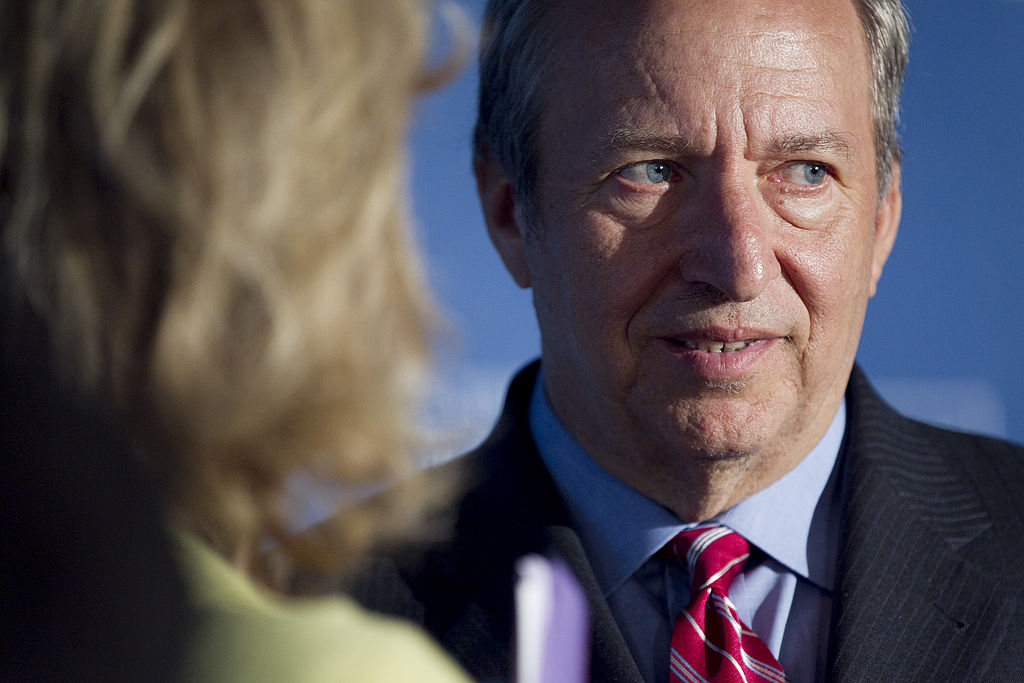
Larry Summers was able to lay waste to America’s working class and yet keep all of his fancy academic, media, corporate, and political credentials, giving him little reason to think he’d face consequences for palling around with Jeffrey Epstein. (Andrew Harrer / Bloomberg via Getty Images)

America’s system of elite impunity is more complex than the old George Carlin joke about a club with member benefits. The system has unstated rules that we learned a lot about recently, thanks to the (momentary) political death of former Treasury secretary Larry Summers and the actual death of former vice president Dick Cheney.

As President Bill Clinton’s Treasury secretary, Summers engineered the deregulation that created the 2008 financial crisis, and then, as President Barack Obama’s economic adviser, Summers made sure the postcrisis rescue plan prioritized serving the bankers throwing millions of Americans out of their homes.

Those decisions should have ended Summers’s public-facing career, but they didn’t. He was instead rewarded with Harvard University’s presidency; platforms at the New York Times and Bloomberg; gigs at a hedge fund, an artificial intelligence giant, and a cryptocurrency firm; and a distinguished senior fellowship at the Center for American Progress, where he was slated to sculpt Democrats’ agenda.

Summers has only now relinquished some of these appointments after the latest revelations about his links to convicted sex offender Jeffrey Epstein.

His downfall tells us that America’s system of elite impunity has adopted at least one new rule for its members: For the moment, you probably can’t remain in the club and have a written record asking the owner of Rape Island for advice about hunting for extramarital sex. That’s a significant shift, considering only months ago the club’s broadsheet of record was still insisting that Epstein “had a lot of powerful friends, and that he was a predator and a pedophile, and those sides of his life were mostly separate.”

But Summers’s situation also reminds us that in America, elites get to keep their club membership even if they wrought more polite and profitable forms of societal destruction — stuff like mass foreclosures and the pillaging of the working class. And it’s fair to suspect that the culture of elite impunity may have even encouraged Summers’s friendship with Epstein. After all, Summers was able to lay waste to America’s working class and yet keep all of his fancy academic, media, corporate, and political credentials, giving him little reason to think he’d face consequences for palling around with a well-connected convicted sex offender.

Cheney provides a related lesson about elite impunity, from the other side of the aisle. During much of the nearly two decades since he left office, his membership in the club appeared to be in jeopardy. After lying the United States into the Iraq War and orchestrating the executive-branch power grabs now being utilized by President Donald Trump, he spent the first few years of his post–vice presidency stoking the far right and lauding the precursor to Trump’s Make America Great Again movement. After that, he somewhat disappeared. It seemed for a time even polite society had lost its appetite for a supervillain who enjoyed being likened to Darth Vader.

But when, near the end of his life, Cheney emerged from political exile to defend his daughter’s congressional seat and to decry Trump, he was heartily welcomed back into the club. His corruption, war crimes, and authoritarian legacy were mostly forgiven, he was granted all the rights and privileges of a member in good standing, and he was posthumously valorized by club leaders as a “devoted public servant.”

He had traversed Vader’s life cycle: after running a blood-soaked imperial project, his last-minute hero gesture secured him eternal valor.

As Cheney’s ghost now glows like Anakin Skywalker, America sees the two tiers of its own society. In a country whose leaders scream about “law and order” and provide no mercy for commoners’ small indiscretions, the separate system of elite impunity makes sure that the slate can always be wiped clean for the club’s past inductees. No matter their transgressions, past members are always potential future members whose chances for beatification are like a B-movie zombie: never dead, only dormant.

That truism is likely comforting Summers right now. If past is prelude, he can look ahead to the inevitable New York Times profile once again rehabbing a disgraced club member, teeing up an inevitable comeback.

Summers’s puff piece will probably cast him as a wronged bystander in the Epstein affair. It’s a narrative already being primed today by the New York Times’ David Brooks. He insists that the push to expose the Epstein scandal — not the actual sex predator network and subsequent cover-up — is “undermining public trust and sowing public cynicism.” Brooks declares that attacks on “the Epstein class” of elites are “inaccurate, unfair, and irresponsible.”

This kind of elite agitprop will only get louder as we move closer to a full accounting of the Epstein scandal. It may end up depicting Summers as a victim and ultimately securing him his own Cheney moment that allows him back into polite society.

But the rest of us know the victims aren’t Summers or anyone else in the club — the real victims are the rest of us still ruled by an elite facing no deterrents or consequences for their worst behavior.