Mario Tronti and the Crisis of Italian Workerism
Italian workerism had a big influence on the 1960s left, highlighting the role of workers’ struggles in the evolution of capitalism. As one of its key thinkers, Mario Tronti had to make sense of a world where those struggles went into sharp decline.
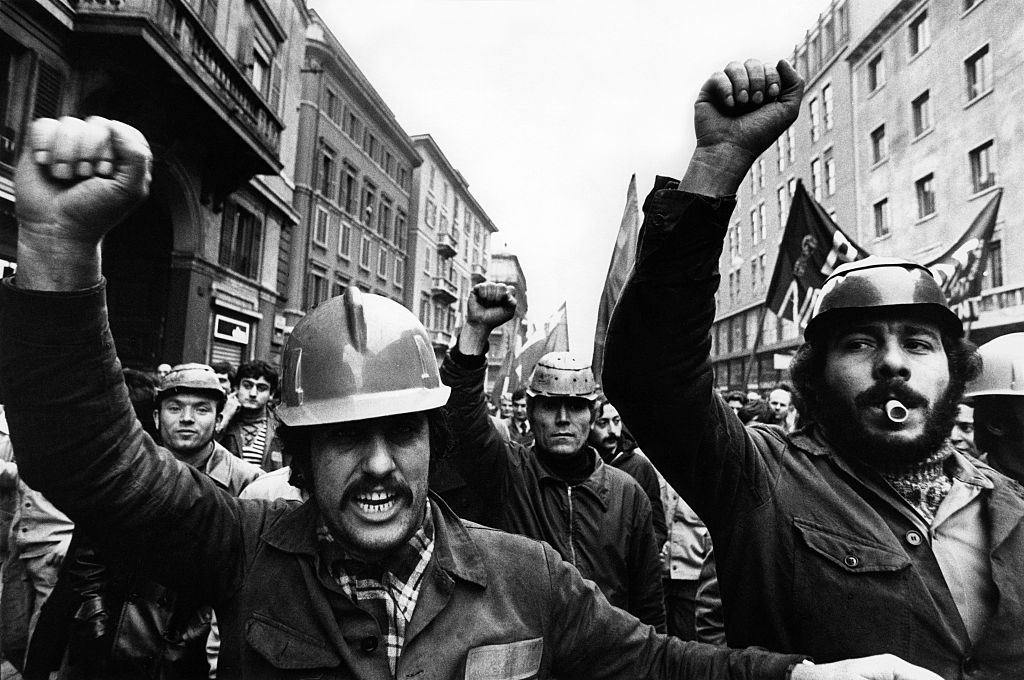
Italy’s operaismo tendency argued that workers’ struggles played a key role in the development of capitalism. On the one hand, labor is an integral part of capital; on the other, it is an autonomous force that opposes capital and provokes its responses. (Adriano Alecchi Mondadori via Getty Images)
In 1964, Mario Tronti and a group of his comrades that included Antonio Negri founded the magazine Classe operaia (“Working Class”). While this may have been a minor event amid the global turmoil of those years, it resonated with the struggles of workers in the industries of northern Italy. The journal also left a deep mark on the subsequent development of the Italian far left and the history of international Marxism.
Classe operaia was born as a split from Quaderni rossi, a journal launched in 1961 by Marxist sociologist Raniero Panzieri, to which Tronti had also contributed. It gathered a group of activists and researchers who focused on studying the composition of the working class in Italian factories. The new project of Classe operaia sought, in Tronti’s words, to move from analyzing the forms and organizations of the labor movement to engaging in “a phase of articulated intervention in the struggles” alongside workers on strike.
A philosopher by training and a political practitioner by vocation, Tronti belonged to a generation of young Italian communists for whom the events of 1956, when Soviet tanks crushed the Hungarian uprising, came as a revelation, shaking them from their default Stalinism. Although they remained within the ranks of the Italian Communist Party (PCI), these “young Marxists in formation and restless communist militants,” as Tronti later described them, began to question the leadership of Palmiro Togliatti and the direction of the PCI.