LA Tenants Have Won a Breakthrough Against Landlord Abuse
Since Los Angeles passed its tenant anti-harassment law in 2021, the city received over 21,000 complaints but referred just 35 cases for prosecution. Now Highland Park tenants have forced the first-ever enforcement through relentless organizing.
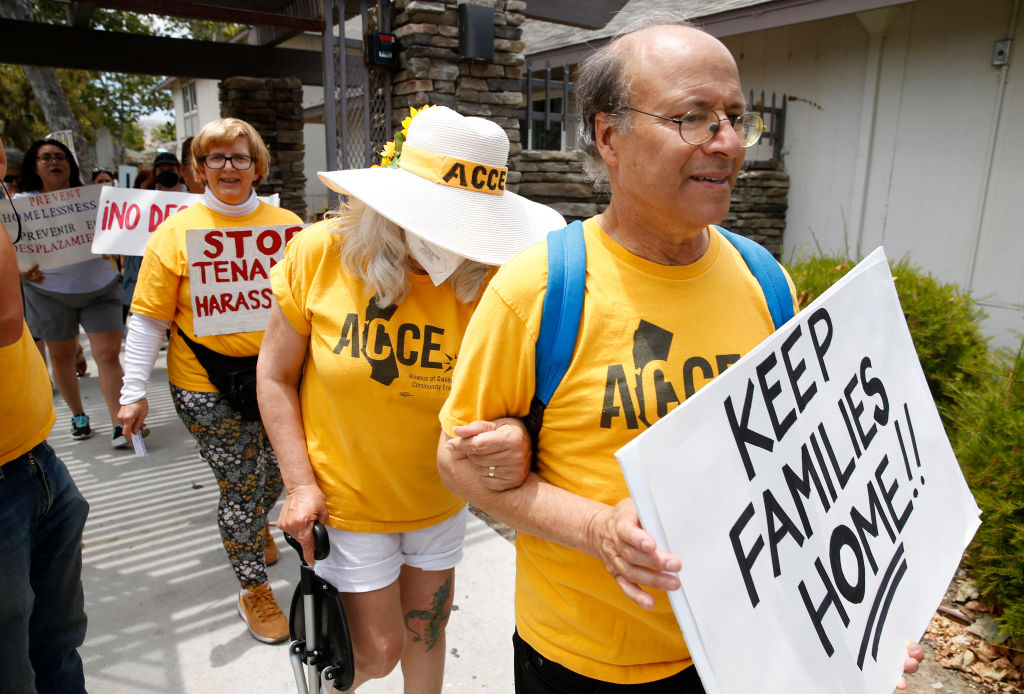
Tenant harassment is rampant in LA, where landlords use it to force out rent-stabilized tenants. Despite tens of thousands of complaints, the city’s anti-harassment law went largely unenforced until tenants organized and forced the city to act. (Jane Tyska / Digital First Media / East Bay Times via Getty Images)
This summer, a small group of tenants in the Los Angeles neighborhood of Highland Park made history when they successfully forced the Los Angeles Housing Department (LAHD) and the city attorney to enforce the city’s Tenant Anti-Harassment Ordinance (TAHO) against their landlord. The campaign, which was conducted alongside the Los Angeles Tenants Union (LATU), lasted a year. In the end, LAHD and the city attorney’s office issued the first ever citations through the Administrative Citation Enforcement Program (ACE), a fine-based noncriminal approach to nuisance abatement and quality-of-life offenses, as well as ten criminal charges against the landlord using the TAHO ordinance originally passed in 2021. Considering the extremely limited enforcement of TAHO since its passage, this was a significant victory. The charges covered a variety of offenses including defying stop-work orders, claiming occupied units were vacant to get renovation permits, disturbing tenants’ peace and quiet, abusing right of entry, and unlawful construction — offenses that are classified as harassment and therefore in violation of TAHO.
Such offenses, of course, are hardly limited to this individual building or landlord. Tenant harassment is rampant across Los Angeles, a ubiquitous feature of tenancy in a city where landlords, both big and small, consistently use a wide-ranging set of harassment tactics to force tenant turnover and to save money on maintenance and repairs. To address this problem, the Los Angeles City Council adopted TAHO in June 2021 after persistent pressure from tenants and tenant advocates, as well as a 2018 Housing and Community Investment Department investigation that documented widespread harassment of tenants of rent-stabilized units. TAHO’s passage was hailed as a victory for the tenant movement. Yet despite receiving 21,402 complaints alleging harassment between August 21, 2021 and August 31, 2025 — including coordinated complaints from tenants documenting pervasive harassment patterns by the same landlord — the housing department’s TAHO Task Force has referred only thirty-five cases to the city attorney in the four years since its passage.
The original idea behind TAHO was to employ a broad definition of harassment that reflects the versatility of landlord tactics and gives tenants greater agency to fight back. Under the ordinance, harassment encompasses withholding maintenance and repairs, removing housing services, entering tenants’ homes without proper notice, disturbing tenants’ peace and quiet or right to privacy, filing evictions on false premises, attempting to coerce tenants to move out with “cash-for-keys” offers, threatening or intimidating tenants with physical harm or with disclosing their citizenship/immigration status to the authorities, and interfering with or retaliating against tenant organizing. If tenants believe their landlord is in violation of TAHO, they may pursue a civil lawsuit or file a complaint with the housing department, which is tasked with enforcing the ordinance by investigating complaints and referring cases to the city attorney for prosecution. A violation of any provision of TAHO is punishable as an infraction or a misdemeanor, subject to financial penalty or imprisonment in county jail for up to six months.