The Economic, Political, and Cultural History of Menswear
Menswear expert Derek Guy talks to Jacobin about where Western men’s clothing traditions came from, how they have evolved, and how they're being continually reinterpreted.
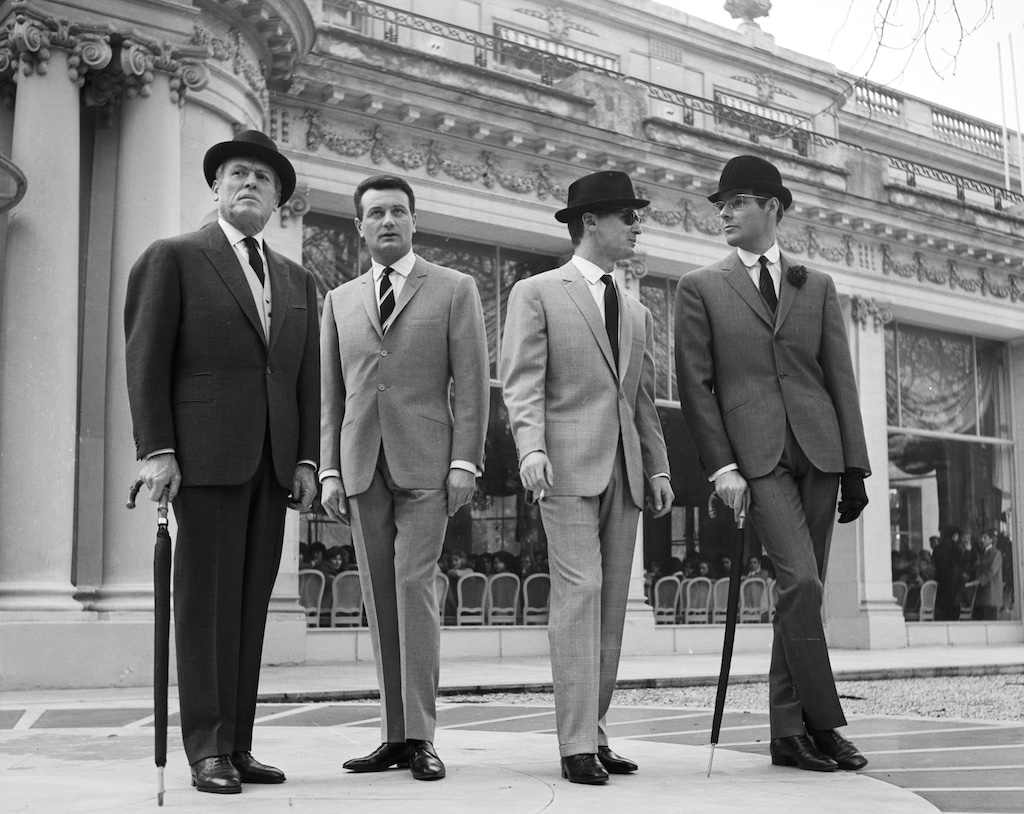
Four men model the latest two-button suits of 1963 in front of a crowded Paris restaurant. (Bettmann / Getty Images)
Perhaps no other industry is as central to the development of Marxist economic thought as the textile industry, which was a major driver of the Industrial Revolution. When Friedrich Engels looked into the conditions of the working class in England, it was on Manchester, “Cottonopolis,” that he chose to focus. And when Karl Marx took readers into the “hidden abode of production,” he inquired first into the textile mills. The history of capitalism has, in a sense, always been the history of clothes.
Derek Guy is perhaps the most prominent contemporary commentator on traditional men’s clothing — where it came from, what it means, and what makes it look right or wrong. Guy, also known as “the menswear guy,” is a freelance writer who also maintains the menswear blog Die Workwear. Guy contends that the clothes we wear are shaped by politics, economics, and culture, and if we want to understand them, we have to start by understanding their relationship to history and the ways they still hold meaning.
For Jacobin Radio’s podcast The Dig, Dennis M. Hogan talked to Guy about his interest in clothing, where Western clothing traditions came from, how they have evolved, and how they’re being continually reinterpreted. They also discussed the changes sweeping the garment industry as well as the contemporary state of menswear. This transcript has been edited for length and clarity.