What Liberals Don’t Get About the Liberal Order’s Crisis
Liberals often explain today’s disorder as the work of authoritarians or populist agitators. What they miss is that the postwar consensus depended on conservatives, whose defection has left it in crisis.
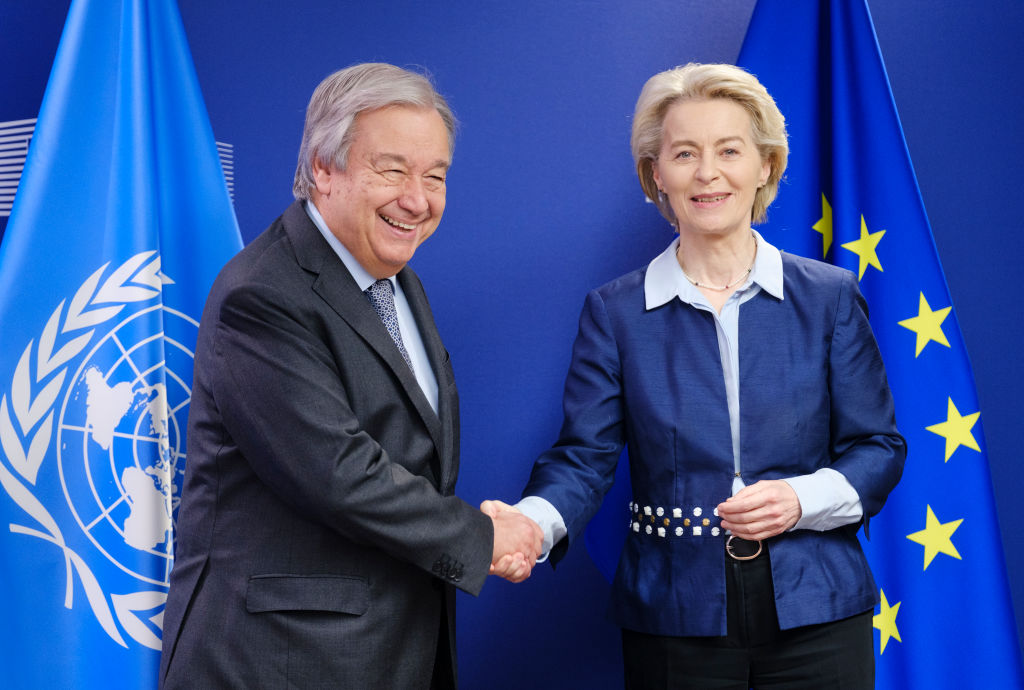
The institutions of the LIO — the United Nations, the European Union, and international legal organizations — are no longer seen as pillars of a liberal order that conservatives can live with. (Thierry Monasse / Getty Images)
China’s President Xi Jinping is fond of saying the world order is seeing “profound changes unseen in a century.” It is hard to disagree. Yet these changes go beyond the rise of China and the reshuffling of relations between great powers. They also reflect the profound impact of the rise of radical conservative politics on global affairs.
Led by the Trump administration, but with significant support from other quarters, previously solid alliances have come into question, established trade arrangements and economic orthodoxies are under assault, and once-powerful social movements such as international human rights suddenly look more like the past than the future. The destination may be uncertain, but the direction of travel seems clear.
These developments have generated a certain nostalgia for the “liberal international order” (LIO), where wistful visions of the postwar world sit alongside urgent calls to liberals to restore it somehow. This desire is understandable, especially in light of the potentially authoritarian alternatives on offer. But it is also misleading about both the nature of the postwar world and the challenges of reviving a more liberal order.