The Thailand-Cambodia War Was About Shoring Up Elite Power
Thailand and Cambodia shocked observers by going to war last month. The destructive border conflict doesn’t stem from an upsurge of popular nationalism: the political elites in both countries needed a distraction to shore up their flagging legitimacy.
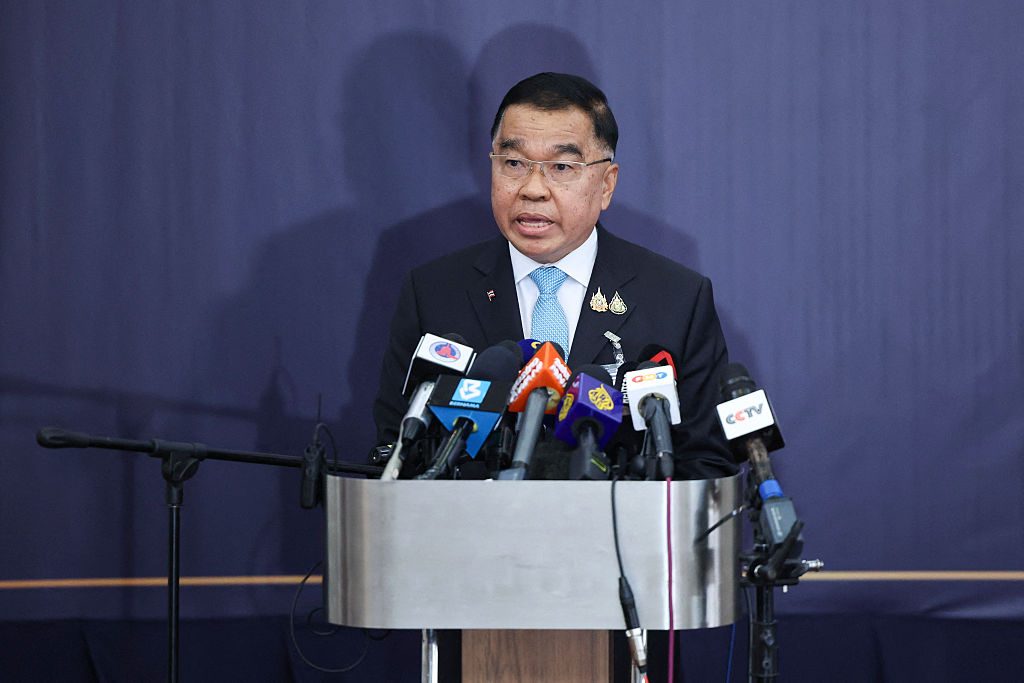
Thai deputy defence minister Nattaphon Narkphanit attends a news conference after the Extraordinary General Border Committee to discuss the border dispute between Thailand and Cambodia, in Kuala Lumpur on August 7, 2025. (Hasnoor Hussain / AFP via Getty Images)
In an escalation that shocked even seasoned observers of Southeast Asian politics, Thailand and Cambodia went to war last month. Dozens were killed, hundreds of thousands displaced. The violence ranged from infantry firefights to artillery and rocket barrages that struck civilian centers. Even jet fighters that had never been used before in actual combat were deployed.
For what? A border temple, centuries-old ruins, and vague claims of cultural pride. Yet to treat this war as an irrational spasm or a misunderstanding would be to miss the point: this was not a conflict over ancient stones, but the consequence of elite manipulation of nationalist myths for political survival.
The Thai and Cambodian ruling classes, both facing domestic crises of legitimacy, turned to the old standby, nationalism, to consolidate support and distract from their failures. The nationalist turn is not a new tactic in Southeast Asia. It is a legacy of empire, colonialism, and the modern state’s attempts to define itself against the “other” — in this case, to be found across a border drawn by French imperialists.