Cambodia Is Still Haunted by the Legacy of the Khmer Rouge
Fifty years ago today, the Khmer Rouge took power in the Cambodian capital Phnom Penh. Instead of rebuilding the country after a destructive US bombing campaign, Pol Pot’s movement plunged it into one of the last century’s most horrifying catastrophes.
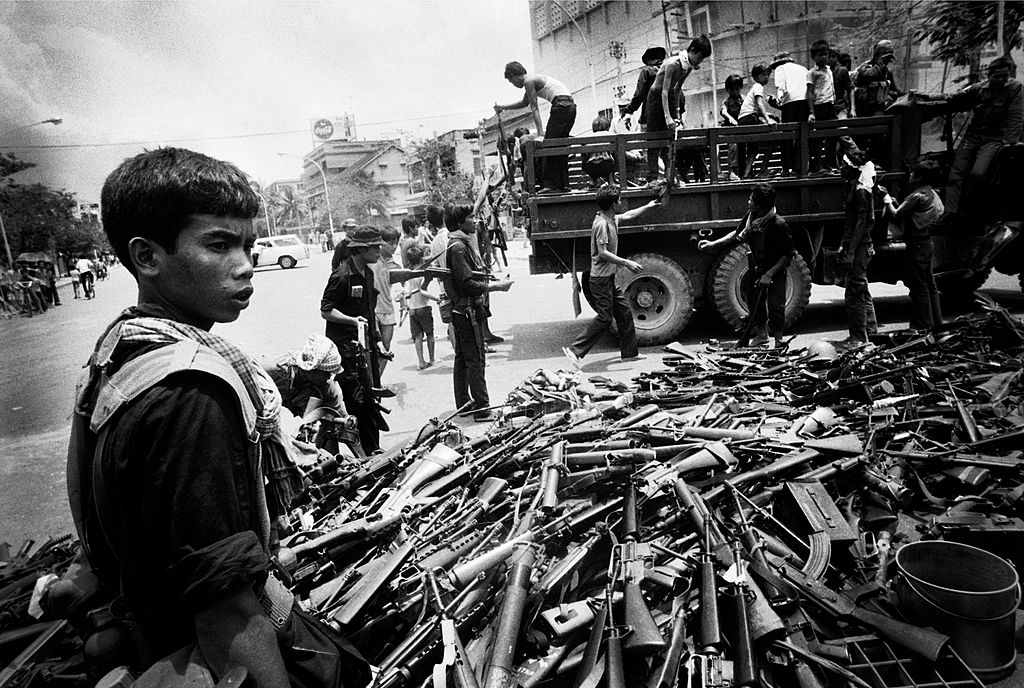
The fall of Phnom Penh to the Khmer Rouge on April 17, 1975. (Roland Neveu / LightRocket via Getty Images)
April 1975 was a pivotal moment in global revolutionary history. In the space of two weeks, communist forces changed the map of Southeast Asia and sent shockwaves around the world.
After the dramatic fall of the Cambodian capital Phnom Penh to the Khmer Rouge and the capture of Saigon by North Vietnamese forces, the Second Indochina War (1955–75) ended with Communist parties claiming victory. By the end of the year, Laotian communists had peacefully occupied Vientiane and avowedly Marxist regimes now controlled all of France’s former Indochinese colonies.
The events of this month constituted the single greatest setback to Washington’s Cold War effort. The inability of the US empire to protect its anti-Communist client states was profoundly embarrassing. Domestically, this shame would feed the conservative reaction of the Ronald Reagan era. Internationally, the United States devised a new set of tactics, including what it called “low-intensity conflicts” and a robust program of covert actions.