The Challenge of Low Birth Rates for the Socialist Project
The global birth rate collapse threatens more than economic dynamism and the viability of the welfare state. It poses a threat to the future of radical politics.
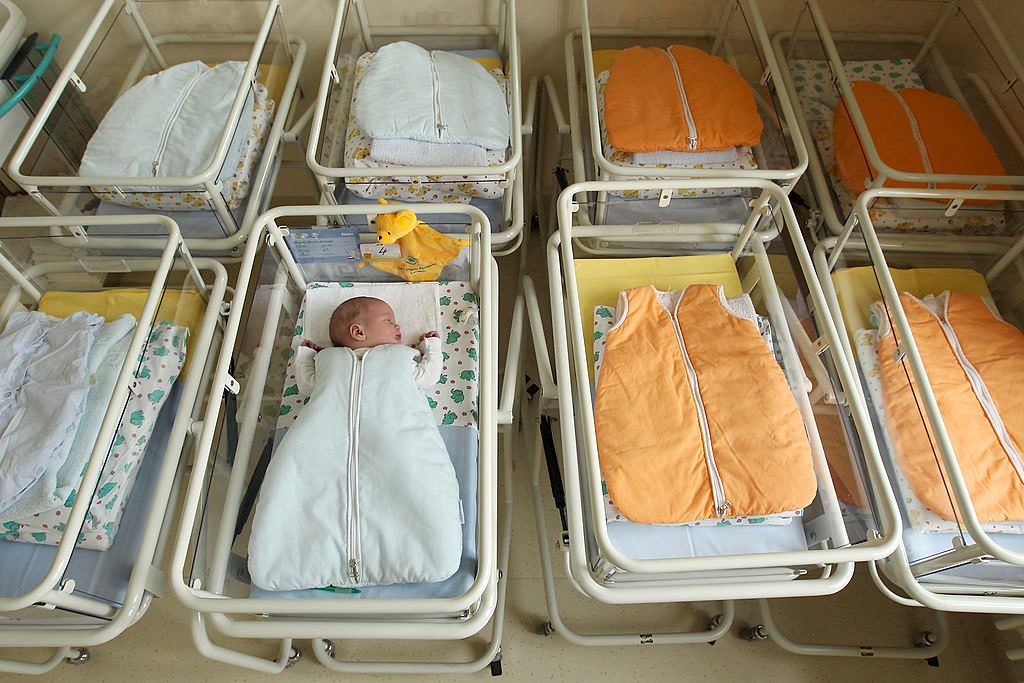
A newborn baby surrounded by empty cribs in a maternity ward in Brandenburg, Germany, on August 12, 2011. (Sean Gallup / Getty Images)
Nearly every developed country has a birthrate below the 2.1 children per woman required to maintain a stable population. The world as a whole seems poised to follow suit: the Population Division at the Department of Economic and Social Affairs at the United Nations estimates global fertility in 2024 to be at roughly 2.1 and sinking. Middle-income countries, led by China, are already in negative territory.
Much ink has been spilled on the implications of declining fertility. Economic dynamism, innovation, investment, and the welfare state are all potentially at risk, to say nothing of the entire future existence of languages and cultures. These are all things that should concern the Left, particularly the fiscal sustainability of social institutions. Low fertility rates could create unsustainable funding shortfalls in public pensions, health care systems, and other age-related social programs, cratering the prospects of our already weak welfare state.
The problems for the Left don’t stop there. Beyond these practical concerns, the fertility collapse — and the resulting rapid aging of the population — poses a severe risk to the future of socialist politics. As an ever-increasing portion of the population nears the end of their lives, we risk an epidemic of political myopia, where a diminishing portion of the population is willing to bet on a future vision of human flourishing.