How Hamas Changed Its Strategy Before October 7
In the years before the October 7 attack, there was a power struggle over strategy inside Hamas. Israel’s refusal to engage with any Palestinian leaders who insisted on ending the occupation handed the initiative to Yahya Sinwar’s militarist faction.
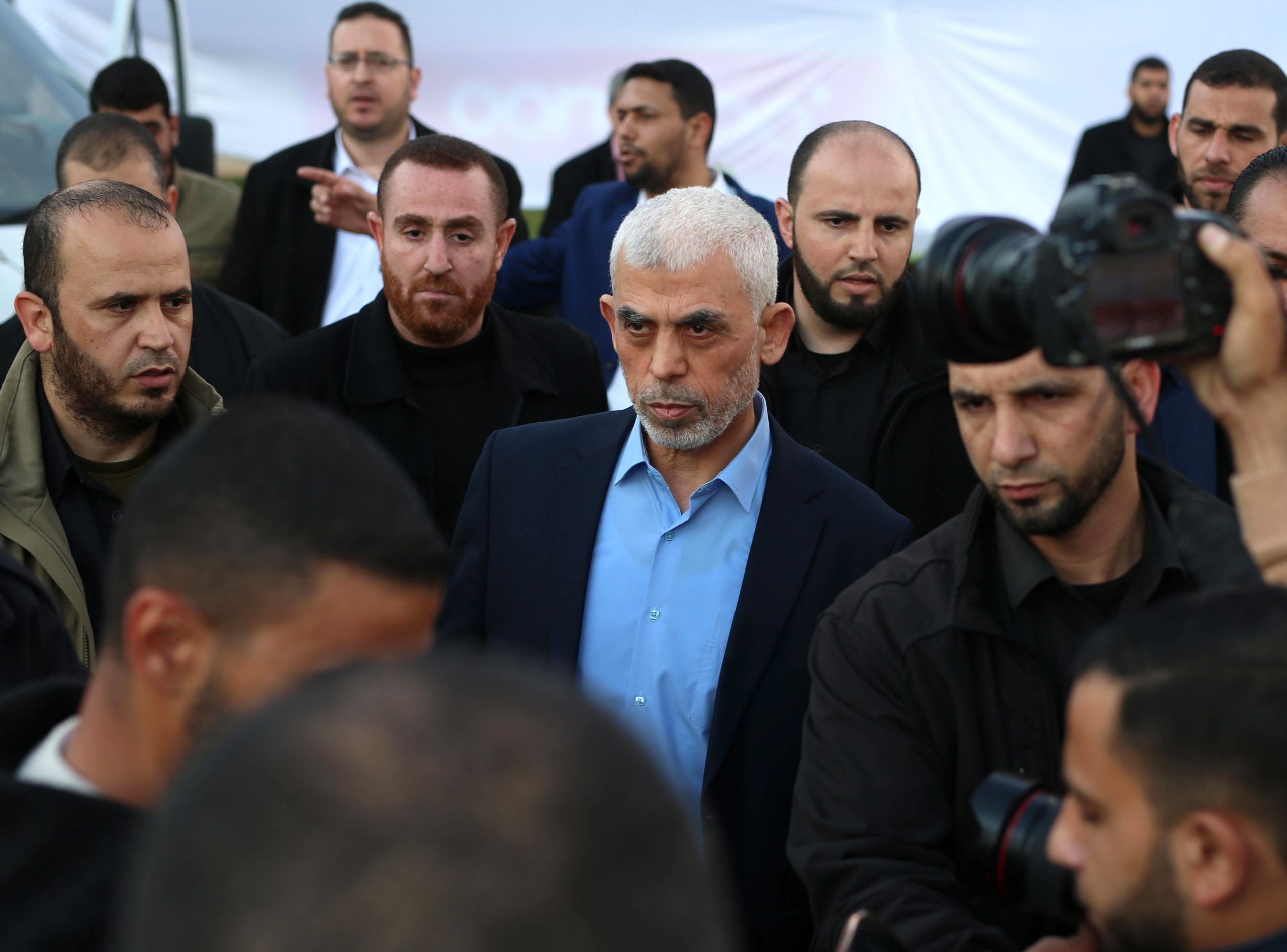
Yahya Sinwar attending a rally in Gaza City, Gaza, on April 14, 2023. (Majority World / Universal Images Group via Getty Images)
On June 25, 2006, eight Palestinian militants from the Qassam Brigades, the Popular Resistance Committee, and the Army of Islam dug their way out at the southern end of Gaza. Approaching silently, the militants took an Israeli tank unit by surprise and killed two Israeli soldiers. Another two Israelis were wounded; one of them, Sergeant Gilad Shalit, was dragged away through the border fence.
The Israelis responded by shelling the Gaza Strip, killing 1,390 Palestinians, of whom 454 were women and children. When a cease-fire was reached four months later, in November, Shalit was still nowhere to be found.
Negotiations for the release of Shalit persisted through the unofficial back channels established between Hamas and Israeli authorities. After years of trust-building, both parties were ready to reach a settlement in 2011, Shalit in exchange for 1,027 Palestinian prisoners.