How Postwar Germany Fell in Love With Israel
As Israeli tanks rolled into the Sinai in the 1967 war, West Germany saw itself marching alongside them. Even former Nazis could identify with Israeli expansionism — and used this support to absolve their own pasts.
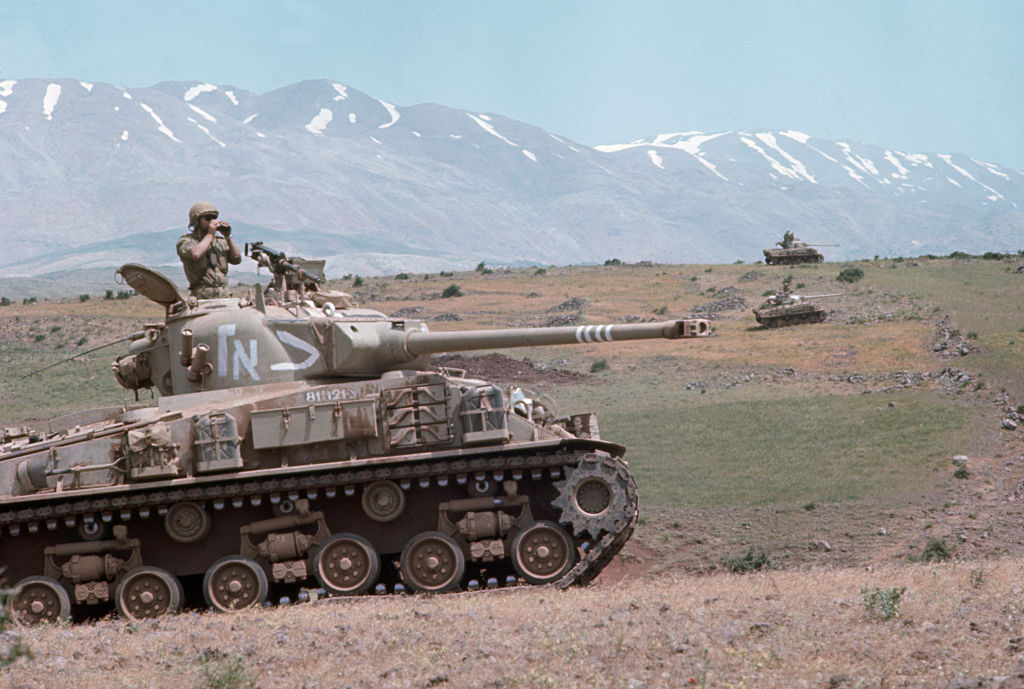
Israeli tanks advance into Syria during the Six-Day War on June 7, 1967. (Vittoriano Rastelli / Corbis via Getty Images)
Much focus is placed on American and Soviet support of Israel — superpower positioning decisive for the state’s early survival. Yet, the major backers of Israel until 1967 were the leaders of the Federal Republic of Germany, including successors of the perpetrators of the Holocaust. The new West German state was Israel’s biggest financial supporter, aided its transition from an agrarian to an industrial economy, and gave it crucial military shipments and advice.
With the foundation of a West German state in 1949, with its capital in Bonn, the government led by Konrad Adenauer of the conservative CDU (Christian Democratic Union) sought to join the emerging Western bloc. Remilitarization was crucial in this regard, breaking with the previous unanimous position among US, French, Soviet, and British leaders that Germany should be kept pacified in a manner like Japan.
With increasing Cold War confrontations, chiefly the Korean War in 1950, West Germany and the Western bloc came to agree to German remilitarization within a Western military alliance. Through this commitment, the United States and other NATO powers abandoned their support for a meaningful denazification of Germany and instead accepted the reintegration of many unreconstructed Nazis.