New York City Paraprofessionals Need More
Half a century ago, New York City paraprofessional educators waged a campaign to win their first contract as part of the teachers union. It’s a history the union can draw on to win needed advances for paras today.
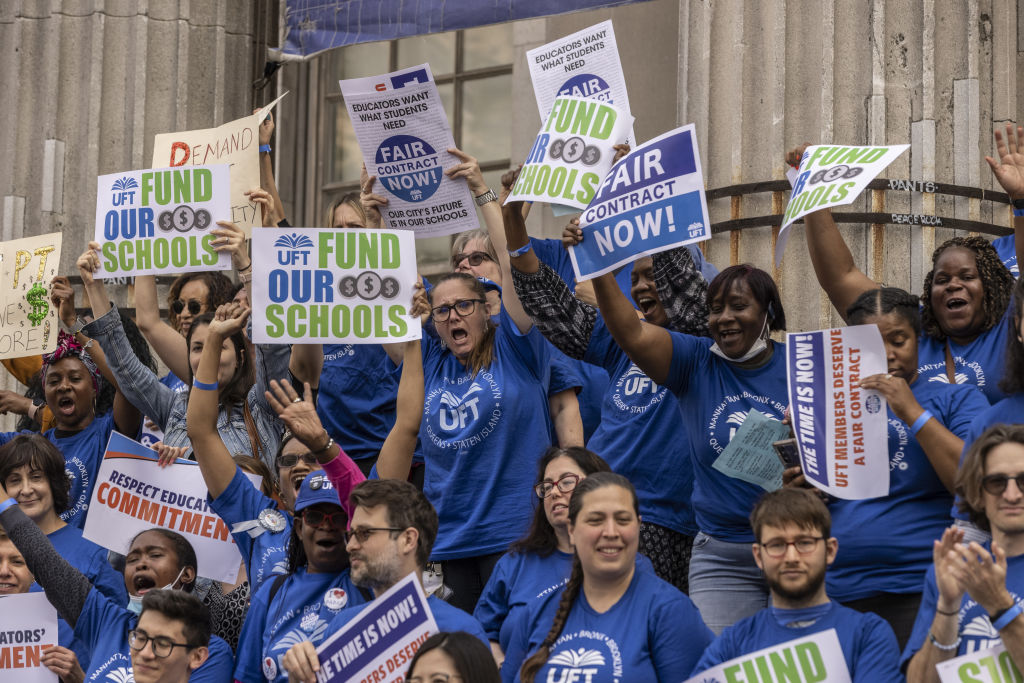
New York City public-school teachers rally for a fair contract in the Brooklyn borough of New York on Wednesday, May 24, 2023. (Victor J. Blue / Bloomberg via Getty Images)
During the first week of April, the United Federation of Teachers (UFT), New York City’s K-12 educators’ union, ran an advertisement on cable and YouTube. The thirty-second spot highlighted a shortage of paraprofessional educators caused by poor pay, which hinders recruitment and retention and leads to “devastating consequences” for students with disabilities in New York City. The ad ended with a bold-type message: “It’s time to fix the injustice. Pass the paraprofessional bill now.”
The “paraprofessional bill” has not figured in the city’s mayoral primary or the educational chaos spewing from Washington. In early April, it had not even been introduced in the New York City Council (though it has since). But the ad points to an ongoing struggle of real significance for educators, their unions, and the defense of public education.
Over eight hundred thousand paraprofessional educators, also known as teacher aides and education support professionals, work in US public schools alongside 3.2 million teachers. They provide everything from reading interventions to bilingual services to one-on-one support for students with disabilities; about half of all paras work in “special education” in some capacity. Overwhelmingly female and, in cities, working-class women of color, “paras” are far more likely than teachers to live in the districts and school zones where they work.