The United States of Money Laundering
By refusing to enforce the Corporate Transparency Act, the Trump administration has gutted key protections against money laundering and financial crime. The message to kleptocrats worldwide is clear: the US is open for anonymous shell company business.
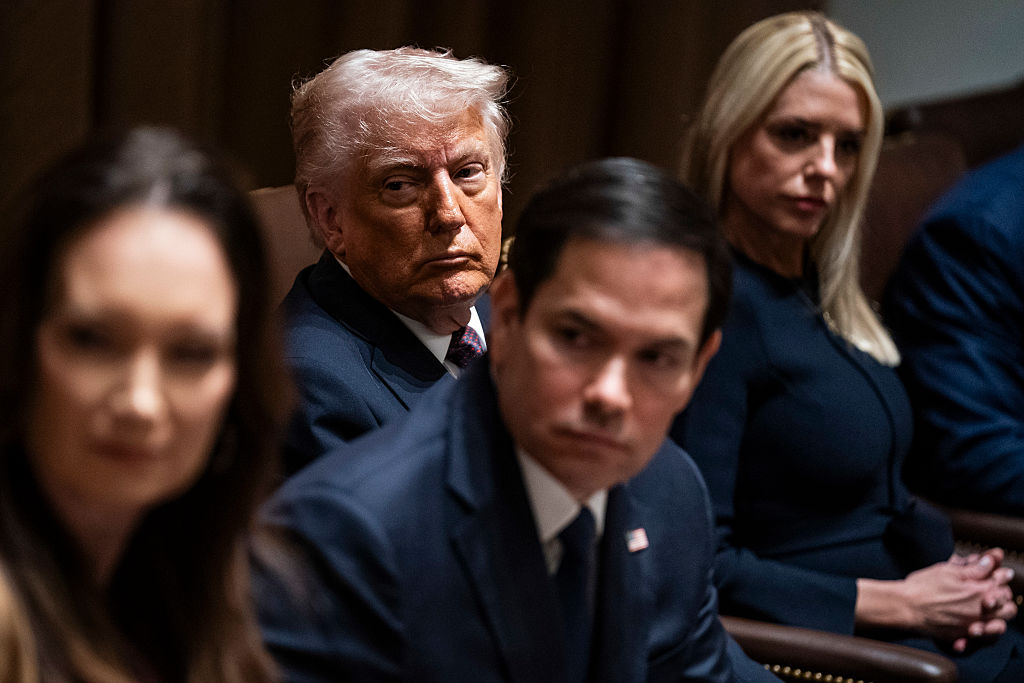
Secretary of Agriculture Brooke Rollins, President Donald Trump, Secretary of State Marco Rubio, and Attorney General Pam Bondi during a cabinet meeting at the White House on March 24, 2025, in Washington, DC. (Jabin Botsford / the Washington Post via Getty Images)
For years, the US financial system has served as a major destination for dirty money, due to glaring gaps and loopholes in the federal regulatory apparatus. The Corporate Transparency Act (CTA), introduced in 2020, was designed to close the gaps by establishing national standards to combat illicit finance and money laundering — bringing the United States up to speed with the rest of the world.
Before it could go into effect, however, the Trump administration announced last month that it would halt any enforcement of its beneficial ownership reporting requirements against US citizens or domestic companies, rendering it effectively moot.
This is not the first hurdle that the CTA has faced. Originally passed as part of the 2021 National Defense Authorization Act — legislation that then president Trump vetoed before Congress overrode him — the CTA came into effect on January 1, 2024, with its first reporting deadline set for January 1, 2025. That deadline was later extended to March 21, 2025, due to ongoing arguments concerning its constitutionality.