Marxism, an American Tradition
In the United States, like in most countries, critics of Marxism present it as a rootless foreign import. Yet both American admirers of Karl Marx and conservatives’ attacks on him have granted Marxism a distinctive place in US public life.
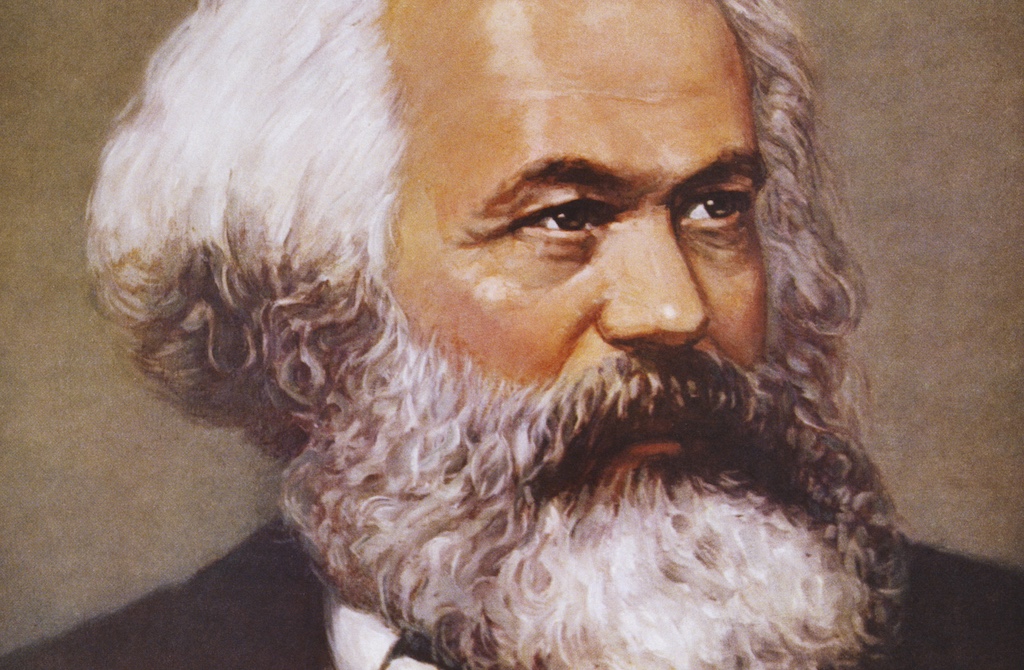
Portrait of Karl Marx. (swim ink 2 / Corbis via Getty Images)
The first American book with the word “Sociology” in its title was Sociology for the South (1854) by the Virginian anti-abolitionist George Fitzhugh. This was one of a large number of screeds from this period that sought to defend the economics, politics, and morality of chattel slavery. Writing under the subtitle “The Failure of Free Society,” Fitzhugh provided a free-wheeling and utterly bad-faith denunciation of the Northern states, their political economy, their allegedly decadent morals, and their devotion to all the false freedoms of industrial capitalism.
Painting this stark picture in turn allowed Fitzhugh to make the core claim of his book: all the failures of free Northern society existed as the mirror opposite of a Southern slavocracy that Fitzhugh felt was the best of all possible worlds. Where other Southern ideologues advanced the limited argument that decisions on slavery should be left to individual states, Fitzhugh went on the offensive and said all states — both South and North — should embrace slavery and its allegedly harmonious social order. Slavery would cure the North of all the social ills that free capitalist labor had created there.
Even at the time, this was a bizarre argument to make. It is not clear if even Fitzhugh himself believed it. His claims about the North were fabricated wholesale and based on selective conjecture; Fitzhugh did not actually visit any Northern state until after the book’s success. His second book, Cannibals All! Or Slaves Without Masters, published three years later, directly contradicts much of the earlier work. Then as now, American ultraconservatism is built on a foundation of bad-faith arguments, illogical claims, nonsense rhetoric, and straight-up weirdness. Bubbling under the surface, though, Fitzhugh shared one other key trait with his fellow conservatives; he was addicted to Karl Marx (and like the most incorrigible addicts, he remained in perpetual denial about that).