Jeff Bezos Is Scared to Have an Open Debate on Economics
By banning perspectives critical of the status quo, Washington Post owner Jeff Bezos is turning a major news outlet into a mouthpiece for market fundamentalists. If the ideas he champions are so defensible, why is he squeamish about debate?
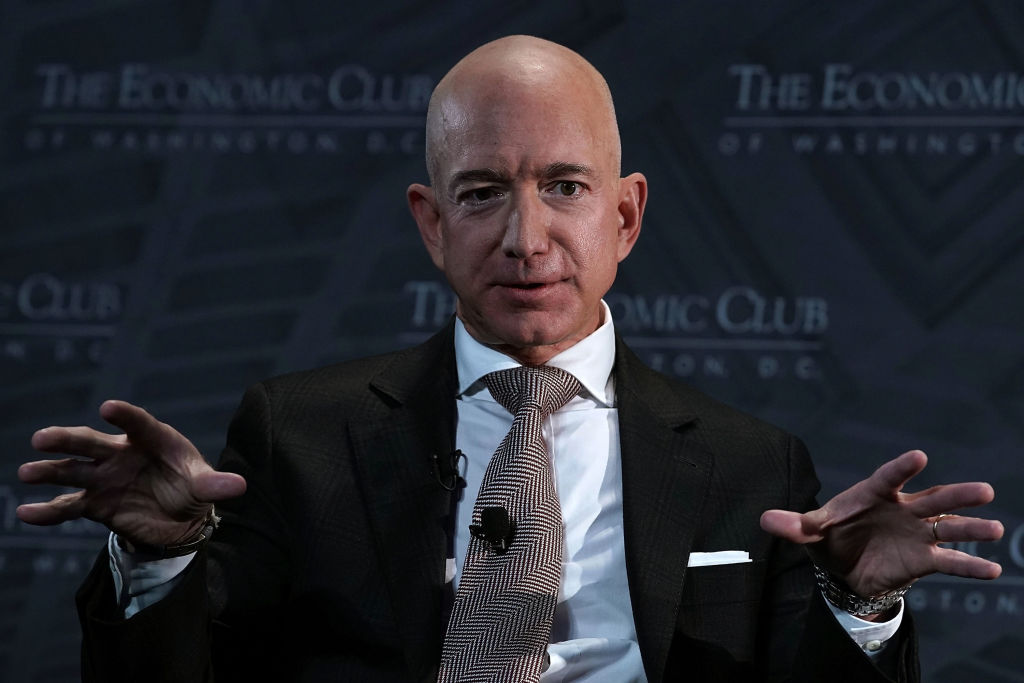
Jeff Bezos speaks at the Economic Club of Washington on September 13, 2018, in Washington, DC. (Alex Wong / Getty Images)
Jeff Bezos has finally dropped the pretense. The world’s third-richest man has decreed that the Washington Post, which he purchased back in 2013, will no longer publish opinions that challenge free market economics. With a casual diktat that would make William Randolph Hearst blush, Bezos has laid bare what critics have long suspected: when billionaires buy newspapers, they aren’t just after profitable investments; they’re buying ideological bodyguards.
In 2019, democratic socialist presidential candidate Bernie Sanders dryly noted that the Post had covered him in an extremely negative fashion and speculated that “maybe there’s a connection” between this fact and the Post being owned by Bezos. At the time, this speculation was widely derided as an absurd and offensive conspiracy theory.
Two years later, right-wing blogger and Peter Thiel protégé Curtis Yarvin expressed the same certainty about the strength of the firewall between WaPo’s editors and its mega-billionaire owner. In a debate with Yarvin in fall 2022, I suggested that his obsession with the liberal biases of college-educated journalists missed the bigger picture. Surely, I thought, what mattered most was the biases of owners. In response, Yarvin insisted that the Post was a shining example of owners’ noninterference, so “autonomous” that Bezos was less the newspaper’s owner than its “sponsor.”