The Eclipse of USAID by Digital Imperialism
In an era when power is increasingly defined by digital infrastructure and platform dominance, USAID was already losing relevance to the high-tech actors shaping US foreign influence, even before the recent attacks by the Trump administration.
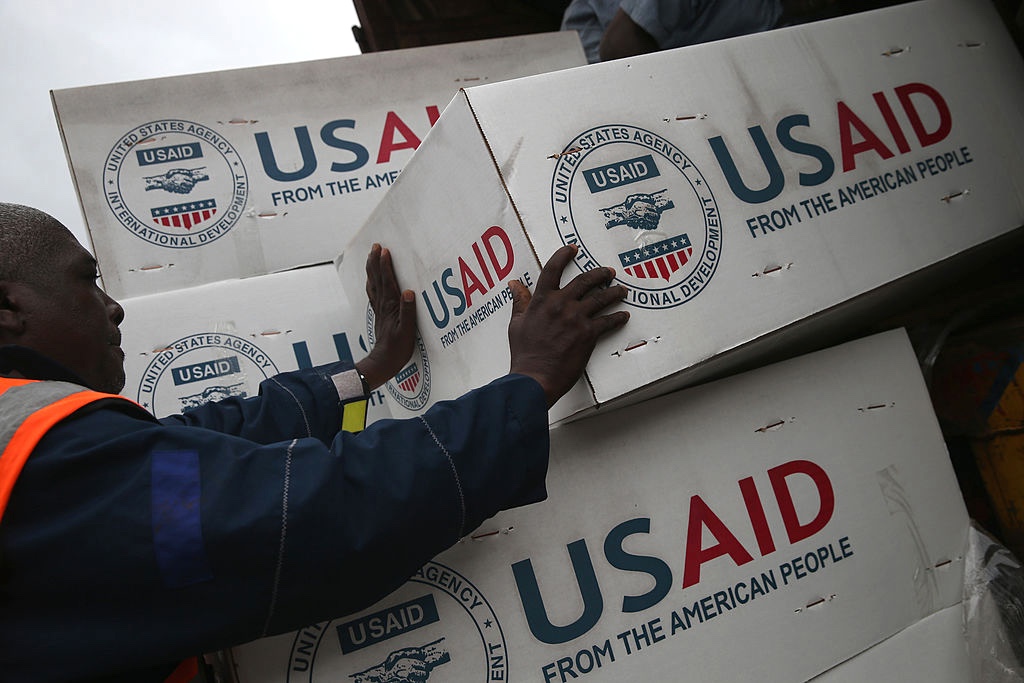
Workers unload relief aid from a cargo flight organized by USAID on August 24, 2014, in Harbel, Liberia. (John Moore / Getty Images)
On Tuesday, February 5, 2025, the second Trump administration announced that it was slashing the United States Agency for International Development (USAID), pulling almost all of its employees from their jobs. Response from the liberal left was swift: outrage over and stark warnings of the suffering that the precipitous dissolution of numerous humanitarian projects will cause. The abrupt halt will indeed inflict immense and far-reaching suffering on millions. USAID-funded projects, whether under the banner of humanitarian aid or development cooperation, have created dependencies that are difficult to untangle — certainly not overnight.
Along with the understandable outcry over the expected humanitarian impacts came lamentations that the dissolution of USAID will accelerate America’s demise on the global stage, diminish global influence, and concede power to China. During his first administration, the traditional US foreign policy establishment was horrified by Donald Trump’s erratic approach to international affairs — his open disdain for NATO, his skepticism toward long-standing alliances, and his apparent disinterest in maintaining the subtle machinery of US soft power. Now, during the second Trump administration, USAID, which had long functioned as an integral part of this machinery, is one of the first institutions that is being slashed.
But what if USAID had long been slipping toward redundancy by the shift from development imperialism to digital imperialism?