Saudi Arabia Is Still One of the Most Repressive Countries
Pundits like Thomas Friedman claimed that Saudi crown prince Mohammed bin Salman was a reformer committed to liberalization. In reality, the Saudi kingdom remains unflinchingly authoritarian, combining traditional and ultramodern repressive techniques.
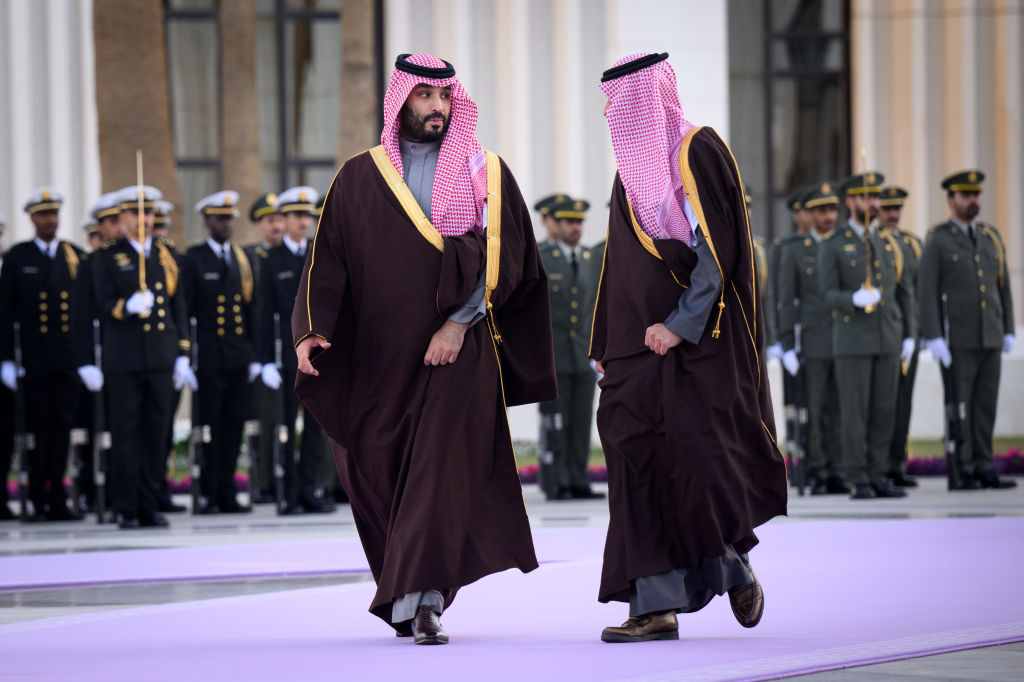
Mohammed bin Salman, crown prince of Saudi Arabia, emerges from the Al Yamamah Palace on February 3, 2025, in Riyadh, Saudi Arabia. (Bernd von Jutrczenka / picture alliance via Getty Images)
Saudi identity is a complex mix of Wahhabi-Salafism — a sectarian Islamic cult based on strict observance of certain behaviors in dress, deportment, gender separation, prayer observance and so forth — alongside recognition, not to say worship, of the Al Saud family as guardians and promoters of the cult.
The relationship between Wahhabi-Salafism and power, however, is far from stable. Wahhabi divines who have their own scholastic and collegiate tradition were often resistant to the introduction of new ideas into the kingdom and to many aspects of the rampant program of modernization undertaken in the wake of the petrodollar bonanza after 1970. The 1979 seizure of the Grand Mosque in Mecca was the most conspicuous example of this resistance.
Not all members of the Al Saud family are personally religious in the Wahhabi-Salafi sense. Before the rise of Mohammed bin Salman (MBS), the most high-profile member of the family was Prince Bandar bin Sultan, an accomplished diplomat and jet-setter whose parties in Washington were legendary and whose preference for Western-style clothes and general demeanor appear very different from that of the Wahhabi-Salafists.