Political Repression Isn’t What It Used to Be
Despite the efforts of Donald Trump and the Right to bend the state in a more repressive, less free direction, society seems more and more resistant to these efforts.
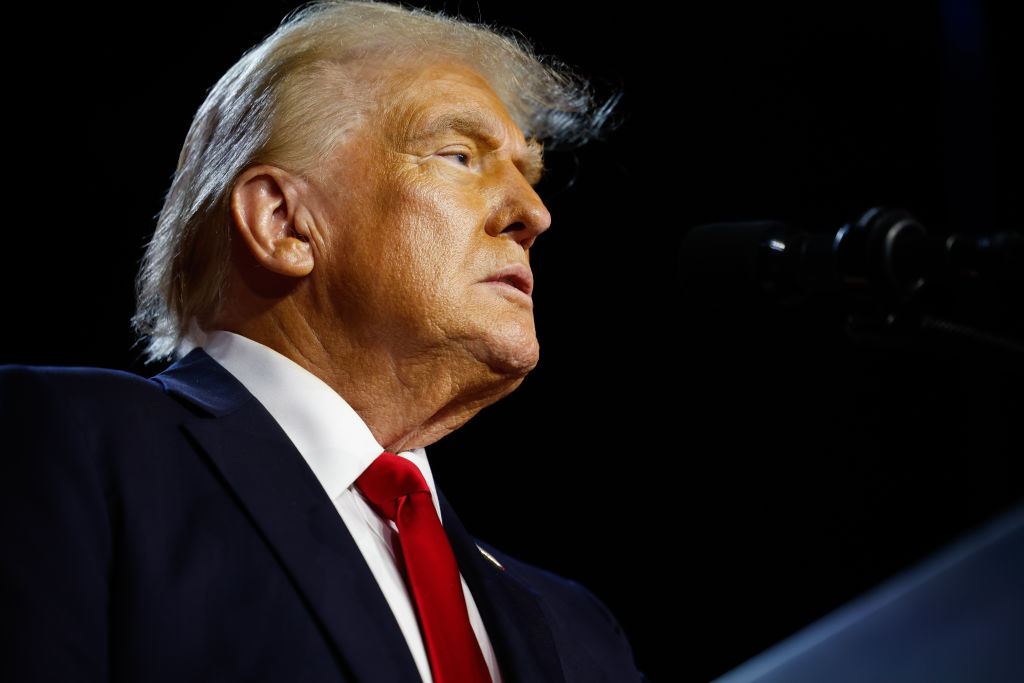
Donald Trump speaking during an election night event at the Palm Beach Convention Center on November 6, 2024, in West Palm Beach, Florida. (Chip Somodevilla / Getty Images)
One of Karl Marx’s most persistent points, from “On the Jewish Question” forward, is that despite the formal freedoms that we enjoy in a liberal state — the right to freedom of speech, for example, or freedom of religion — we are socially and in fact unfree. (As Bruno Leipold reports in his Citizen Marx, a lot of Marx’s evidence for this claim, particularly about religion, came from travelers’ reports to America, which Marx read assiduously.) That is what it means to live in a liberal society, says Marx: formally free, actually unfree.
But lately I’ve been wondering whether we are not living in the reverse. Despite the efforts of right-wingers to bend the state in a repressive, less free direction, society seems more and more resistant to these efforts. Producing a situation that is, in some sense, the mirror image of what Marx described.
When I compare the current moment, since Donald Trump first rose to power, to previous moments of political repression and coercion and intimidation, it’s hard not to conclude that, at both the national and the state and local levels, this may be the weakest, most flailing effort to control society and individual and collective behavior in American history.