No, the New Deal Wasn’t Racist
New Deal legislation was not without significant shortfalls. But where it succeeded, it created broad, universal programs that disproportionately helped America’s most exploited and oppressed workers.
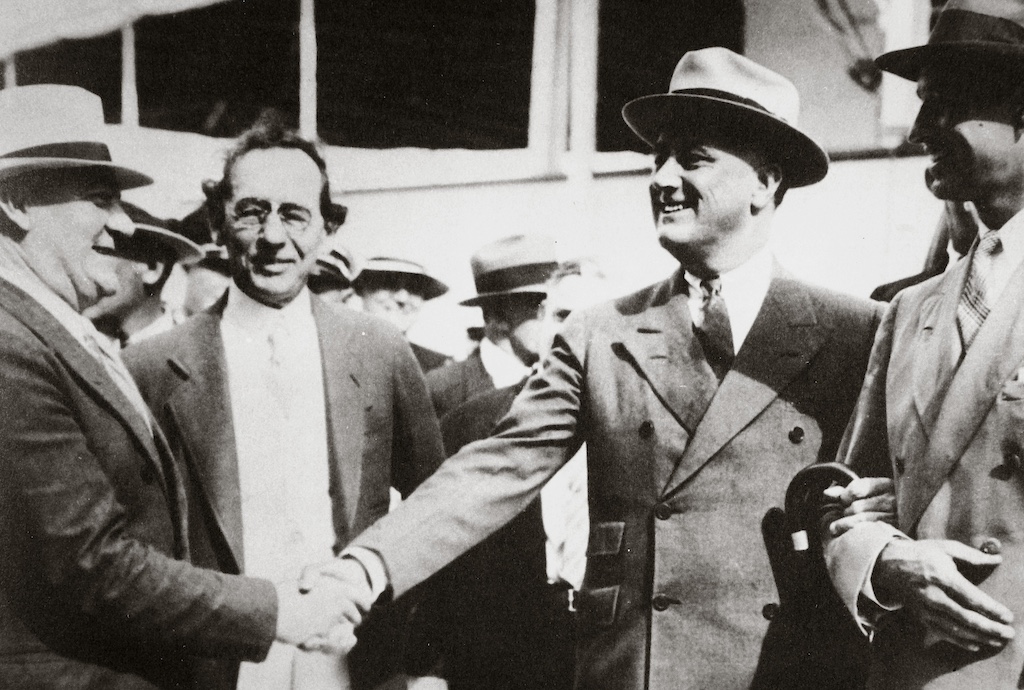
Franklin Delano Roosevelt shaking hands with General Hugh Johnson, one of the key figures in the New Deal strategy to bring the US out of the Great Depression, in Miami, Florida, April 13, 1934. (Historica Graphica Collection / Heritage Images / Getty Images)
At the 2019 SXSW conference, Representative Alexandria Ocasio-Cortez, one of the most recognizable figures in contemporary progressive politics, sat down for an interview with then Intercept senior editor Briahna Joy Gray. In a wide-ranging discussion delivered to a packed auditorium, Ocasio-Cortez focused on strategies and challenges for contemporary progressive politics. Somewhere in the middle of their discussion, Gray asked Ocasio-Cortez how she thought progressive politicians should be trying to build support for broad social welfare programs given the “emergent narrative that these kinds of New Deal–style universalism programs are not for diverse communities.”
According to Gray, a major challenge for organizers is communicating the utility of programs for those who have been “insufficiently served by them in the past.” Ocasio-Cortez responded that she and her allies were conscious of needing to avoid the kind of “revisionist history” that had led many to “act as though the New Deal wasn’t racist.” Ocasio-Cortez underscored this point:
The New Deal was an extremely economically racist policy that drew literal red lines around black and brown communities. Basically, it invested in white America. What it did was that it allowed white Americans to have access to home loans that black and brown Americans did not have access to, giving them the largest form of intergenerational wealth, which is real estate. So this really accelerated many parts of an already horrific racial wealth gap that continues to persist today. So how do we turn this around?