Jim Clyburn Is Wrong About FDR and the New Deal
Was the New Deal bad for black people? Rep. Jim Clyburn says it was. He’s wrong — and it’s time we set the record straight about both the New Deal’s real flaws and its overall hugely egalitarian impact on workers of all races, including black workers.
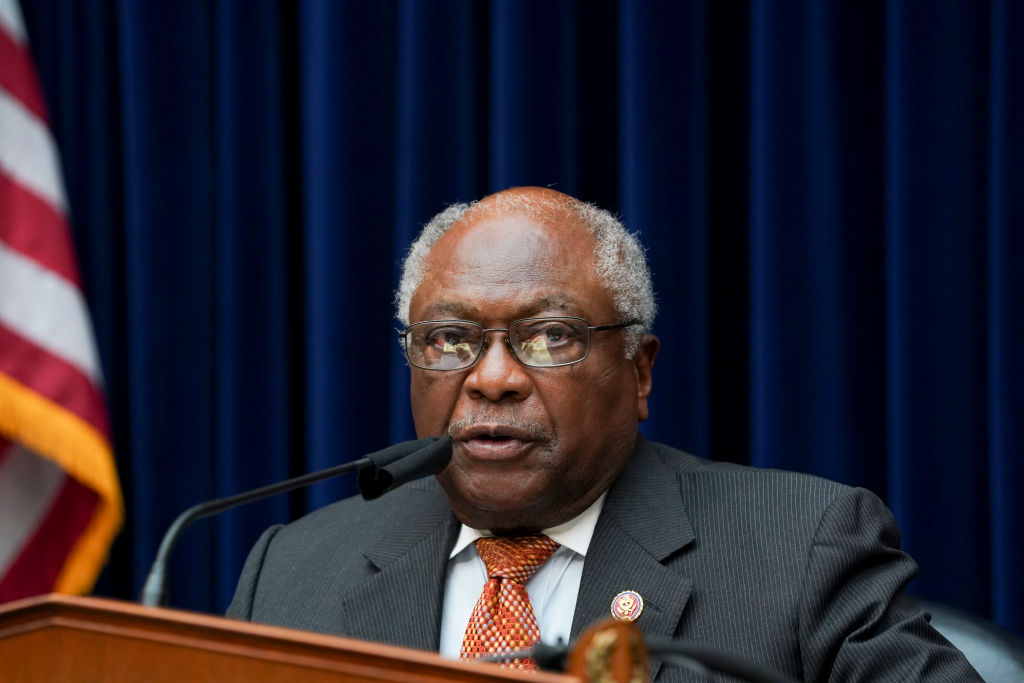
House majority whip Jim Clyburn on September 23, 2020 in Washington, DC. (Stefani Reynolds / Pool-Getty Images)
Is Joseph Robinette Biden Jr the new Franklin Delano Roosevelt? Many people would certainly like to think so. Prominent among them is his chief of staff, Ron Klain, who has enthusiastically pushed the comparison.
Many on the Left are, of course, skeptical of such premature canonization. But skepticism has also come from another direction. Recently, House majority whip Jim Clyburn argued that “if [Biden’s] going to have credibility, [he] must be much closer to Harry Truman than to Franklin Roosevelt. . . . I hear people talking about Joe Biden all the time comparing him to FDR. FDR’s legacy was not good for black people.”
Clyburn’s skepticism about FDR’s legacy for racial inequality vocalizes what’s become a common theme in liberal-progressive views of the New Deal. While FDR’s administration was the lodestar for liberal ideals into the 1970s, recently, both scholars and activists have argued that the New Deal in fact served mainly to entrench racial inequality in the United States through its exclusions of black workers. In the words of political scientist Ira Katznelson, many of its programs functioned as affirmative action for white people.