No One Seems to Have an Answer to Germany’s Far Right
Electoral gains for the Alternative für Deutschland have shown that the far right can win in Germany. Mainstream parties are touting broad coalitions to keep the AfD from power — but they show little sign they can resist its antiestablishment messaging.
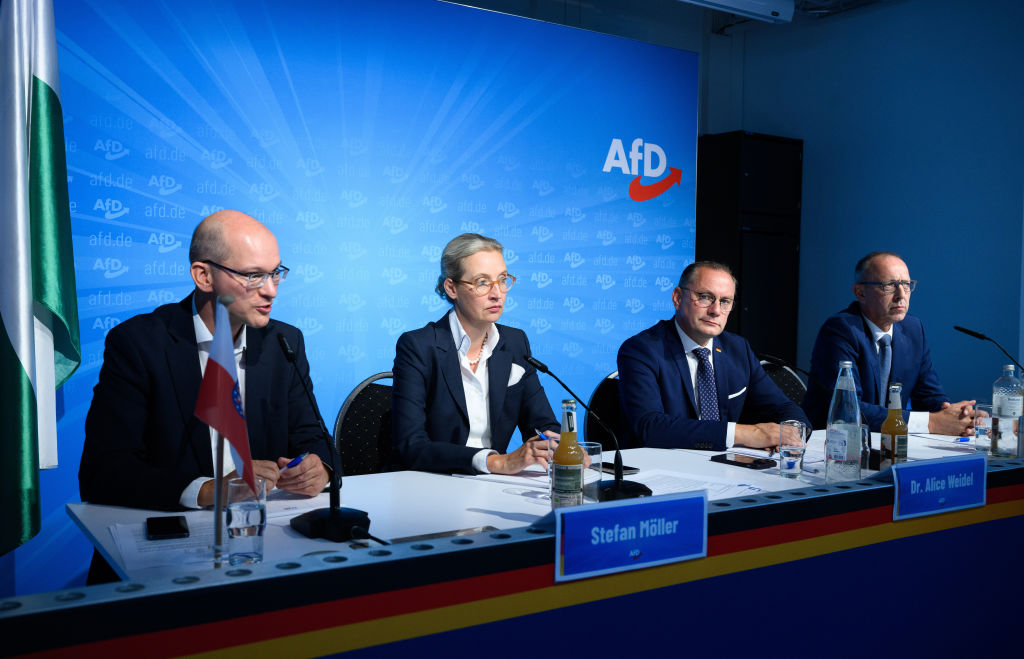
Leaders of the AfD comment on the results of the state elections in Saxony and Thuringia at a press conference in Berlin, Germany. (Bernd von Jutrczenka / dpa picture alliance via Getty Images)
For ten years, Thuringia was the only state in Germany with a president from left-wing party Die Linke. That was until September 1, when it fell to just fourth place in elections to the state parliament.
In regional capital Erfurt, members and sympathizers of Die Linke assembled in a building close to the railways to follow the election night. Gloomy preelection polls soon materialized into even more dismal results. For the first time in the history of the postwar Federal Republic, a far-right party, the Alternative für Deutschland (AfD), had won a state election.
Thuringia’s president, Bodo Ramelow, who will remain in post until a replacement is elected by the parliament, addressed Die Linke activists who had come to follow the results. On a historical note, Ramelow remarked that Erfurt is the city where the ovens for Auschwitz were produced — and promised to do everything possible to prevent AfD from reaching power.