Paul Foot Showed What Journalism Could Be
The investigative journalist Paul Foot embodied a spirit lost among members of his profession today. He was unflinching in his criticism of the powerful but held himself to the highest standards of journalistic rigor, which even his critics admired.
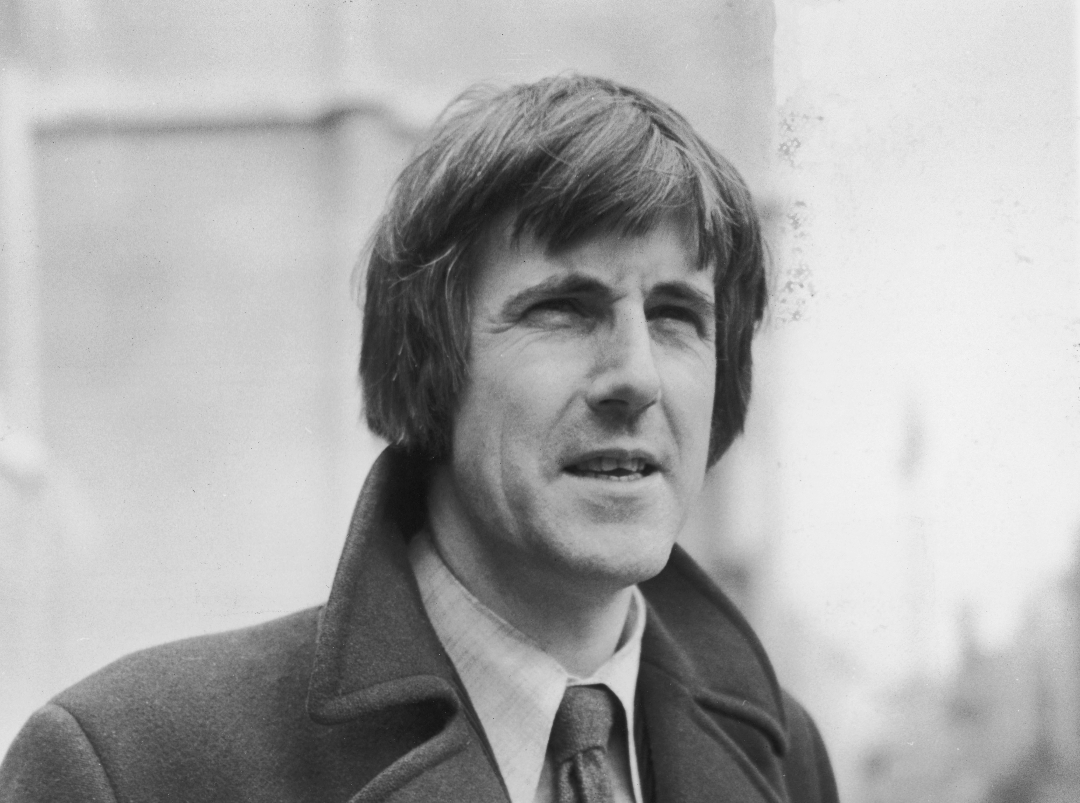
British journalist Paul Foot, photographed in February 1977. (Frederick R. Bunt / Evening Standard / Hulton Archive / Getty Images)
In the last of his sixty-two pieces for the London Review of Books, written just a couple of months before his death in June 2004, the radical journalist Paul Foot offered some generous, if qualified, praise for a book on the contested legacy and grubby compromises of Britain’s 1832 Reform Act. Foot noted with pleasure that its author’s “political instincts are the opposite of reactionary,” that he “ruthlessly exposes the buffoonery” of a particularly egregious cluster of nineteenth-century Tory grandees and robustly lays into the “religious lunacy” and bigotry of the church.
It was disappointing then, to see how little time the book devoted to what Foot saw as the real story: the raucous, uncompromising agitation of the masses, with their riots at Nottingham, Derby, and Bristol, and the crusading journalism that gave voice to their thwarted demands for universal suffrage, like the Poor Man’s Guardian, made infamous by the writing of the Irish Chartist James Bronterre O’Brien. The “noise outside” that terrified the political establishment and set tight constraints on acceptable debate regarding the “suffrage question.”
Noise, agitation, political ferment. Few subjects consumed Foot more over the course of a half-century career as investigative reporter and polemicist with the LRB, Guardian, Daily Mirror, Private Eye, and Socialist Worker. His Guardian obituary put it succinctly: “The most seductive revolutionary socialist of his generation died yesterday. . . . He was 66 going on 21 and had been seriously ill but very busy for several years.” Margaret Renn’s Paul Foot: A Life in Politics is, somewhat remarkably, the first book-length biography of Foot to be published. It is exhaustively detailed and unflaggingly generous toward, as another eulogy put it, “a staunch friend of lost causes” and “revelatory” journalist, as even the Economist grudgingly conceded, despite Foot’s “potty” Trotskyist politics. It likely won’t have to be done again.