Neville Alexander Was a Major Thinker of Socialism in Africa
Neville Alexander was a brave fighter against South African apartheid who was jailed on Robben Island alongside Nelson Mandela. Alexander exposed the links between racism and capitalism and opposed the ANC’s neoliberal turn after the fall of apartheid.
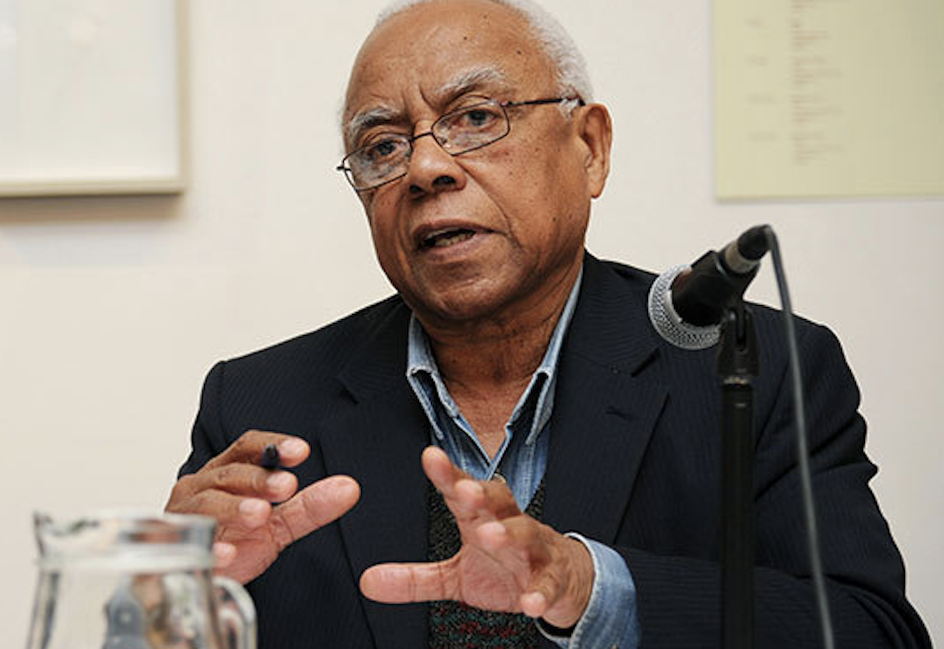
As a socialist internationalist, Neville Alexander remained open to the construction of a universal identity that would not be constrained by national boundaries. (Michael Hammond / University of Cape Town)
As a revolutionary public intellectual, activist, and former political prisoner, Neville Alexander was one of the most important theorists of the relationship between racism and capitalism to emerge during the struggle against South African apartheid. His activities and ideas remain a reference point for some of the key debates in contemporary history not only in South Africa but internationally.
A courageous opponent of the apartheid system who went on to reject the neoliberal trajectory embarked upon by the post-apartheid ruling establishment of the African National Congress (ANC) in the 1990s, Alexander was always reflective and humble. But he never wavered from his own self-description as a nondogmatic Marxist, a Pan-Africanist, and an internationalist.
Fighting Apartheid
Alexander was born in Cradock in South Africa’s Eastern Cape in 1936. His father was David James Alexander, a carpenter, and his mother, Dimbiti Bisho Alexander, was a schoolteacher. Her mother was among a group of Ethiopian slaves who had been freed and placed in the care of missionaries in Cradock. Alexander went to a local school run by German nuns.