South Africa’s Transition to Democracy Left Neoliberalism in Place
The negotiations to dismantle apartheid in South Africa in the early 1990s failed to challenge the neoliberal economy created by the ruling National Party. The water shortages and blackouts sweeping the country today are a direct result of that failure.
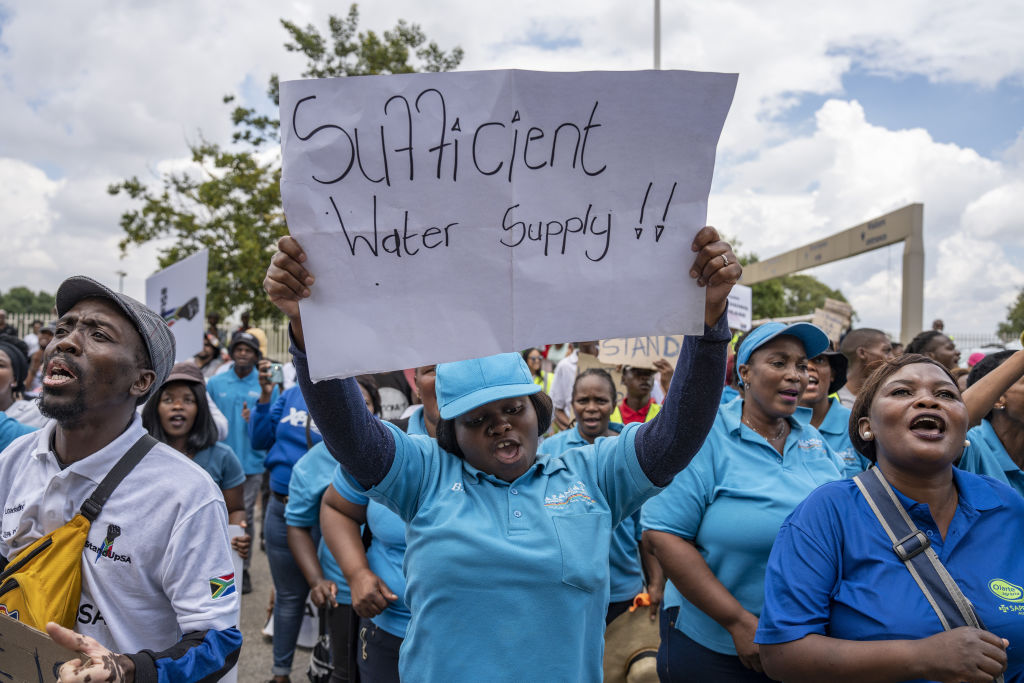
South Africans protest against energy and water shortages in Johannesburg on February 2, 2023. (Ihsaan Haffejee / Anadolu Agency via Getty Images)
South Africa’s transition from an apartheid state to a democratic republic did not inaugurate an era of either prosperity or egalitarianism.
This year, South Africa has seen its worst period of planned blackouts, which the country’s government has taken to euphemistically refer to as “load shedding,” since the advent of multi-racial democracy. According to some studies, the average citizen spends 27 percent of the year without power. Meanwhile, some 15 percent of South Africa’s water supply systems are in poor condition and seventy million liters of drinkable water are lost daily as a result of poor-quality infrastructure.
Many have blamed corruption for the country’s ills. A popular narrative has developed that the country’s state-owned enterprises (SOE) are dysfunctional because these companies are in the hands of the government. Cutting back red tape, critics argue, is the most efficient way to improve the dire situation. By stealth, South Africa’s infrastructure crisis has provided a justification for a turn towards economic liberalization, a move which would only worsen the conditions for the poor who suffer most from the country’s inadequate social provisions.