Academic Climate Science Funding Has a Big Problem
To figure out how best to address climate change, federal climate funding is crucial. But government granting agencies are increasingly at the mercy of climate deniers.
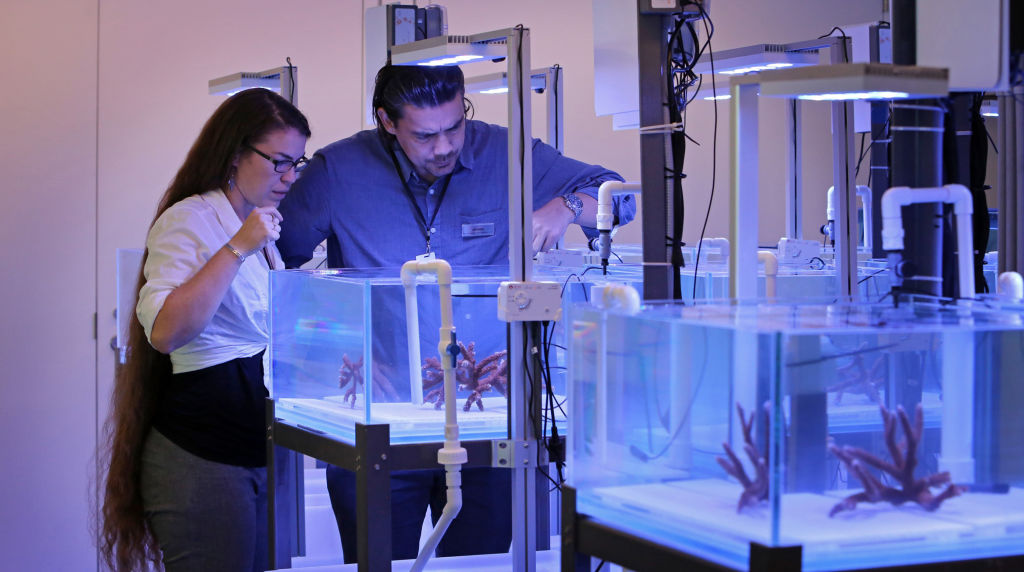
Scientists study the effects of climate change on coral in Miami, Florida, on February 23, 2018. (Emily Michot / Miami Herald / Tribune News Service via Getty Images)
Record-breaking temperatures and billion-dollar climate disasters occurring every three weeks in 2024 have even climate skeptics in the United States scratching their sweaty heads. Climate change is claiming lives and land: fires in New Mexico have burned over seventeen thousand acres, extreme heat caused an estimated 175 deaths in Phoenix in June, and Beryl became the earliest hurricane on record to hit the Atlantic United States in a calendar year. To address the crisis, Americans depend on interactions between government and academic science. But the truth is that those interactions are woefully inefficient, leading to delays in climate change mitigation and deepening public distrust in scientific climate research.
The greatest expertise in climate science resides in academic institutions, where professors and their graduate students toil away in university departments and labs. They address climate change both by educating the next generation and by producing knowledge through research. That knowledge then mitigates climate change through government action. “I’ve always seen [government] grants, especially federal basic research grants, as a critical part of the scientific fabric,” says Dr Adam Subhas, professor of oceanography at Woods Hole Oceanographic Institution, the nonprofit ocean science arm of the Massachusetts Institute of Technology.
In climate science, research grants come from a variety of government branches, reaching as far as the Department of Defense and Highway Administration, but the National Science Foundation (NSF) is primarily where academic scientists go to fund basic research. This basic research sets the foundation for our understanding of how the climate works and ideally informs policy.