The UAW Heads South
The South has long remained a nearly impenetrable citadel for labor. Fresh off the success of its Big Three strike, the United Auto Workers wants to storm the castle.
(Andi Rice / Bloomberg / Getty Images)
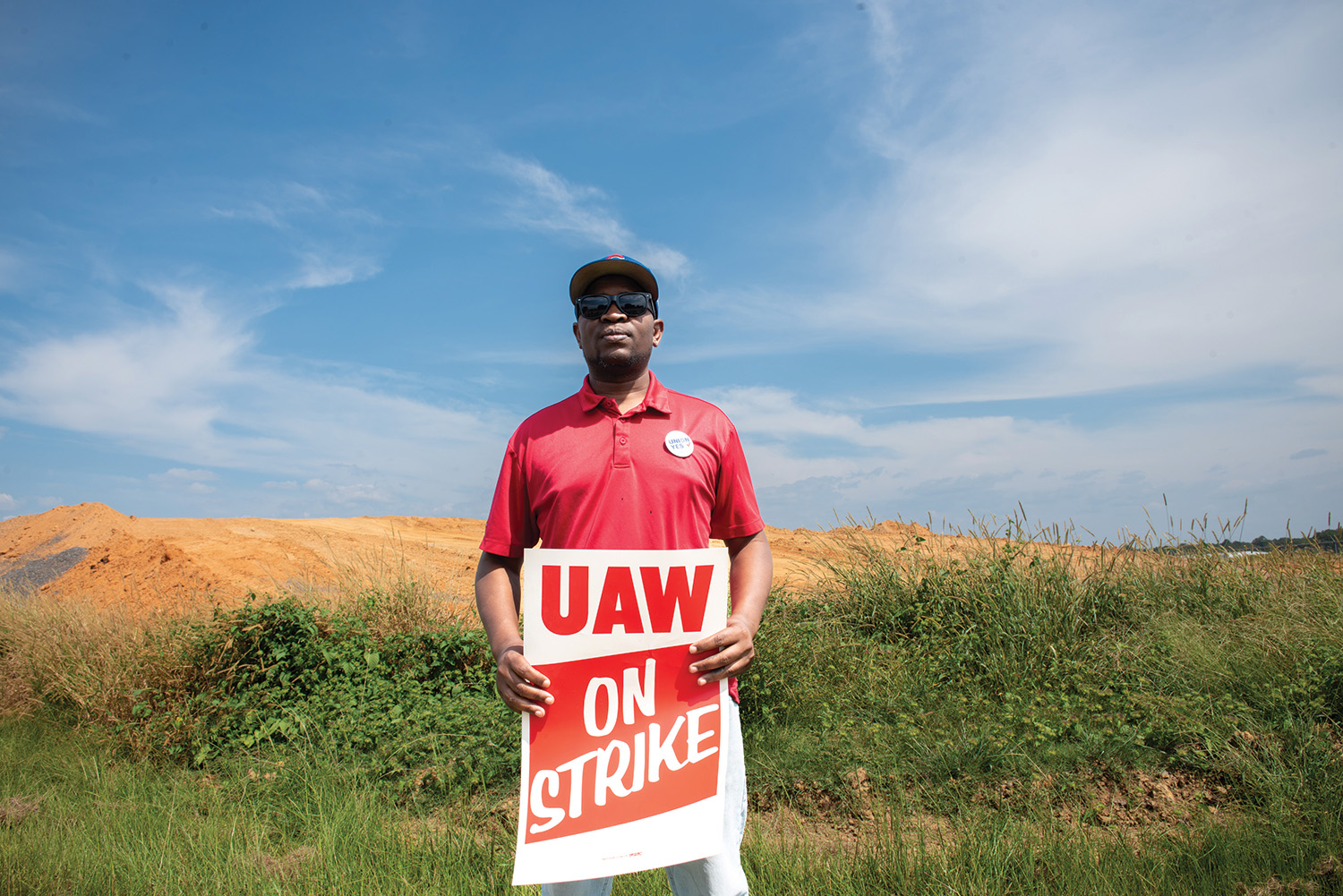
Nineteen miles east of Tuscaloosa, workers at the Mercedes-Benz US International (MBUSI) plant in Vance, Alabama, make the Mercedes GLE, GLE coupe, and GLS model series as well as the all-electric EQS SUV and EQE. They’ve also started building something else: a union. On the heels of the United Auto Workers’ (UAW) victorious strike against the Big Three automakers last fall, the union has gone on the offensive, vowing to organize some 150,000 autoworkers at thirteen companies across the country.
The union has tried, and failed, to organize some of these plants before. For decades, the South has proven a nearly impenetrable citadel. Yet the UAW is directing its focus and $40 million in extra resources to try again, this time on a far larger scale.
The tide seems to be with them: members’ success at the Big Three has ignited a sense of possibility in their nonunion counterparts, and the union’s new leadership is encouraging precisely such ambitious thinking.