The Economy Isn’t Actually Good for Workers Right Now
Celebration of today’s economy reveals more about the class biases of journalists than it does about the daily realities of ordinary workers.
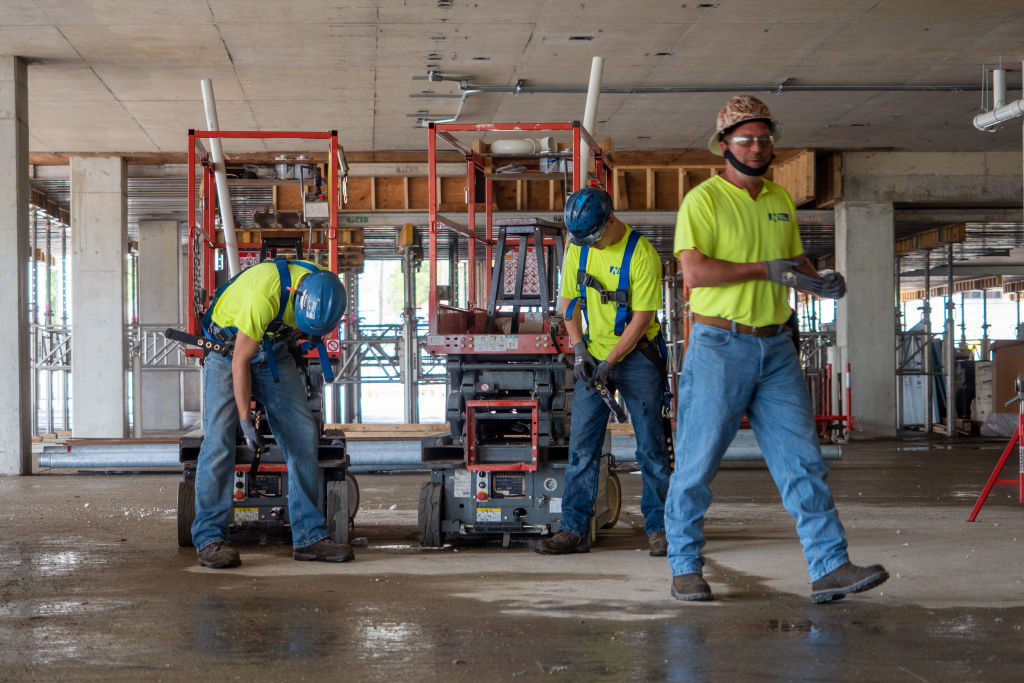
Plumbers working to install lines in Cincinnati, Ohio, on May 28, 2020. (Jason Whitman / NurPhoto via Getty Images)
For months, media pundits and Biden campaign operatives have been scratching their heads attempting to describe why, given all the measures that seem to indicate a strong economy, people think it’s bad. Paul Krugman has been trotting out one flummoxed opinion piece after another, bemoaning the fact that, despite evidence that the economy is “in remarkably good shape,” ordinary people just don’t see it that way.
Pundits’ obsessive focus on this question was understandable. With a presidential election looming, Kamala Harris’s campaign and Democratic leaders are rightly concerned about one of the “laws” of political science: presidential incumbents’ electoral performance is strongly linked to voters’ perceptions of their own economic fortunes. With a sitting vice president on the ticket, how people feel about the economy heading into November will likely impact who wins the US presidential election.
From a 30,000-foot perspective, Democrats appear to be on solid economic footing: strong employment numbers and job creation, recent increases in real wages, high consumption levels, and a strong GDP. Yet these measures actually do little to capture the reality of the US economy for many Americans, particularly those in the working class. Instead, celebration of today’s economic conditions reveals more about the class biases of journalists and other experts than it does about the realities of the economic situation for ordinary workers.