University Endowments Suppress Dissent by Design
Endowments are meant to insulate universities from politics. But far from being apolitical, the arrangement prioritizes the whims of the market, the authority of financial experts, and the preferences of donors over the concerns of students and faculty.
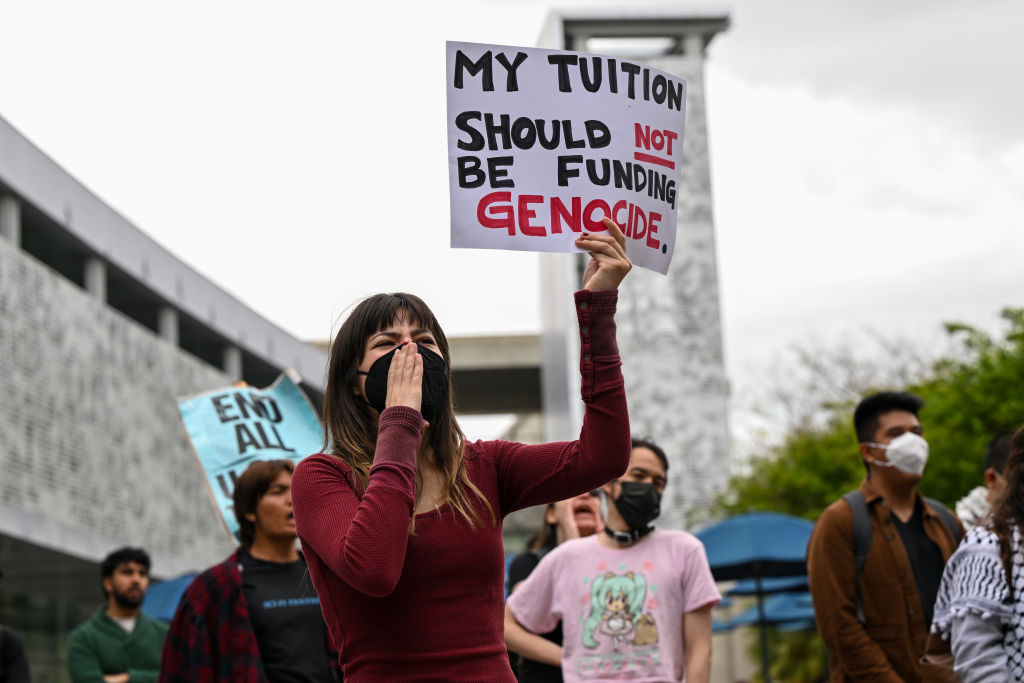
Students at San Jose State University (SJSU) protest Israeli attacks on Gaza in San Jose, California, on April 24, 2024. (Tayfun Coskun / Anadolu via Getty Images)
Why has it been so difficult for students demanding divestment from Israel to catch their university administrations’ ears? Part of the answer is the specific content of the request: universities’ donors are more pro-Israel than their students. Schools hoping to both quell the protests and continue courting philanthropic support find themselves balancing competing and perhaps irreconcilable interests.
Equally important, however, is the nature of university investing itself, and the broader structural logic of university financialization. Over the last four decades, endowments have ballooned and become increasingly central to universities’ self-conception and function, with financial professionals proliferating throughout schools’ administrative ranks and assuming greater control of institutional priorities. For university administrators, the deeper and more existential risk emanating from the encampments is the breaching of the barrier that insulates investment decisions from the specter of politics, and the possible democratization of the financialized university itself.
Endowments are political objects, subject both to macrofinancial pressures and recurrent pressures from interested groups on campus. But they also represent a fantasy for universities looking to retreat from politics. This fantasy is both functional and formal.