Kathy Hochul’s Pause on Congestion Pricing Is Indefensible
NYC’s congestion pricing program would have reduced traffic, enhanced transit service, and benefited the most vulnerable New Yorkers. But Gov. Kathy Hochul absurdly decided to suspend the program the MTA had already invested half a billion dollars into.
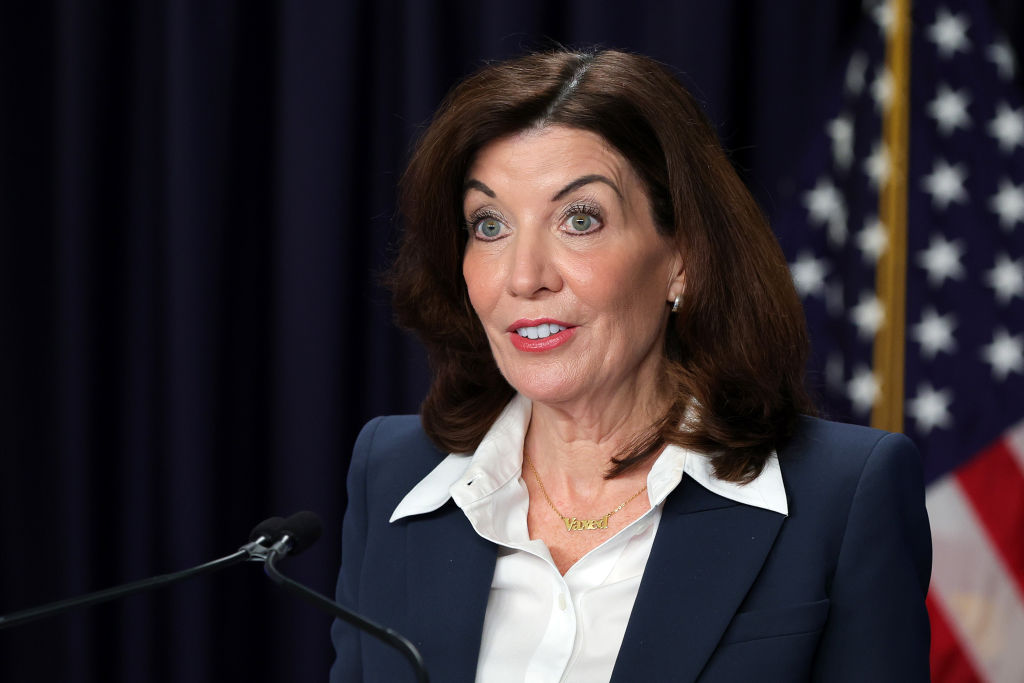
New York governor Kathy Hochul speaks during a press conference on February 9, 2022, in New York City. (Dia Dipasupil / Getty Images)
On Wednesday, June 5, Gov. Kathy Hochul directed the Metropolitan Transportation Authority (MTA) to pause New York’s congestion pricing program indefinitely. The plan, which was scheduled to go into effect on June 30, would have charged drivers a toll when they entered Lower Manhattan (south of 61st Street). The fee would have varied by automobile type, with passenger vehicles paying $15 per entry (maximum of one charge per day). While those who drive daily into Lower Manhattan may be celebrating Governor Hochul’s decision, her choice to suspend the program is absolutely ridiculous.
Before her reversal, Governor Hochul touted the plan as a solution to two major issues: traffic inside New York City and a lack of capital funding for the MTA. New York City, if you can believe it, has some of the worst traffic in the United States and consistently tops reports as the most congested area in North America. Additionally, while being one of the best transit systems in the United States, the MTA has been critically underfunded and routinely experiences budget crises.
The idea behind New York’s congestion pricing program was to incentivize commuters to take other types of transportation into Lower Manhattan. Those who continue to drive would be charged a fee, and the program’s revenue would be directed toward the MTA for capital expansions. This approach would likely have persuaded some commuters to find other transportation options as a preliminary report estimated that the number of cars entering Lower Manhattan would drop by 17 percent, equal to 153,000 fewer automobiles. This would reduce traffic and carbon emissions while promoting safer streets and cleaner air within the congestion zone.