Catalonia’s Election Isn’t Just About the National Divide
Seven years since the failed bid for Catalan independence, the national question still haunts Spanish politics. But Sunday’s snap elections in Catalonia are also about its economic model — and its increasing dependence on a low-wage tourist sector.
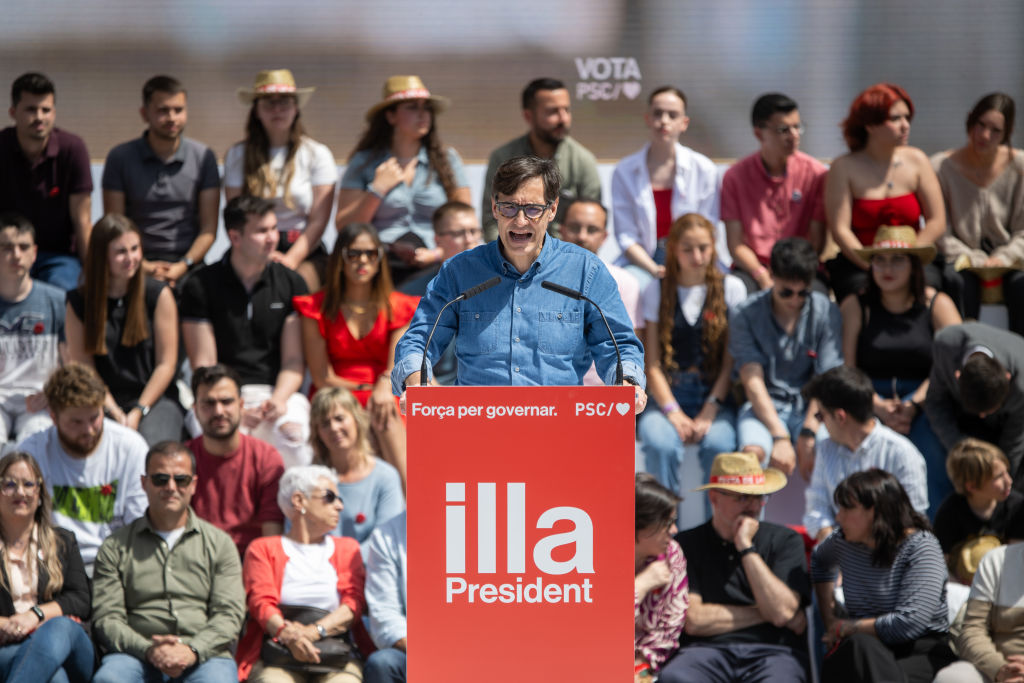
Partido Socialista leader Salvador Illa speaks at a rally on May 4, 2024, in Barcelona, Catalonia, Spain. (Lorena Sopena / Europa Press via Getty Images)
This Sunday, Catalonia votes in a snap election to elect a new parliament. This autonomous community in northeastern Spain is today unlikely to garner the global attention that it did in 2017, when its government made a push for independence. Yet these elections surely will shed light on two key issues, both for Catalonia and for Spain.
This election firstly matters for the balance of power between the two main forces contending to dominate Catalonia’s pro-independence camp, divided between center left and center right. But it will also be key for the strength of Spain’s Socialist-led government, just days after prime minister Pedro Sánchez announced that he had decided not to resign.
Resignation Threat
In late April, Sánchez shared a letter explaining that he was considering resigning over a judicial and media smear campaign against his wife, Begoña Gómez. The trigger was a judge’s decision to open corruption proceedings against Gómez. The lawsuit was presented by a far-right pseudo-union and was based on defamatory articles by online right-wing newspapers.