August Thalheimer Was a Great Revolutionary Theorist
- Julia Damphouse
In the 1920s, August Thalheimer was the most important theorist of Germany’s Communist movement. He stood for an independent workers’ movement that forged a path beyond conservative social democracy and authoritarian Stalinism.
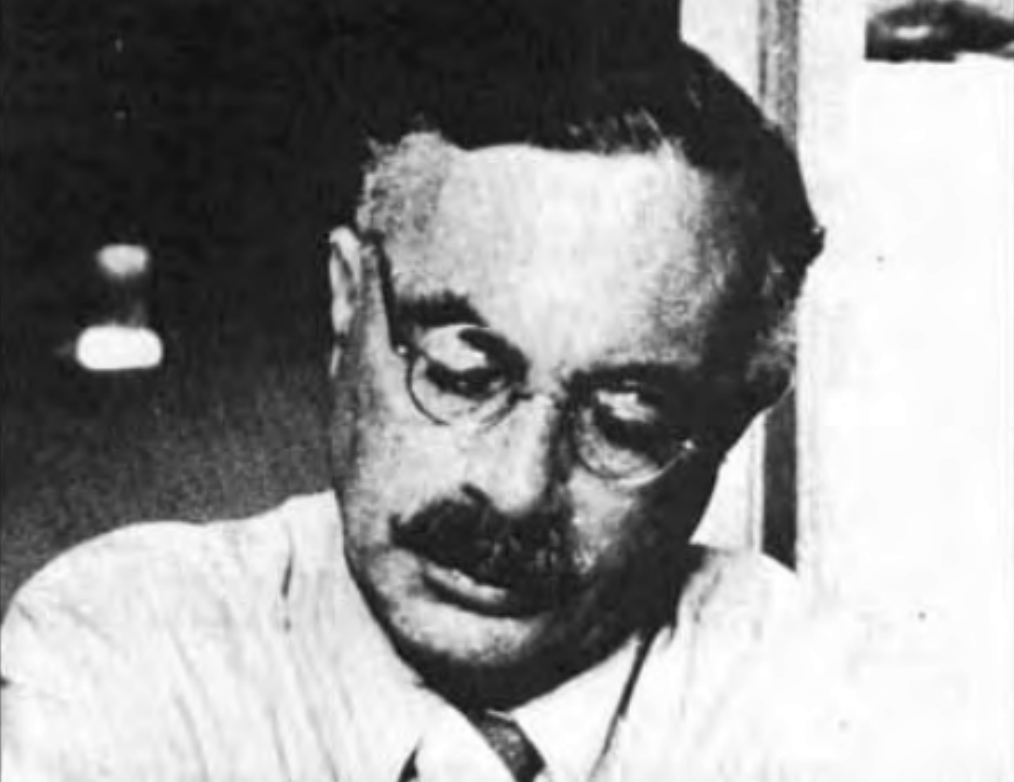
August Thalheimer in Havana, Cuba. (Wikimedia Commons)
This year marks 140 years since the birth of the Marxist theorist August Thalheimer. A first Social Democratic then Communist militant, he was a political intellectual whose life’s work revealed alternative ways of thinking to those of the fossilized official parties. More than that, he developed a coherent theory of fascism that went above merely propagandistic opposition to the looming Nazi threat.
Social Democratic Beginnings
Growing up in a Jewish home in Affaltrach, Württemberg, August and his sister Bertha (1883–1959) had come into contact with the Social Democratic labor movement at an early age through their father, Moritz. The siblings were both politically active first in the Social Democratic and then Communist movements, but forged independent paths and then lost contact with each other after the Nazi takeover in 1933. August’s intellectual and political inspiration came not only from his parents but also from Clara Zetkin, Friedrich Westmeyer, and other left-wing Social Democrats close to the family.
After completing his doctorate in linguistics in 1907 and spending some time studying in Munich, London, and Oxford, Thalheimer established contacts with Karl Liebknecht, Rosa Luxemburg, Franz Mehring, and other leading intellectuals of the Social Democratic Party of Germany (SPD). But the university was a conservative place in the German empire, and his SPD membership saw him denied a career as an academic. Instead, he became editor of the social democratic Göppinger Freie Volkszeitung newspaper. Meanwhile, his sister Bertha wrote for Zetkin’s socialist women’s paper Die Gleichheit and became a member of the SPD executive in Baden-Württemberg.