Pro Wrestling Today Is a Microcosm of Corporate Entertainment
Professional wrestling remains tremendously popular media today because it encapsulates our collective obsession with justice. The recent WWE-UFC merger shows that the story of American professional wrestling is also one of ruthless profit maximization.
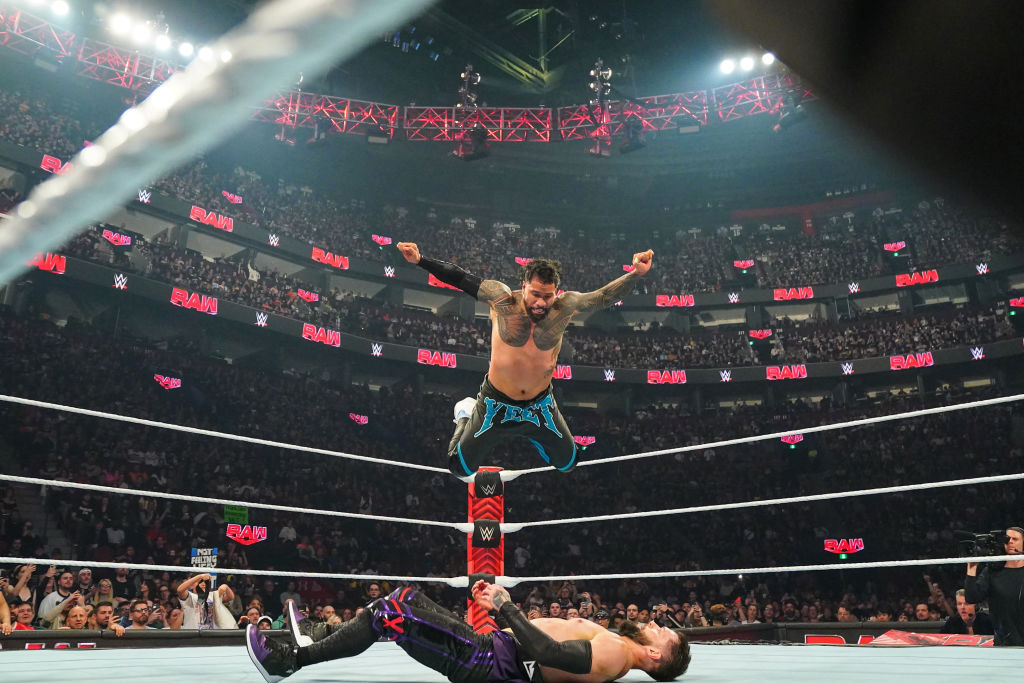
Jey Uso in action with Finn Balor during Monday Night RAW at the Bell Centre on April 15, 2024 in Montreal, Canada. (WWE / Getty Images)
This past fall, World Wrestling Entertainment (WWE) merged with the Ultimate Fighting Championship (UFC) to form TKO Group Holdings, which means that an entertainment company showcasing theatrical, staged fights has joined the same company televising “real” fighting in the form of mixed martial arts.
While WWE viewership has declined in recent years, it’s far from dead. Millions across every age group still watch RAW weekly on the USA Network. And what began as a televised phenomenon has fared equally well online — WWE is consistently one of the top-ten most subscribed YouTube channels in the world.
A few months later, the merger raises questions about how the new company will influence what constitutes “popular” American media — and the degree to which corporate control influences that. The endurance of WWE and its seamless transition into the internet ecosystem are a reminder that corporate media is as strong as ever, despite the promise that independent or democratized media could prevail with more platforms, new technology, and savvier, younger audiences.