J. B. McLachlan Was a Canadian Labor Hero
J. B. McLachlan’s tireless advocacy for coal miners’ rights left an indelible mark on Canadian labor history. McLachlan emphasized the pivotal role of members in upholding unions as bastions of resistance to class exploitation.
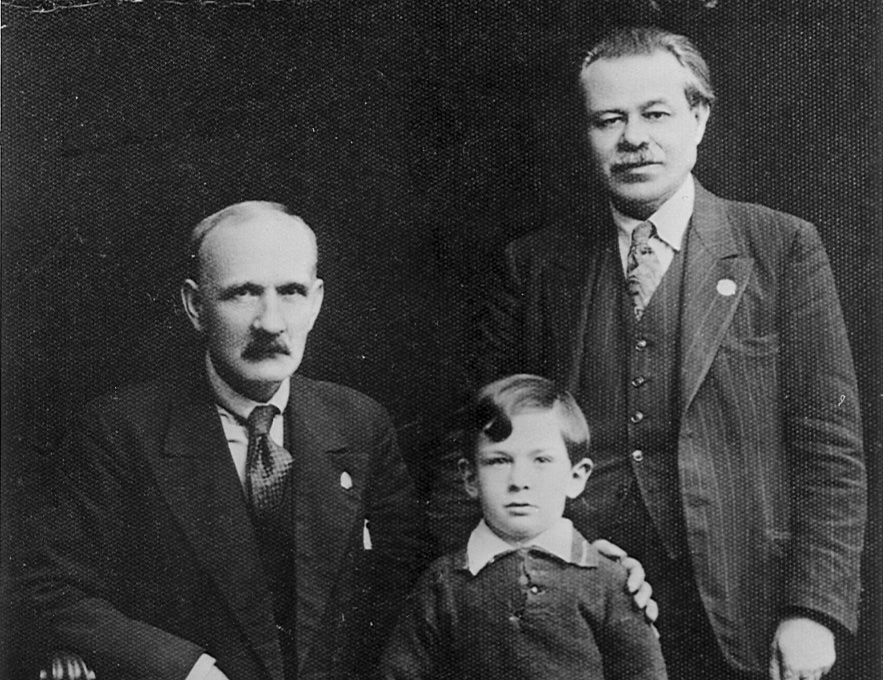
Canadian labor leader J. B. McLachlan (L) in Toronto in 1928, with union organizer Max Shur (R) and Jimmie Buller (C), the son of communist activist Annie Buller. (Beaton Institute, Cape Breton University)
“They ravaged the coal mines and robbed the coal miners.” Looking back a century later, we can still envision James Bryson McLachlan in action, boldly advocating in crowded halls, championing the cause of coal miners, and offering economic and moral judgements on the failures of capitalism as he knew them. He believed that the coal industry exposed the essential contradictions at the heart of the capitalist system, and that it was the mission of the coal miners to lead the way in building a culture of opposition.
In recent years, this Canadian labor icon has continued to stake his claim on the imagination of his home country. He has made his way into reference works and textbooks, is quoted on Labour Day and other public occasions, and is mentioned in song and poetry. He appears in a dream sequence in a novel by the Cape Breton writer Sheldon Currie.
From the early industrial revolution in Canada in the 1850s to the mature industrial economy of the 1950s, coal was the country’s dominant source of energy. It was also a way of life for the tens of thousands of Canadians who lived and worked in communities that supported the coal industry. The boom and bust of resource exploitation is a familiar theme in Canadian economic history, and in the case of nonrenewable resources, the logic of extractive capitalism is unforgiving.