The Supreme Court Is Chipping Away at Anti-Corruption Law
The US Supreme Court will soon hear a case that could make it legal for corporations to enrich politicians in exchange for lucrative favors — establishing a far-reaching precedent that further limits the scope of anti-corruption law.
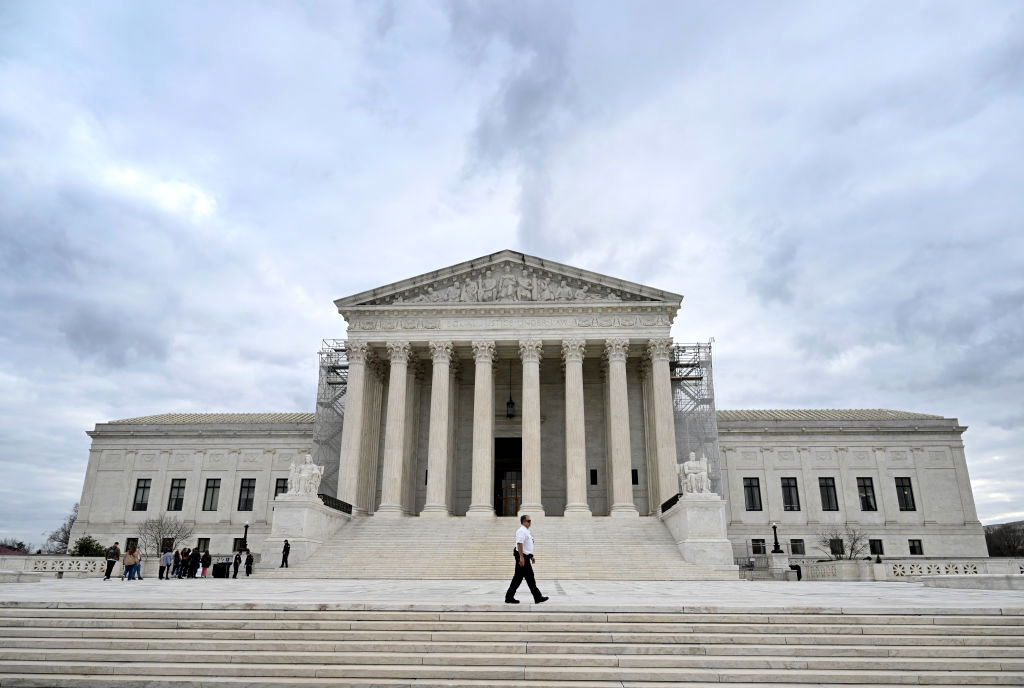
The Supreme Court March 4, 2024 in Washington, DC. (Matt McClain / the Washington Post via Getty Images)
The US Supreme Court is about to hear an obscure case that could legalize corporations enriching public officials in exchange for lucrative government contracts and other favors.
Though political corruption prosecutions and convictions are already near a historic low, conservative groups are pressuring justices to deliver a far-reaching precedent that would make it much more difficult for law enforcement to prosecute bribery charges against politicians who seek financial remuneration for official actions they take.
The case, Snyder v. United States, revolves around the dealings of a mayor in a small Indiana city who was convicted of bribery in 2019. The Supreme Court could have allowed the conviction to stand, but instead agreed to hear an appeal. It is the latest in a string of corruption cases in which the high court has intervened — and in each past case, the court has overturned convictions and limited the kinds of bribery charges that can be brought against public officials in the future.