Chief Justice John Roberts Is to Blame for the Supreme Court’s Extremism
Chief Justice John Roberts is portrayed as a thoughtful moderate who’s been a victim of the Supreme Court’s hard-right turn rather than a perpetrator of it. But his crusade to legalize corruption built the foundation of the court’s current extremism.
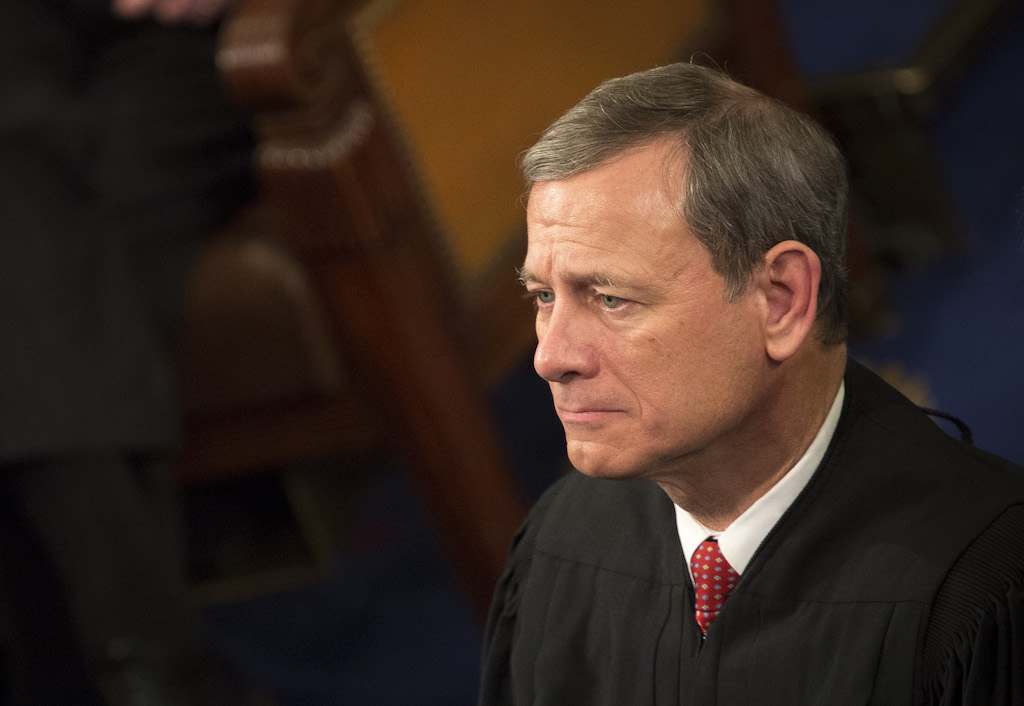
Chief Supreme Court Justice John Roberts at the Capitol in Washington, DC, 2016. (Drew Angerer / Bloomberg via Getty Images)
Amid all the high-profile rulings dominating the headlines, a more obscure but far-reaching decision slipped through the Supreme Court, even if it was barely part of the news cycle. It is the case that culminates Chief Justice John Roberts’s crusade to fully legalize corruption — and construct a political system that permanently produces all the extremist rulings now repealing the twentieth century.
Cases like this new one, FEC v. Ted Cruz for Senate, don’t get much attention because they seem esoteric and technical. But so many of the more infamous legacies of the Roberts Court — crushing workers, rescinding reproductive rights, shielding big business from accountability, restricting voting rights, eviscerating gun control, complicating the fight against climate — can be traced back to its campaign finance rulings, which equate liberty with corruption.
That Roberts doctrine has given oligarchs, corporations, and their front groups a First Amendment right to bankroll political campaigns and now — thanks to the Cruz case — directly funnel cash to politicians’ personal bank accounts. The return on such investments has been all the right-wing laws, obstructions, and judicial edicts that have spewed forth from Washington over the last decade.