Taiwan’s Election Wasn’t Just About Relations With Beijing
Lai Ching-te has been elected Taiwan's next president in a vote widely presented as a rebuke to China. But millions of Taiwanese were more concerned by economic issues than geopolitics, with low-wage young voters swinging behind a third-party insurgent.
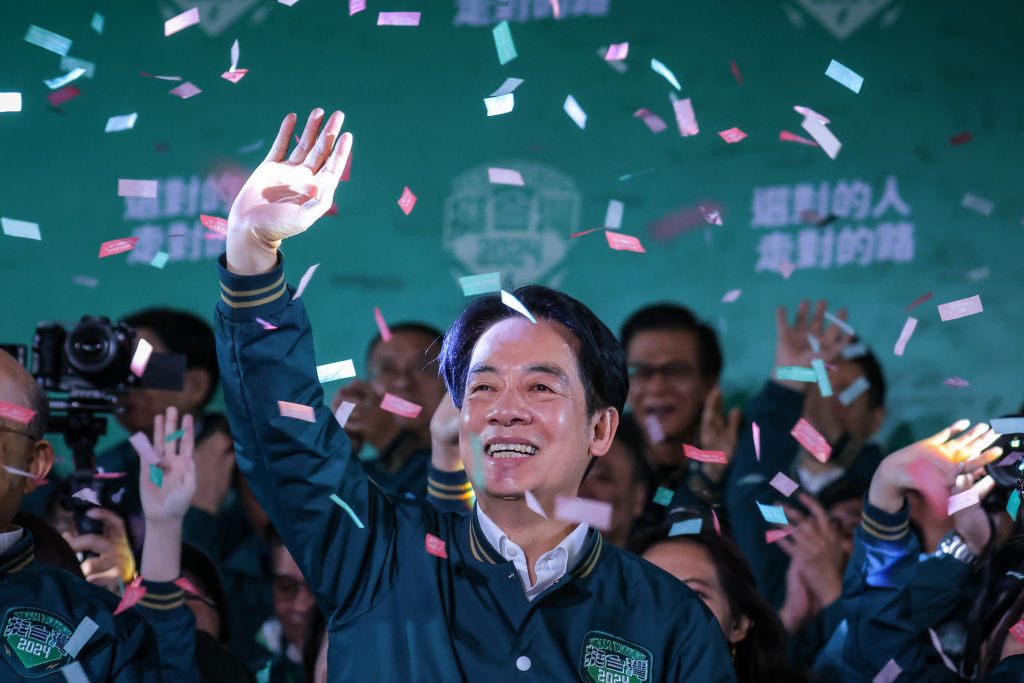
Taiwanese president-elect Lai Ching-te speaks to supporters at a rally at the DPP’s headquarters, January 13, 2024. (Annabelle Chih / Getty Images)
On January 13, over thirteen million Taiwanese cast their votes in a three-way presidential contest coupled with parliamentary elections. Lai Ching-te of the ruling Democratic Progressive Party (DPP), a force known for advocating Taiwanese sovereignty and identity, won the presidency with 40 percent of the vote. Focusing on geopolitical issues, much international media framed the result as a rebuke to China, in what the BBC called a “move angering Beijing.”
Lai’s victory could more accurately be seen as a vote for stability, at least by the large minority of Taiwanese. The winning candidate signaled that he would continue to uphold the long-standing status quo in Taiwan’s relations with China, avoiding a move toward formal independence or armed confrontation.
Yet looking at a broader range of issues, Lai’s mandate is less strong than his predecessor’s. Voter discontent over domestic policies is potentially growing, especially on socioeconomic matters. On January 13, third-party candidate Ko Wen-je made substantial inroads among disaffected voters eager for change. It seems that domestic concerns will continue to take priority over the question of relations with Beijing in shaping Taiwanese democracy’s future.