The Story Behind “Solidarity Forever”
The iconic labor song "Solidarity Forever" turns 109 years old today. Written in defiance of early 20th-century oppression, it railed against the forces that “would lash us into serfdom” with the abiding counsel that the “union makes us strong.”
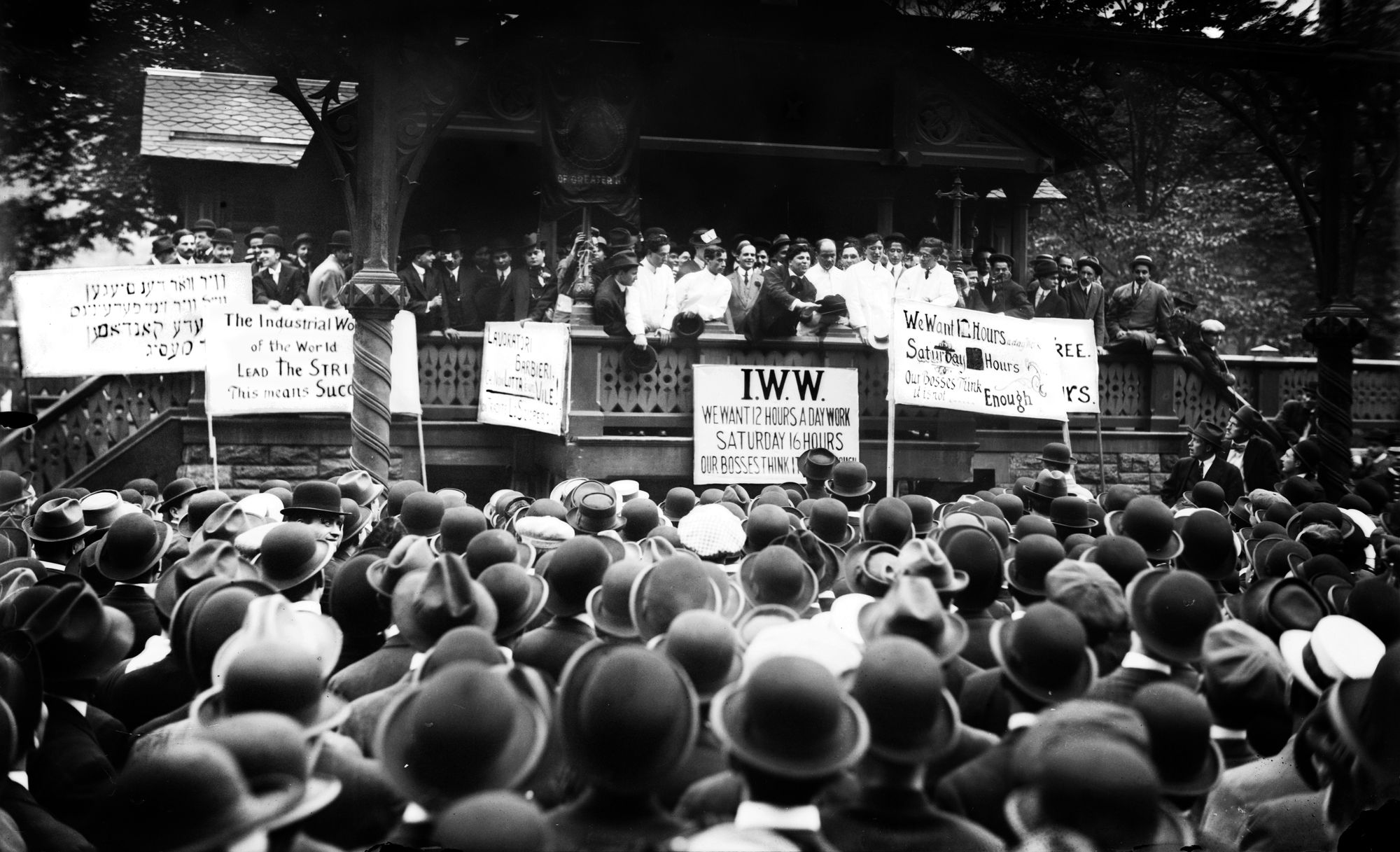
Joseph J. Ettor, who had been arrested in 1912, giving a speech to barbers on strike. (Wikimedia Commons)
In an era where actual labor songs — of the sort popularized by Pete Seeger in the 1940s — are in short supply, Rage Against the Machine has become the quintessential representative of “protest music.” This is despite the fact that “Sleep Now in the Fire” is now over twenty years old. One could make the case that we are long overdue for more overtly pro-union, pro-worker anthems.
In a tragic instance of “the more things change, the more they stay the same,” we likely couldn’t find a more serviceable tune than one of the mainstays of the Industrial Workers of the World (IWW) trade union songbook. “Solidarity Forever” still resonates, even at 109 years old.
The song’s lyrics, referencing the “untold millions” who “stand outcast and starving,” might lead one to assume that the song was composed at the height of the Great Depression. But the fact that it was composed about fifteen years before the stock market crash of 1929 highlights that the oppression and hardship experienced by the American worker transcended the confines of the worst general economic crisis the nation faced in the twentieth century.