Protests by Soldiers’ Wives in Russia Show How an Antiwar Movement Can Grow There
In Russia, the wives of men mobilized to the Ukrainian front are increasingly demanding that they be returned home. While the movement is not mainly directed at opposing Vladimir Putin, it offers hope of breaking the war machine from within.
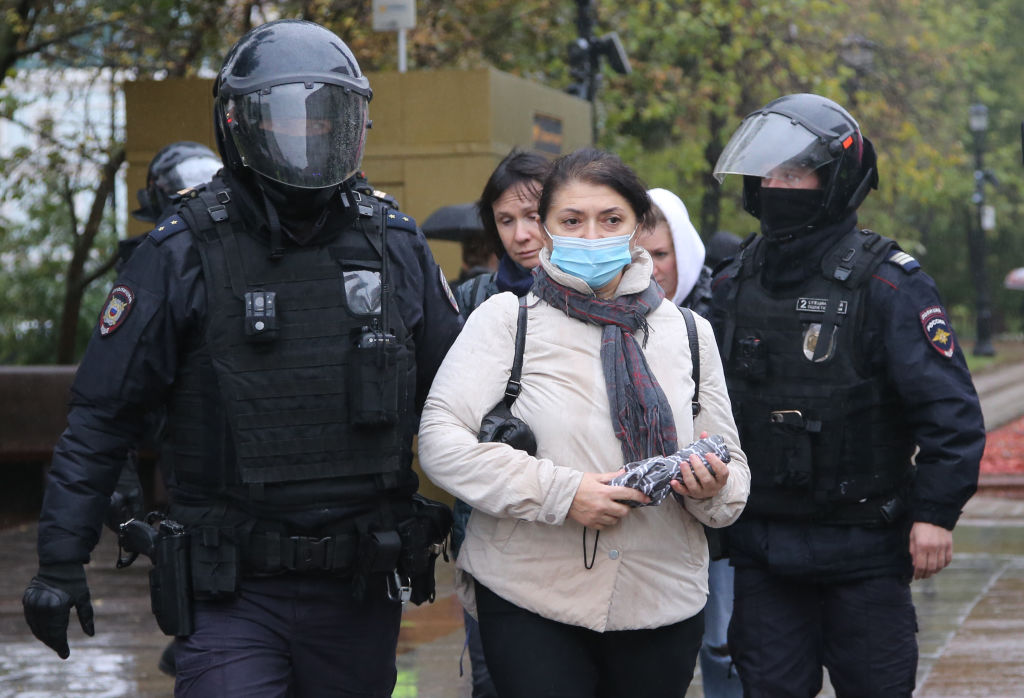
Police officers detain a woman during an unsanctioned rally against the military invasion of Ukraine and partial mobilization on September 24, 2022, in Moscow, Russia. (Contributor / Getty Images)
In fall 2022, Russia began a partial mobilization of civilians for the war in Ukraine. By October 2023, at least four thousand of them had been killed (Russia’s total nonrecoverable losses amount to four hundred thousand men, but these are mostly contract soldiers who were killed or heavily wounded). Striking, among the mobilized dead, is the number of over-forties, since young men are more likely to avoid the draft. Many of these men were sent to the front despite deferrals for health reasons or work. They were promised that they would mainly serve in the rear — but in fact they were thrown into the most dangerous parts of the front, often without training and with poor equipment.
While the mobilization lasted a month, there was no official decree to end it, so the mobilized men are forced to stay at the front. At first, the authorities promised to replace them with contractors, but now openly state that they will have to fight until the “Special Military Operation” (SMO) is over. The mobilized are not allowed leave — after all, it has been estimated that if they were granted this dispensation, most would never return. Ninety-eight percent of the mobilized wounded are later returned to service.
But the relatives of the mobilized are not accepting all this. A growing movement is demanding that they be brought home, moving from attempts at dialogue with local officials and appeals to the president to street actions and mass flash mobs. Their demands include the establishment of a one-year time limit for mobilization, or a complete transition to contractual status. The movement also demands rights to social protest and public assembly, as well as “social justice and equality in rights and duties for everyone, including the mobilized.”