In Israel, Thai Migrant Workers Are Caught in Other People’s War
Since Hamas’s October 7 attacks killed dozens of Thais in Israel, 8,000 of 30,000 Thai migrant workers have fled the country. Their exposure to a war in which they have no part dramatizes their insecure status as heavily exploited laborers.
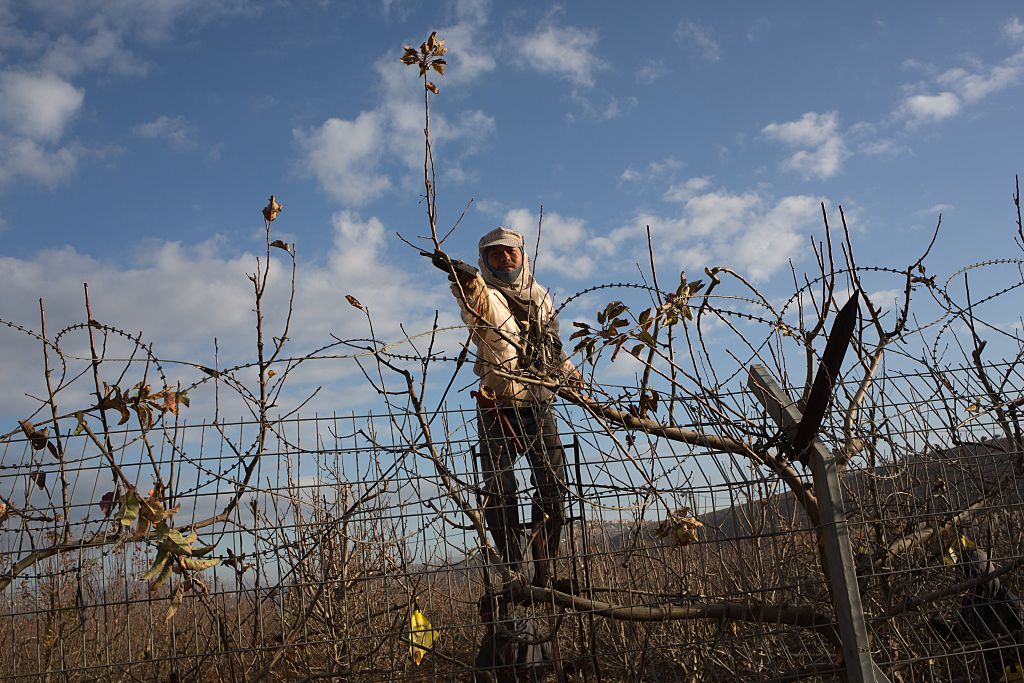
A picture taken on January 29, 2015 in the Israeli town of Metula along the Lebanon-Israel border shows a Thai migrant worker at an apple plantation, a day after the Israeli military shelled border areas following a Hezbollah attack. (Menahem Kahana / AFP via Getty Images)
By far the largest group of non-Israelis affected by the Hamas-led attack this October 7 were migrant workers from Thailand. As of December 5, forty-five Thai citizens have been pronounced dead. Following the release of twenty-three hostages over the past two weeks, fifteen remain missing, an estimated eight of them still abducted in the Gaza Strip.
Meanwhile, thousands of other Thais who lived and worked in the region have been displaced by the violence. Despite activists’ efforts to provide safe spaces for rest and recuperation, most have had to choose between immediately going to work with replacement employers — or even returning to their previous workplaces — and flying home to Thailand.
After thirty years laboring in obscurity, Thai migrants in Israel — the vast majority of whom come from Isaan, Thailand’s impoverished and underprivileged northeast — are suddenly in the global limelight. Thailand’s new government, headed by a party many Isaanites voted for, has struck a populist note by calling on them to come home and offering special benefits. Preferring to take the government at its word rather than continuing to endure physical danger and naked discrimination in Israel, over eight thousand have already gone home.