Black Ribbon Day Is an Ahistorical, Antisemitic Fraud
Black Ribbon Day is also known as the Day of Remembrance for Victims of Stalinism and Nazism. But this veneer of humanistic solicitude is a facade for historical distortion and antisemitic rhetoric, perpetuated by far-right movements across Eastern Europe.
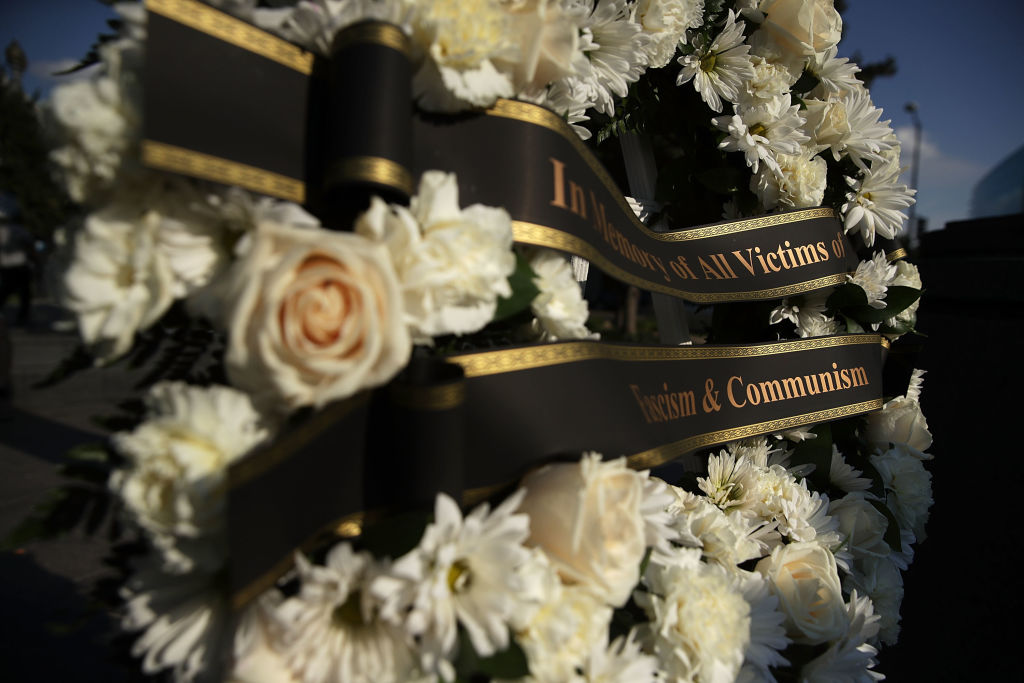
A wreath is placed during a Black Ribbon Day remembrance event at the Victims of Communism Memorial on August 23, 2017, in Washington, DC. (Alex Wong / Getty Images)
Today marks Black Ribbon Day, more formally known as the Day of Remembrance for Victims of Stalinism and Nazis. With its roots stretching back over four decades, Black Ribbon Day came about as a reaction to investigations by the United States and Canada into the possibility that war criminals escaped justice and settled in North America after World War II.
But these prosecutions stalled at roughly the same time as the collapse of the Soviet Union, and the commemoration took on a new role as the histories of postcommunist Eastern European nations from the Baltics to the Balkans and the Black Sea were rewritten from a nationalist perspective. This rewriting of history is closely intertwined with the resurgence of far-right, ultranationalist movements throughout Eastern Europe since the fall of Communism. It’s equally connected to the triumphs in rehabilitating the reputations of wartime collaborators, Holocaust culprits, and various other fascists.