The Supreme Court Doesn’t Have the Final Say on Student Debt
If the Supreme Court rules against Joe Biden on student debt, it will be a major blow. But there is a more straightforward path for Biden to unilaterally forgive a lot of student debt.
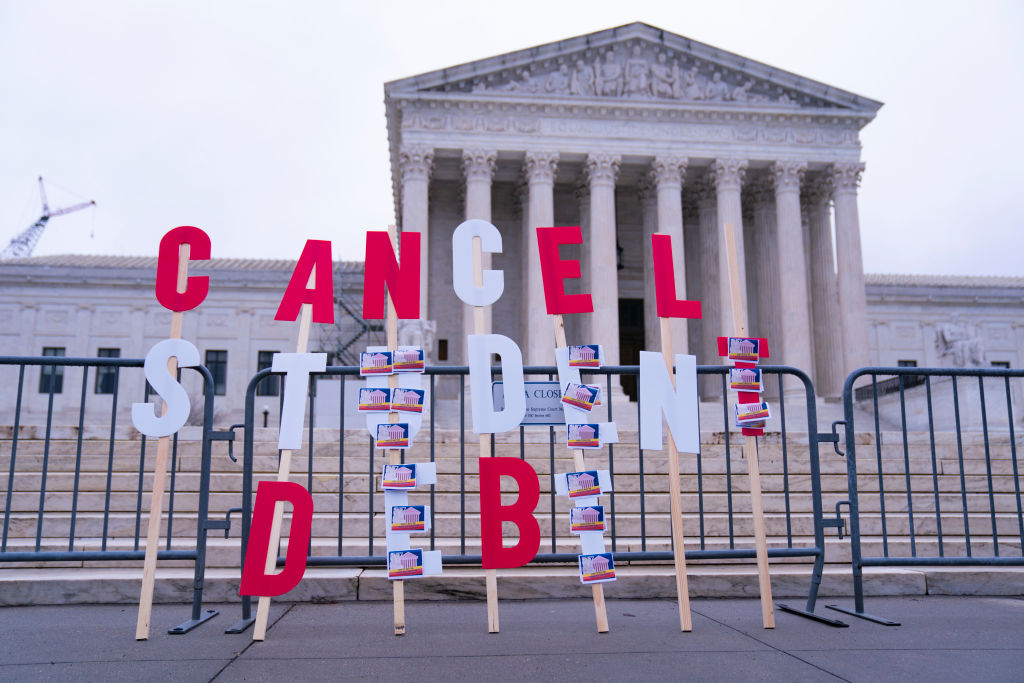
A sign reading “Cancel Student Debt” is staged outside of the Supreme Court of the United States in Washington, DC, on February 28, 2023. (Sarah Silbiger for the Washington Post via Getty Images)
In August of last year, Joe Biden announced that he would be forgiving $10,000 worth of student debt for individuals with income below a certain level. The Biden administration claimed that a post-9/11 statute called the HEROES Act gave him this authority because it allows the president to modify student loans in response to a national emergency.
After he announced the policy, various individuals, organizations, and governments filed lawsuits trying to have the program halted. One of those suits has made it to the Supreme Court, and the court may decide on it soon. Many court-watchers and legal analysts believe that the Supreme Court is likely to conclude that Biden’s move is unconstitutional under the major-questions doctrine provided that the Supreme Court also concludes that one of the plaintiffs in the case — likely the state of Missouri, suing on behalf of a state-affiliated debt servicer called MOHELA — has standing to sue.
If the Supreme Court rules against Biden, it will obviously be a major blow to the cause of student debt forgiveness. But there is another more straightforward legal path for Biden to unilaterally forgive a lot of student debt that does not rely upon expansive interpretations of a post-9/11 statute.